
Note: This post
will use Adler’s theory of Birth Order.
Birth Order
Psychology…what is it?
In analyzing how children’s personalities develop, Adler was
the first to point out the impact of birth order. Essentially, he contended
that regardless of genetics and the environment children are reared in, the
order in which siblings are born have a unique impact on their personalities.
In fact, the birth order itself was considered to be a
different environment in itself. For example, an only child would have grown up
in a much different environment than a first-born with one younger sibling or a
youngest child with five elder siblings.
While only for fun, I’m going to analyze the personalities
of different siblings in the series. Their personalities don’t correspond with their respective birth order; however, a lot
of their personalities fit very well in Adler’s personality model.
Let’s go through them.
First-born Child:
First-born children tend to adopt the role of the teacher,
the tutor, the leader, and the disciplinarian. They are intellectually mature
and have a deep interest in maintaining order and authority. As such, they’re
good organizers, are very detail-oriented, and hold authoritarian/ conservative
attitudes.
Sound familiar? It should, because this describes both
German brothers: Germany and Prussia.
Both are very disciplined and ordered.
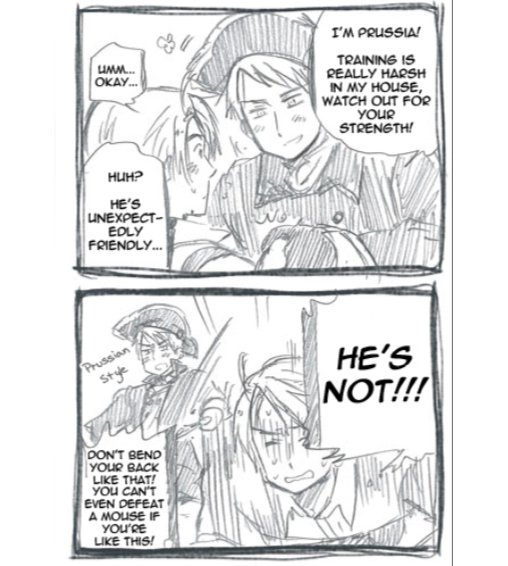
Ex: Prussia
mentored America and gave him vast military knowledge.
Source: Hetarchive, Christmas 2011
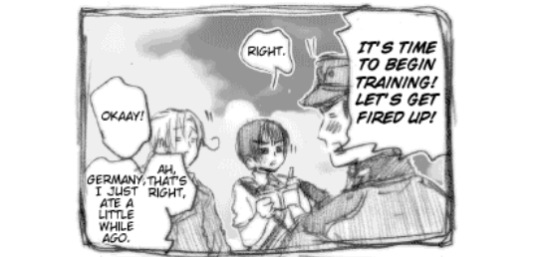
Ex: Germany
trains his allies, Japan and Italy, in a hierarchical manner during WW2.
Source: Hetarchive, Diary Sketches Summary.
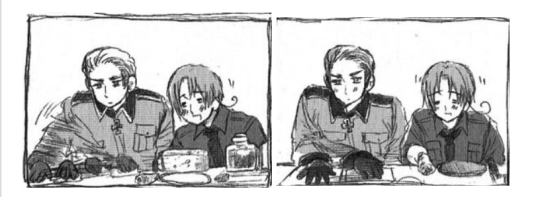
Both are very organized and devote a great attention to
detail.
Ex: Germany is
known for his neurotic attention to detail, such as keeping his kitchen clean,
meticulously organizing his day with agendas, and following manuals to the
letter.
Source: Volume 1.
Ex: Prussia has
documented several centuries worth of diary entries and has an entire library
to shelf them.
Source: Hetascanlations, World Stars Chapter 339.

Second-born:
Second born children often have a pacesetter set in the
older sibling or vice-versa. A lot of times, this involves becoming locked in a
competition with the other sibling where they may strive to surpass them.
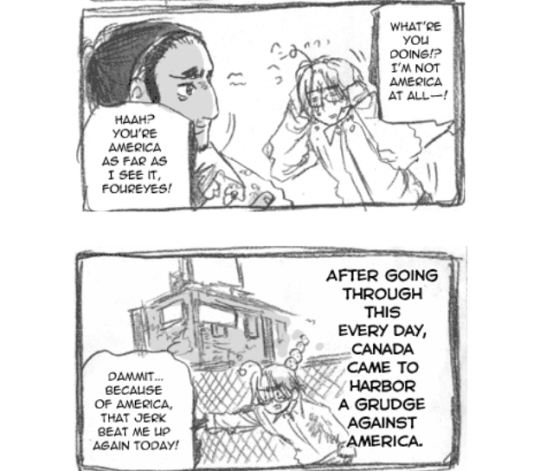
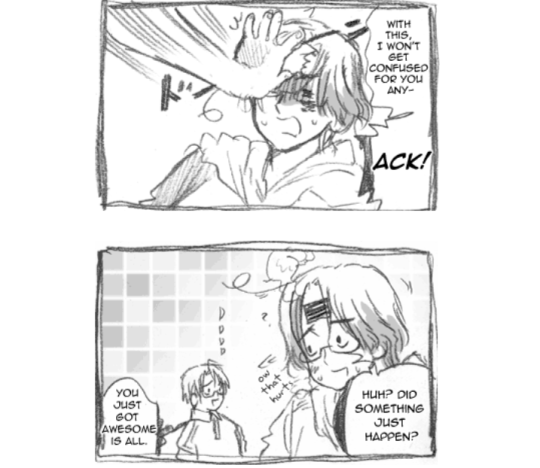
This is especially relevant to Canada and Romano.
Romano has felt inferior to Veneziano ever since he was a
young child.
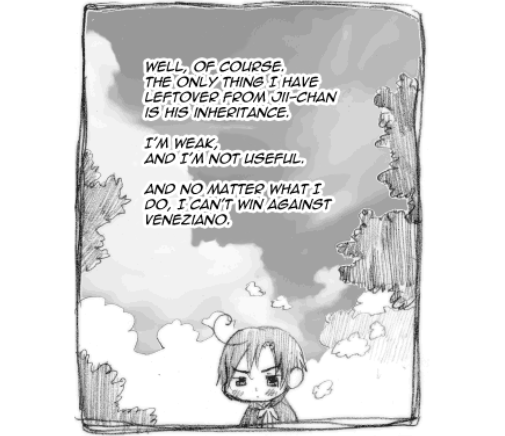
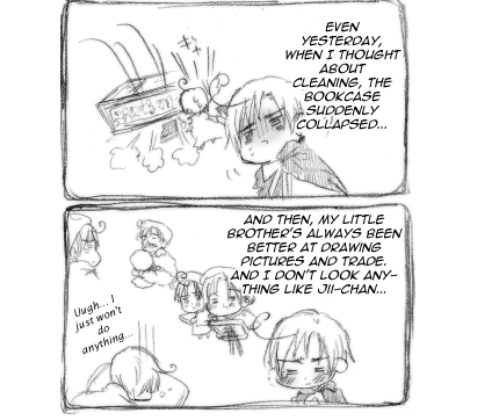
Source: Hetarchive, Boss Spain’s Control of Southern Italy pt. 2
Canada’s characterization often revolves around his struggle
to overcome his invisibility, step out from America’s shadow, and develop a
unique and memorable identity for himself. His greatest irritation is being
mistaken for America.
Source: Hetarchive, Fly Canada-San, Fly!
Last-born:
Like second-borns, last borns are also driven by the need to
surpass their older siblings and often develop at a remarkably fast rate. They are
high achievers in whatever they decide to undertake. On the other hand, if they
fulfill the role of the “baby” of the family and are coddled too much, they can
also become dependent and helpless in adulthood.
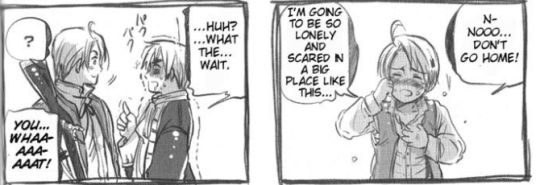
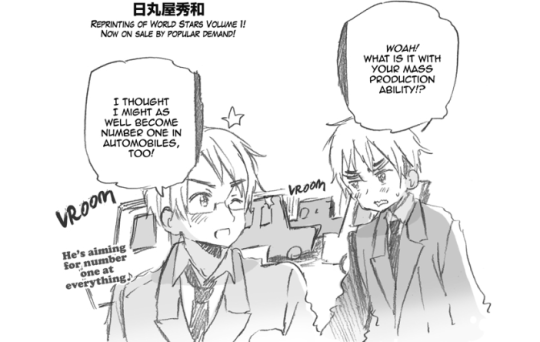
This personality is most relevant to America, who both
developed (aged) at a remarkably fast rate but also rose to surpass England as
a world power to be reckoned with during the second Industrial Revolution.
Source: Volume 3, England Dreaming of Long Days Passed + Hetascanlations, World Stars Chapter 71.
A good example of the baby-like aspect of his personality is
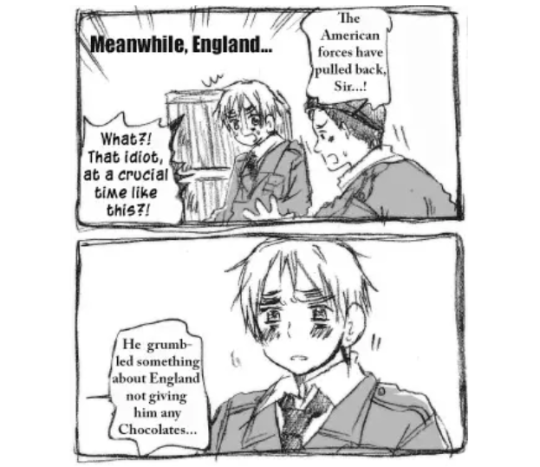
that America is notorious for pouting when he doesn’t get something he wants.
Ex: He pouts and sulks when England doesn’t give him
chocolate on Valentine’s Day.
Source: Hetarchive, Buon San Valentino pt. 2.
Only-child:
Only childs are far more mature than their peers due to being reared in an environment with adults. They are likely to
experience difficulties in situations outside the home where they are not the
center of attention.
Italy fits this personality-type best.
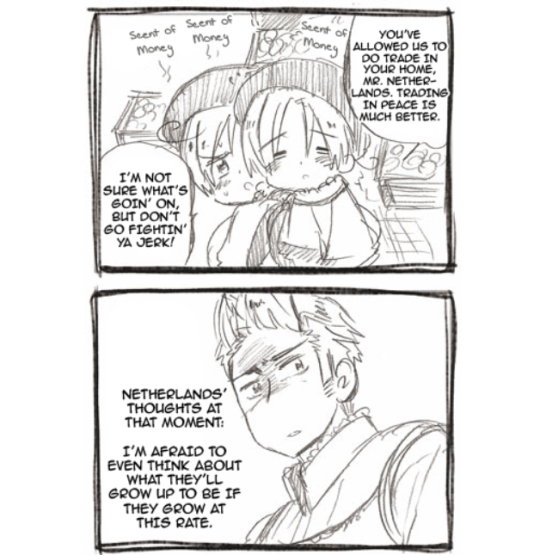
Italy grew up in prosperity and accumulated aptitudes in
several things, such as trade and commerce and art.
Ex: Both he and Romano had a talent for business at a young
age.
Source: Hetarchive, Christmas 2011 Event.
It’s not so much that Italy wants to be the center of
attention, but abandonment issues that he suffered from after Rome and Holy
Rome died definitely plays a part in how initially clingy he was towards
Germany.
Source: Hetarchive, Main Storyline Chapter 4.


 Ellawritesficssometimes