image
image

I think it goes unsaid that how the nations relate to one
another is not only based on their present political relations.

In other words, while they may not be on good terms with
each other, these relations don’t define their relationship in whole. There are
times where nations get along, and there are times where they will fight
frequently and ‘hate’ each other. Point is, the hate doesn’t typically last.

While current relations do cause tensions, their pasts have
the most impact on how they view one another. It would therefore be shallow to
say that if nation A and nation B grew up together, only to go to war centuries
later, that they would unequivocally hate each other and be unable to reconcile.
Relationships don’t work like that, and this is especially the case for
immortals who have lived several lifetimes.

I’ve stressed this in other posts before, but the nations
don’t represent their government. They represent their people – they’re cultural,
not political representations. The irony is that they’re forced to serve their government, which may or may
not represent their peoples’ best interest. [x] [x]

It is for this reason that even in times of war, nations on
opposing sides are shown to be getting along with each other when they’re not
on the battlefield.

Ex: America’s occupation of Rome. He doesn’t treat the Italy
brothers as enemies, but rather friends.

image
image

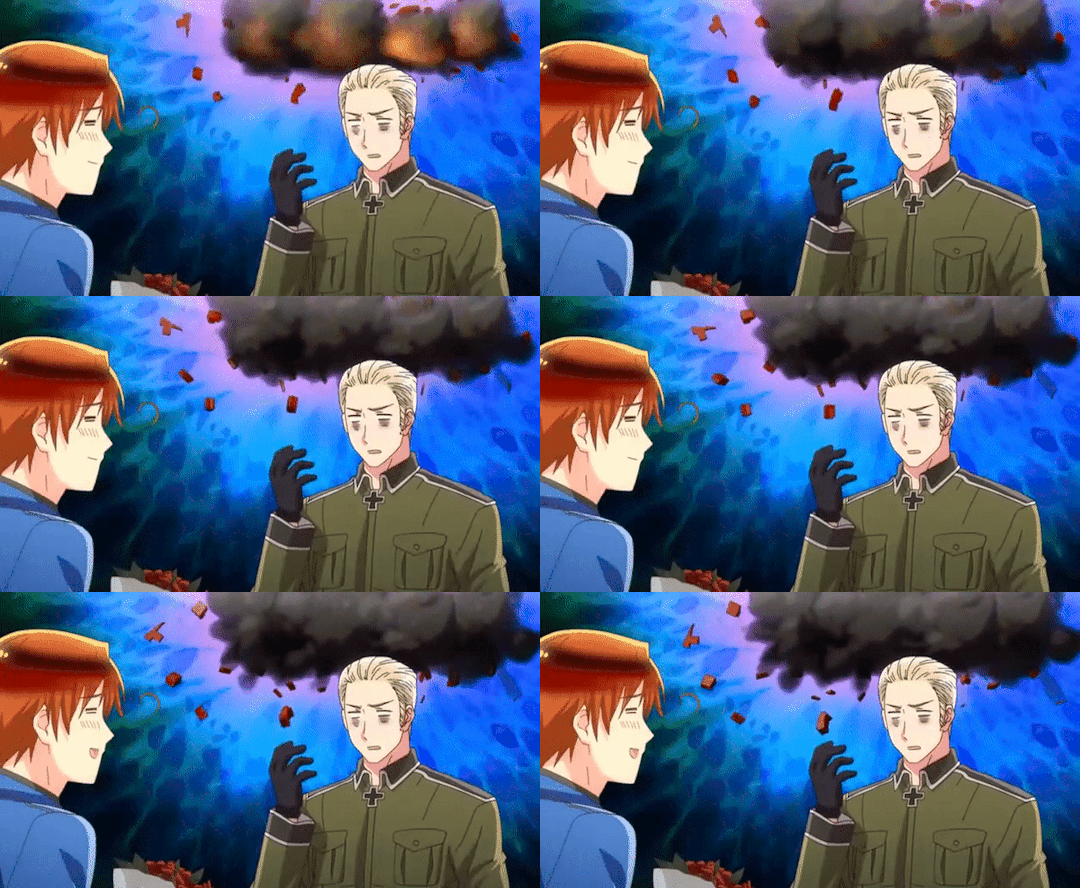
Ex: England, Russia, and Germany share their military
rations with each other.

image
image

While humans from other nations may bear present grudges
towards each other, this doesn’t always reflect itself in the personification.
It’s important to remember that they’re people themselves, and have had more experiences
that influence their outlook on life.

That said, what this post will set out to demonstrate is
that nations rumoured to canonically hate each other don’t actually. The hatred
isn’t deep-set or genuine. It’s more like a rivalry between someone who constantly
gets on your nerves…someone who you routinely get into arguments with and can
never see eye-to-eye. On the other hand, old war grudges have been shown to heal with time.
Although, some take far longer than
others.

With all that in mind, let’s go over some of the most common
characters that are mistakenly depicted to be in hate-hate relationships. And
yes, while this is intended to be ship neutral, all of these examples can be
used to counter bashes against your ship.

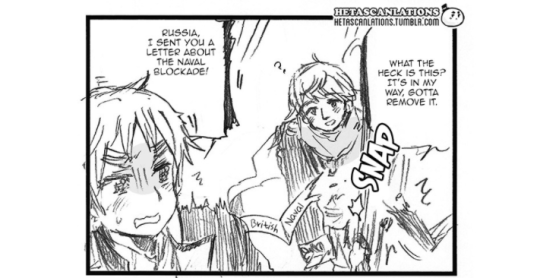
Russia and America:  

While they may have been on thin ice with each other in the Cold
War, their history runs far deeper than that. Unfortunately, we get very
minimal insight into American-Imperial Russia relations. The strips only depict
Russia’s participation in the American Revolution.
image
image

Either way, the two countries don’t hate each other,
regardless of how tense their political relations were and still are. They even
acknowledge this tension as they spend time with each other in the present.
Russia in particular admits to how much America gets on his nerves.

image
image

China and Japan: 

Japan’s betrayal in WW2 caused China to develop a strong
grudge towards him.

image

Nonetheless, in recent strips, we do see China attempting to
reconcile with Japan through diplomacy.

image
image

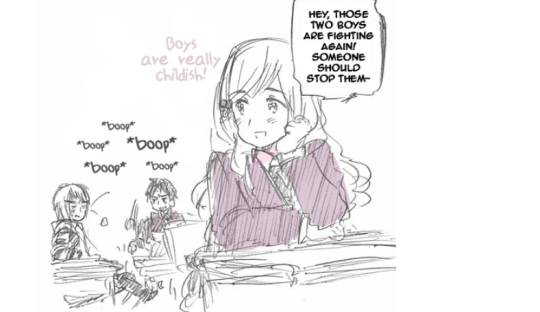
Hungary and Romania:  

The two are noted to fight like cats and dogs. Each nation
depicts each other in a negative historical light. They may have resented each
other, and still do from time to time. However, it’s not true, long-lasting hatred.

image

Ex: Hungary’s somewhat smug reaction to Romania and Bulgaria fighting with
each other.
image

Regardless, they’re still capable of getting along. 

image

Greece and Turkey: 

The two bicker every time they see each other. 

image

Comic gags
aside, the two still care for each other and are mentioned to be making some grounds
in their relationship.

image

Ex: Turkey’s form of bullying Greece is taking him to a
bathhouse and massaging him.

image

Switzerland and Japan:

Switzerland yells at Japan to be more assertive and voice
his opinion. It has nothing to do with hatred. If anything, it’s an aggressive form of encouragement.

image
image

Veneziano and Romano: 

Romano suffers from an inferiority complex in comparison to
Veneziano, who received most of their grandfather’s attention. As such, he is
often very hostile to Veneziano, referring to him as “stupid little brother”,
or something similar to that depending on his mood.

image

However, this is only done to Veneziano’s face. When he’s
not around, Romano’s been shown on several occasions to look out for Veneziano.

image

America and England:

Short story short, the two have been able to reconcile their
rocky relations in the years following the Revolution. England’s bitter and
scathing nature towards America has softened considerably over the years.

It’s said that England once suffered from one hundred years
of heartbreak, presumably a hint to the American Revolution.[x]

Ex: England still goes to America’s centennial celebrations, despite
how sick it makes him.

image

He also offers to fix a crack in the first liberty bell he
gave to America, and gives him another one for his bicentennial. 

image

Ex: The two are close enough to make fun of each other’s
politics.  

image

America and Canada: 

Canada doesn’t hate America. Instead, he hates America’s
egocentrism and often calls him out for this.

image

France and England:  

While these two are notorious for fighting, having their own
designated preserve to quarrel in…

image

…they can get along with each other just as well too.

Ex: France used to be England’s cook.

image

Ex: England proudly calls on France’s cooking skills again
when he opens a butler café.

image

Ex: A summary of how their relationship’s progressed. 

image

Prussia and Austria:

The two don’t get along with each other.

image

However, that doesn’t stop them from spending Christmas together as ‘family.’ Prussia, of course, initially [teasingly] refuses to accept Austria and Hungary as guests.

image

                                                            …

image

Real Hatred – Prussia and Russia:

Albeit the fact that it’s one sided, Prussia’s hatred of
Russia is deep. It’s probably one of the only case examples where it’s not a
matter of two nations simply not getting along.

Ex: Prussia will cough up blood if Russia touches him.
Either that, or he will lose four eyelashes.

image

With all that in mind, long-lasting hatred between nations
is rare in canon. Similarly, while current political relations may have an
influence on how nations interact with each other, the influence of the past –
on a personal level – is much greater.

image
image

The nations are two-fold representations. By that I mean
that they have a literal body and a figurative body.

Bear with me, things get a bit tricky, but I’ll break it
down to the best of my ability.

Basically, the figurative body is what influences the nation’s
physical body.

The figurative body
is composed of two parts.

1) There’s the geography
of the nation. The landmass is sometimes referred to as their body or house,
despite the real physical one that they possess.

The geography can influence both the physical appearance and
personality of the personification.

Ex: Since Sealand’s geographic body is small, so is his physical
one.

image
image

Ex: Iceland’s contrasting volcanic and freezing temperatures respectively
causes him to have a hot and cold side.

image
image

2)  There’s the personality
of a nation. The personality of a nation (not to be confused with the
personification’s personality) is defined in terms of culture in the manga [x]

If the culture is well-developed
and thriving, then the personification will also thrive and be able to grow; to
age. However, if the culture is repressed, then the personification’s growth
will also be stunted.

The reason I’m outlining this is essentially to show how
geography/climate and historical events are reflected in the personifications’
appearances and personalities. Information on the impact that this has on their
health can be found here [x] [x]

What this post will focus on, however, is why some nations
have scars and either suffer from or are affected with other physical symptoms.

Let’s go over some examples.

Ancient Rome: 

Before dying, Rome was noted to have many wounds and scars –
a physical reflection of the turmoil his people suffered from.

image

Lithuania: 

We know from his time spent in the USSR that Lithuania acquired
several scars on his back. The military repression of several revolts and the
banning of diverse cultural practices in favor of an atheist state very likely
had a role in causing these scars to appear.

image

Latvia: 

Latvia’s case is similar to Lithuania’s. While we don’t know
if he has any scars, we know that Russia pushing down onto his head ultimately
stunted his growth. How I interpret this is that it’s a metaphor for political repression.

image

Put another way, Russian control stunted Latvia’s growth,
which, in turn, was reflected in the personification’s physical body.  

image

China:

It’s hinted that China gained scars after being betrayed by
Japan in WW2. It’s both a literal and symbolic stab to the back.

image
image

Germany: 

Each time America engages in reckless financial activities,
a new wrinkle develops on Germany’s forehead.

image
image

Finland: 

Estonia’s quest to become a Nordic causes Finland’s back to
be itchy whenever he’s talked about.

image

Bonus cases that aren’t so clear…

Russia: 

When he’s not wearing a scarf, Russia is shown to be wearing
bandages around his neck.

image

Netherlands:

An unknown event caused him to develop a scar on his
forehead.

image
image
image

Before I start, it’s important to go over and situate a few
things. The nations’ immortality is more of a curse than it is a blessing.
They’ve experienced countless wars, plagues, political strife, and have even
died, only to be regenerated.

Now, unlike humans who have been blindsided with the rough
backhand of fate, the nations are forced to relive these pains over and over
again. It would be enough to drive a normal person mad.

In other words, their immortality was a prison that kept them
locked into a systemic cycle of bloodshed. What adds to this prison imagery is
that they’re obligated to listen to their bosses and fight in wars that they don’t
necessarily want to participate in.

image

Nowadays, this prison more has to do with loneliness. They
still follow their bosses’ orders, but the restrictions on their freedom are
not nearly as pervasive.

Ex: England’s sweet and alcohol intake is regulated by his
boss.

image

Regardless, Germania and Ancient Rome best exemplify how
their freedom was gained not by their immortality, but rather, the loss of it.
They were “liberated” from their bosses and war upon dying.

image

France is another good example of this. He gives better
insight into how heartless history can be in tossing peoples’ lives around. When
he first sees Lisa, Jeanne d’Arc’s reincarnate, he believed that God was
playing a cruel trick on him. On its own, this already proves how betrayed and
hurt France felt after her death.

image

Nonetheless, France still keeps his faith and believes that
humans who have had rough past lives will be reborn into happier ones. He
doesn’t have this privilege.

image

The purpose of this post will be to illustrate how the
nations’ immortality has historically caused them to live through many
traumatic events. It would follow, then, that being reared in such unhealthy
environments would cause some of them to develop PTSD.

In fact, there is a mounting pile of canon evidence that
depicts the nations having discomforting flashbacks, severe anxiety, and
nightmares. That said, let’s go over some examples.

America: 

When his settlers moved inland, America didn’t have many
belongings to his name. England ponders why America produces things in mass and
comes to the realization that America’s overconsumption of goods likely stems
from this impoverished period of his life.

image

Note the use of the word traumatized.

image

Lithuania:

image

Lithuania has a flashback to when he and the other Baltic
States declared their independence from the USSR. He then experiences another
flashback, where Russia squeezes his shoulder – it’s used as a metaphor to
represent political repression.  

image

Lithuania is so immersed in this second flashback that he
begins squeezing Estonia’s and Latvia’s shoulders without realizing it.

image

One of his character notes also mentions that he’s been rebilitating after his time spent in the USSR. 

image

England: 

England doubts his capacity to care for young America. The
stress of this new responsibility causes him to have a flashback of his older
brothers sending him hexes.

image

It’s noted that England once suffered from 100 years of heartbreak, presumably a reference to the American Revolution.

This is a theory of mine, as it isn’t confirmed in canon, but given that England coughs up blood and gets ill on the fourth of July, I think that it is meant to symbolize how he still hasn’t recovered emotionally from America’s independence. In other words, each year, England’s heart is both literally and figuratively ripped open on the inside.

image

Japan: 

While this example is a more subtle depiction of trauma, it’s
not surprising.

Although this isn’t covered in the strips, following WW2, Japan
would have become America’s underling. As such, the atrocities committed by the
atomic bombs would have made him visibly more compliant to America’s demands,
regardless if he agreed or not.

This is seen in a world meeting where Japan unanimously agrees
with America’s ridiculous global warming plan. Switzerland even calls out Japan
for not voicing his true opinion.

image

Switzerland: 

Switzerland’s mercenary past still haunts him. Lichtenstein
perceptively reads into this as she asks him why they’re working to boost her income through tourism.

image

Italy:

Italy’s perhaps one of the most anxiety-ridden characters in
the series.

Ex: He worries that Germany hates him and has nightmares
about this. His greatest fear is being left behind to fend for himself.

image

This insecurity leads him to make Germany reaffirm to him several times that he’s not actually hated.

image
image
image

Ex: Italy has nightmares where a childhood version of himself
presses to be acknowledged.

image

The dream ends with Italy screaming and refusing to
acknowledge the child. To me, and as I’ve theorized in the past, I read this as
Italy repressing parts of his childhood to minimize and forget about the trauma
that he experienced. The child is merely a representation of his unconscious
mind.

image

Germany:

Germany also has a childhood version of himself pressing to
be acknowledged. Of course, this is running on the assumption that he’s
actually Holy Rome and has forgotten about his childhood.

image

Similarly, he’s once depicted to be holding Chibitalia,
looking visibly confused.

“It’s me.”

image

Again, how I see this is that perhaps Germany is repressing
aspects of his childhood. In that case, Chibitalia is an unconscious
representation of these memories attempting to pierce through to his conscious
mind.  

All in all, given how long the nations have lived, it’s not
novel to assume that they’re still traumatized by things that have happened to
them in the past.

image
image
image

Note: This
theory will make use of Freudian theory. While I recognize that Freud’s ideas
do not bear much contemporary relevance, that shouldn’t take away from the fact
that many of his concepts (e.g., erogenous zones, childhood memory repression,
catharsis) are nonetheless employed by Hima in the series. The purpose of this
post is to give some insight into the psychologies of the characters.

Terminology I’ll go over: Psychosexual stages,
causality, regression, fixation.

Yes, that’s right. Freud’s ideas are very much prevalent in the
series. A big area of his work was analyzing the impact of childhood on
personality development. Freud believed in causality, meaning that who you are as
an adult can be directly traced back to your childhood.

How you’re parented and brought
up is the most crucial factor. I don’t need to go into this in too much detail,
but basically, we go through five stages of development titled: Oral, anal,
phallic, latency, and genital.

For this specific post, we
only need to focus on the early stages of development, which focus on sensual
(sensory) pleasure and stimulation, often for the purposes of soothing and
experiencing relief.

Each stage has corresponding needs. If these needs are not met (under-gratification) or
if they are too easily met (over-gratification), then the person develops a
fixation.

fixation essentially means that the person is
stuck at that level of development, which causes them to develop a problematic and
unhealthy personality type.

However, it’s only when that individual is met with confrontation
or a stressful situation that they regress back to the stage in which they developed
this fixation. The stress causes them to revert back to the age where their
needs weren’t met, and as such, they engage in childish behaviours.

For example, if you get into an argument with someone and they
start behaving selfishly, like a toddler, then you have every right to poke fun
at them for having Daddy or Mommy issues. Or, there are those who bite their
nails and pick at their lips, something akin to the soothing acquired from
sucking one’s thumb as a child.

Where America Fits Into This:  

image

America’s tricky in that he’s fixated at two stages of
development. I’ll go over each of them separately.

Oral Fixation: 

The oral stages revolves around gratification through the mouth
and lips. Tension and stress in an infant is reduced as they feed from their
mother. It soothes them.

image

Over-gratification, as in the infant is fed too much or too
easily, results in an oral-incorporative
personality
. In this case, it would apply not to how America was parented,
as England wasn’t present in his life for long periods of his childhood, but
rather the time that he spent in isolation.

In isolation, America only looked after himself. That’s why when
he emerged from this isolation he came across as selfish and egocentric to the
other nations. He had gotten so used to satisfying his own needs that he had
trouble putting others first. [Please note that this is not the case in modern
strips.]

Now, consider how much responsibility America
had when he became a major manufacturing power in the years leading up to WW1.

image

Then, consider how he evolved to the status of a superpower
following WW2. That’s a lot of responsibility for one nation to take, and as
such, you would think that it would have caused America a lot of stress.

Well, it did.

Ex: He’s visibly distressed and disappointed in himself when
the Stock Market crashes in 1939. He assumes all the blame given that it was
his economy that had propped up the global market at the time.

image

While he doesn’t always show it, a lot of America’s habits
help reduce this tension and stress. Not only that, but it helps him cope with
the loneliness and lingering effects of isolation that he still feels when
interacting with other nations.

Oral-incorporative personalities reduce tension through oral
activities (duh). This would include things like smoking, drinking a lot,
chewing gum, eating excessively, and being overly talkative. Hmmmm.

Doesn’t America overeat?

image

Isn’t America an overly-talkative person that just so
happens to get on a lot of the other nations’ nerves?

image

Notwithstanding that America is completely aware of the fact
that he’s not well-received in the international community?

image

This brings me to my next point. An oral-incorporative
personality-type also possesses a high degree of gullibility. Following Freud’s
allegory, they swallow everything they’re told.

With America, this gullibility of not being able to read the
atmosphere is an act. 

image

It’s nothing more than a running gag and shouldn’t be taken seriously, especially if you look closely at his interactions with the other nations.

It’s a stress-reducing mechanism that allows him to avoid
confronting reality, given how stressful his position as a superpower must have
been. Point is, he’s more than capable of reading the atmosphere as seen in the
example above. He simply chooses not to.

Similarly, America also embodies aspects of an oral-sadistic personality type. Under-gratification,
as in the infant is not fed enough, results in this personality type. It means
that they were weaned off early from their mother.

These people tend to be verbally abusive, or, in less
serious cases they use “biting” sarcasm. Note again the use of an allegorical reference to infancy.

That said, we know that the nations often get frustrated
with America for making reckless mistakes. More importantly, these mistakes are attributed to his youth and inexperience.

image
image

In that case, America being
weaned off from England too early and not learning the proper ropes of how to
conduct himself in accordance to tradition would be what is most
relevant here…

image

Not many people know this, but America can be verbally abrasive (it’s not quite abusive) and sarcastic.
The whole arc covering his and Canada’s childhoods are full of heated arguments
between the two of them.

Ex: America gets frustrated with Canada when the latter
refuses to let him see England following the Revolution.

image

The argument ends when Canada slams the front door on
America.

image

Ex: America explodes
at Canada upon hearing that the latter intends to gain his independence by being
on good terms with England.

It’s the softness of the approach that doesn’t sit well with
America. Canada is still fairly sheltered at this point, and hadn’t experienced/
travelled the world like America had. Put another way, Canada comes
across as too idealistic to him.

“Is your head a field of flowers?!” 

image

Ex: Russia gives
America a ticket to Siberia for his birthday. America blows his nose with it.

image
image

Anal Fixation:

[Yes, laugh. I didn’t come up with these terms.]

This stage of development centers around potty training. As
toddlers gain control, autonomy, over
their bodily functions, the authority that their parents assert over them
regarding how they regulate these functions is met with hostility. They want to
enjoy their newly-acquired independence and go whenever they want. The parents
are the only barrier to that. Essentially, this stage is a battle of wills between
the stubbornness of the toddler and their parents.

Sound familiar? Does the American Revolution ring a bell?

image

As America became increasingly sufficient, he realized that
England’s authority was too imposing; it restricted his growth and freedom as a
nation. He therefore pushed back and fought for his independence, his autonomy.

image

America fits best with an anal-retentive personality type. Similar
to how a toddler will sometimes refuse to relieve themselves, these individuals
tend to withhold their emotions and hoard their belongings. This also ties in
nicely with how America pretends not to read the atmosphere.

Ex: America’s been shown on a few occasions to hold his
tongue and not say what he really thinks.

image

Ex: He has a
problem with over-manufacturing [hoarding].

image

Ex: While this doesn’t apply in the present, when he first
came out of isolation, America would only do favors if it served to his own
benefit.

image

Notice how similar that
is to the behavior of a toddler. They lack the intellectual capacity to think
of anyone but themselves.

Lastly, in terms of stress, you’ll also notice that America
is often equated with child-like imagery.

This is especially the case when his ideas are challenged.
The stress of it causes him to revert back to childish behaviour.

Ex: When proposing a world defense plan, he crushes bundled spoons
to intimidate other nations into agreeing with him.

image

England berates him for this childishness too.

In sum, America’s childish behaviour is often an unconscious
reaction to stress than it is arising from selfishness. Not only that, but a
lot of his ‘obnoxious’ habits (e.g., eating excessively) can be attributed to
him relieving his stress through them.

image
image

Absolutely! It’s a bit more complicated than that, as they
still bicker frequently. 

The difference today is that this bickering is
playful. They’re able to joke and poke fun at each other. 

They also hang out
frequently…

They’ve spent New Years’ together. 

They make it a point to visit each other.

They phone/ prank call each other too. 

As rocky and unhealthy as their relationship used to be, it’s progressed beautifully over time. 

image
image

Oh, this one is certainly tricky! America’s personality
primarily borrows from two stages of development. Still, it’s striking how
consistent his characterization is with Freudian theory.

I’ll also have to create a separate post analyzing how
England passed on his mental health issues/ inferiorities [in psychology we
call these neuroses] to America. But, that’s for another time.

Post on America’s personality coming up soon!

image
image
image

Before I go through case examples, I want to go over some
important ground rules pertaining to the subject of economics and how nations are
affected by it.

1) When a personification has a cold or is
physically unwell, they’re having problems with their politics and/or are
experiencing a recession.

image
image

2) An economic recession will impact a nation’s
health differentially depending on their economic standing.

Ex: During the
Great Depression, some nations were more affected than others, as designated by
greater negative signs.

image

3) If the nation itself is poor, so will the
respective personification.

image
image

With all that in mind, just like political independence and
a stable, functioning government, the strength of a nation’s economy is an
equally important factor in influencing the personification’s age. The best way
I can explain this process is that a nation’s age is a result of an amalgamation
of factors.

Some personifications will go through a gigantic growth spurt
in reaction to their country’s own surge in economic prosperity. 

Other
personifications, while lacking official political recognition, are able to age
upon achieving and maintaining economic prosperity through high GDPs.

Lastly,
there are officially recognized nations who remain young as a result of poor and
inconsistent economic growth.

America: 

Of course, I’ll start with the most obvious and well-known
example. America grew up quickly in tandem to his growing economy, despite lacking
independence from England.

“Because he was relatively tolerant of religion forms, America became a melting pot for various cultures, arts and crafts. Soon, he began to grow an industrial prowess and rivaled England himself.”

image

Meanwhile, Canada, who didn’t possess the same
economic strength, aged at a much slower rate than America.

image

The point to differentiate between the two brothers is the
impact that their economies had on their biological ages.

Chinese Autonomous Territories: Macau and Hong Kong 

While they are presently considered to be autonomous territories under a one country-two systems mode of governance and therefore lack full
recognition as nations in themselves, Macau and Hong Kong’s strong industrial
economies allowed for them both to age. 

This lack of official autonomy is depicted by both of them
living in China’s household.

image

Macau: 

Macau was originally Portugal’s underling. He was East Asia’s
centralized and most successful trading port before being superseded by a
younger Hong Kong. 

image

As such, despite being part of Portugal’s house, Macau’s
commercial success was enough to make him an adult.

image
image

That’s all we know, as he’s not given an exact canon age.
Now, he remains as an older brother figure in China’s house. Again, it’s his
economy that primarily contributed to his physical maturity.

Hong Kong:

Hong Kong was little when he became English territory. 

image

Becoming an economically-successful trading port is what contributed to his growth. 

image

However, because he’s not a nation-state in himself,
this would explain why he’s 16-17. If he did become a full-blown nation, the
consistency in this rule would likely have him age again.

Historically, Macau’s a lot older than Hong Kong – this might
offer a plausible explanation for their differences in age.

image

Taiwan:

This one’s a bit tricky and controversial given the testy
disputes regarding China’s claim of sovereignty over a self-governing Taiwan.
Nonetheless, there’s still an economic factor that accounts for the reason why
Taiwan is older in age [as opposed to a small child]. She’s also a strong
industrial power, despite not receiving international recognition.

image

On the other hand, Taiwan was officially recognized as China
in the UN before losing its seat in 1971. This also may have had an impact on
Taiwan’s age, although since none of this is presented in canon, all I can do
is speculate.

Latvia: 

Not only was Latvia historically repressed politically, but
his agricultural economy isn’t doing all that great today either. Both of these
factors account for his young age, regardless of how long he’s existed
chronologically.

image

Moldova:

As one of the poorest countries in Europe, it’s no wonder
that Moldova’s growth has been stunted.

image

In sum, while economic sufficiency and success is only one
of the factors that allow a personification to age, it’s influence has a strong impact.

image