When she’s not erratic, yeah lol [x].

When she’s not erratic, yeah lol [x].

I wanted to ask about Belarus. Does she have an
outdated personality like France? Should I consider her old appearance as
inaccurate?
I’ve said this before, but very
little is known about Belarus. She’s a bit of an anomaly, so I’m not inclined
to form a solid opinion on her.
Most of the canon information about
her personality is from an untranslated PC game that Himaruya created and posted
on his blog. As for any changes? She appears in a few non-linear strips and the
first three printed volumes but makes a marginal appearance in World Stars.
Where we do see her more often is in
the Holiday Events (e.g. in Halloween 2011 and Halloween 2013-2014 you get
larger glimpses than in the Christmas Holiday Events where she also appears).
Judging by her character there,
she’s still obsessed with Russia and has violent/ impulsive tendencies, yet
she’s also calm and almost…regal at other moments [x]. However, it’s nowhere near
to the same extent as some of the borderline insane information given from the
PC game.


(She mistakes Taiwan’s greeting as normal lol).
I’d prefer to have a recent arc of
chapters/ strip deliberately focusing on her before I assess what aspects of
her characterization have remained and/or if it hasn’t changed at all.
Since Mochis are versions of the countries they
represent, does that mean that America’s strange dad complex can be backed up
by the weird lettuce-daddy Mochi comic strips? Cause Lol, I hope so.
I really wanted to
say no to this but knowing Himaruya, that literally might be a factoring
reason lmao. Although you have to remember that this lettuce also once wanted to
take over the world, only to be eaten by Canadamochi [x].


Okay so this has been in my mind for a while. I
was reading over some chapters from the manga to establish notes for myself and
came across the terms ‘junior’ and ‘senior’ used. Specifically in the It’s a
Treasure Box Full of Countries and Ch. 201. I was wondering if it’s meant to be
out of age establishment (Hutt River calls Wy, Molossia, and Sealand juniors
and himself Wy’s senior) or ranks (Australia calls himself Canada’s senior but
could also mean age… )? What are your thoughts?
Most of the time it has to do with
chronological age.
Then again, you also have South
Korea asking Japan and China (who in the
series are older than him) to call him older brother [x].

I saw something saying that romano has more
arabic(?) blood than italy, that’s why he’s darker than him (hair, skin, etc)
but I wasn’t sure if it was someones headcanon or canon
It’s considered to be canon by most
since his hair still remains darker than Veneziano’s. It’s listed in his Hetarchive
article [x]. Some LJ posts also link to Japanese fans who have saved old trivia
information that Himaruya later deleted from his blog.
By the way, in one of your posts, you mentioned
that “in WW2 when he’s occupied by the Nazi regime, England takes France
into his home”. Can you show me which strip that’s in? (I can’t find
it…) Thanks!
It’s from Volume 5: “Liberté, Égalité, Fraternité and…”

I think I read somewhere that Belarus can see
ghosts? Do you know if this is true.
I don’t have a direct English translation to link you to, but it is
revealed that she can see ghosts in “Desktop Buddies” [x].

This is
the anon from earlier asking about your askbox status. I’ll send the ask now
then. So I was wondering if the canon human names that Himaruya’s picked out
for the countries have any historic relation, significance, or connotation to
be kept in mind? I believe that Hima in the past has explained some of his
reasoning to an extent, but a lot of it I think he’s left up for debate so I
was wondering if you could provide a list of plausible reasoning for their
canon names. Thanks!
The human names were deleted, so some people don’t take them as canon. Many speculate that this was because the names and surnames were not well-researched on Himaruya’s part (which is true).
Hetarchive has an entire page dedicated to extracting the possible historical references and/or significance from each of the names [x].
Although the nyos were later given names, they’re not official or canon. Himaruya stated that fans could name them however they please [x].
I love your post on
micronations and states. I’m hoping hima will put Mexico and Texas in there. I
know mexico was mentioned once. I just am hoping Texas will be
official-official since Texas used to be a country and hima saying nations
continue living if the become territory’s.
Thank you!
The strip where Mexico was mentioned is from Comic Diary 2. America speaks of the Alamo grudge [x].

As for statetalia? While state personifications exist for other nations, they don’t [officially] for America.
On the other hand, Himaruya does create a dialogue and panel in which the American states hypothetically existed [x].
I think I saw somewhere that Prussia asked
Italy on a date once- is that true?
Yup! It’s from Prussia’s Drama CD, titled “The CD of the Awesome Me,” [x].
Hi Ella! Can nations teleport? (France
disappeared after talking to Joan so I was wondering) Or maybe he just ran away…
Hello! They can transport; however, distance and the ability to travel on foot conventionally seems to be a major factor (e.g., Finland can’t transport to Seychelles and vice-versa during the 2010 Christmas Event).
*After talking to Lisa, Jeanne’s presumable reincarnate*
It’s not confirmed, but that could be the reason why France disappeared so quickly. Either that, or he was just being dramatic for flare.


Do you know some moments that Italy may looks naive, but he knows more
then he looks?
Italy’s not canonically naïve.
Yes, I’m aware that the comic gag is that he’s a “Hetare” but even in the
original webcomic, he’s not clueless at all. In fact, he constantly worries
about how he’s perceived by his allies in terms of his worth and ability to
contribute to the alliance [x].
Overall, he’s incredibly
intelligent and perceptive. He puts on a front of cheerfulness but is keenly
aware of what’s going on around him. Most of the time he brushes it off and
chooses not to focus on it.
You see this more when he refers to corruption in his nation’s
politics [x].


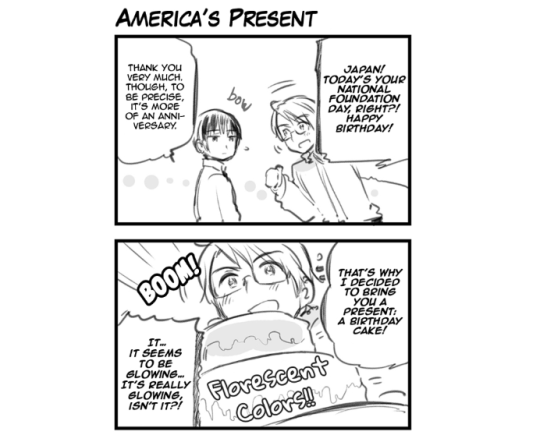
MORE WHOLESOME AMERICA PLEASE
Your wish is my command [x].
Why are Austria and Switzerland suddenly so
distant from each other? Okay their relationship was cut because of their boss,
but after that, why are they like cold towards each other like ex lovers or
something?
As far as I’m concerned, it’s
literally just that reason. There isn’t much of a romantic overtone (they were kids). It was more like a very tight partnership or camaraderie. I say this because Switzerland has flashbacks of the times he spent with Austria when he experiences similar moments of fondness with Lichtenstein.
He’s still bitter over the loss, having been discarded and mistreated by someone he trusted. Please remember that nations follow their bosses orders, so it’s not like Austria had any malicious intent [x].
Okay, just a quick question. Do you remember
that strip where Romano wanted his room of hopes and dreams cleaned? There was
a roman emperor looking statue on the front. Maybe he wanted to rule the empire
once? I’m feeling curious y’know.
That’s an interesting thought. My personal take on it is that it represents Romano’s failed hopes to live up to his grandfather’s legacy and inheritance [x].

You see this complex with him when he’s younger too [x].

Veneziano isn’t exclusive to failing up to this legacy either. Germany actually overestimates him when they first encounter each other in WW1 (Volume 1, Prologue).

Which character do you think is least accurate
to the country they are based upon?
Poland 100%

This post will use attachment
theory to analyze Russia’s attachment style – how he forms relationships with
others – in adulthood. Unlike the case of Romano’s characterization [x], where
you can argue that attachment theory is actually used, this post applies
attachment theory to Russia for the sake of amusement. Although, things
strangely make a lot more sense when you look at him from this
perspective.

Attachment theory focuses
on the relationship between a child and their caregiver. Central to the theory
is the concept of needs. A child relies on their caregiver to protect them,
provide for them, and care for them. If all these needs are consistently met,
the child develops a healthy attachment to their parents. This healthy attachment style positively
affects both the child’s personality and their capability to establish and
maintain healthy relationships as they grow older.
However, if needs are not met at all, or are sometimes met and
at other times are not, this inconsistency causes the child to develop unhealthy attachment styles. As
such, they develop unhealthy personalities and form unhealthy relationships
with others.
The Ainsworth experiment was where this theory
originated. To test the attachment styles between toddlers and their
caregivers, they would put them in a room together at first. After a while, the
parent would leave and the child would be left on their own. Then, a stranger
would be introduced to the room and leave after the toddler had a chance to react.
The last part of the experiment analyzed the toddler’s reaction once they were
reunited with their parents again.
Being in a “strange situation” – a foreign room, absence of a
parent, and meeting a stranger [danger] – created a lot of
stress in the child. Since children seek protection from their caregivers, this
stress and fear would typically cause the child to become upset and seek
reassurance from their caregiver. It’s a survival instinct that innately kicks
in.
Those with a secure [healthy] attachment style would
cry or be upset for a bit but would be easily calmed once their caregiver
soothed them. The healthiness of this attachment style means that the child
knows that the parent is there for them – they can be relied on to satisfy
their needs.

While there are several
different unhealthy attachment styles, only one is important for this
post. An organized/ unresolved categorization is where Russia fits best. A
child with this attachment type functions better when their parent isn’t
around.
This is typically seen in
children who are abused and view their parent (s) as a source of fear. The
parent’s care is inconsistent in that they provide for the child and the child
attaches themself to them out of an instinct to survive; however, the abuse also
makes the parent the enemy. In the strange situation experiment, these children
would often approach their parent with hesitation or be paralyzed with
fear.
As adults, their attachment
system is subtle and needs to be activated. If they’ve had past traumas, such
as abuse, then they become disorganized. This often involves dissociation and
slipping in and out of consciousness. So long as they have trauma(s), they’ll
be disorganized. Sometimes, they’ll act in ways that are completely dependent
on others (activation), and at other times, they’ll be completely detached – perhaps from
reality.


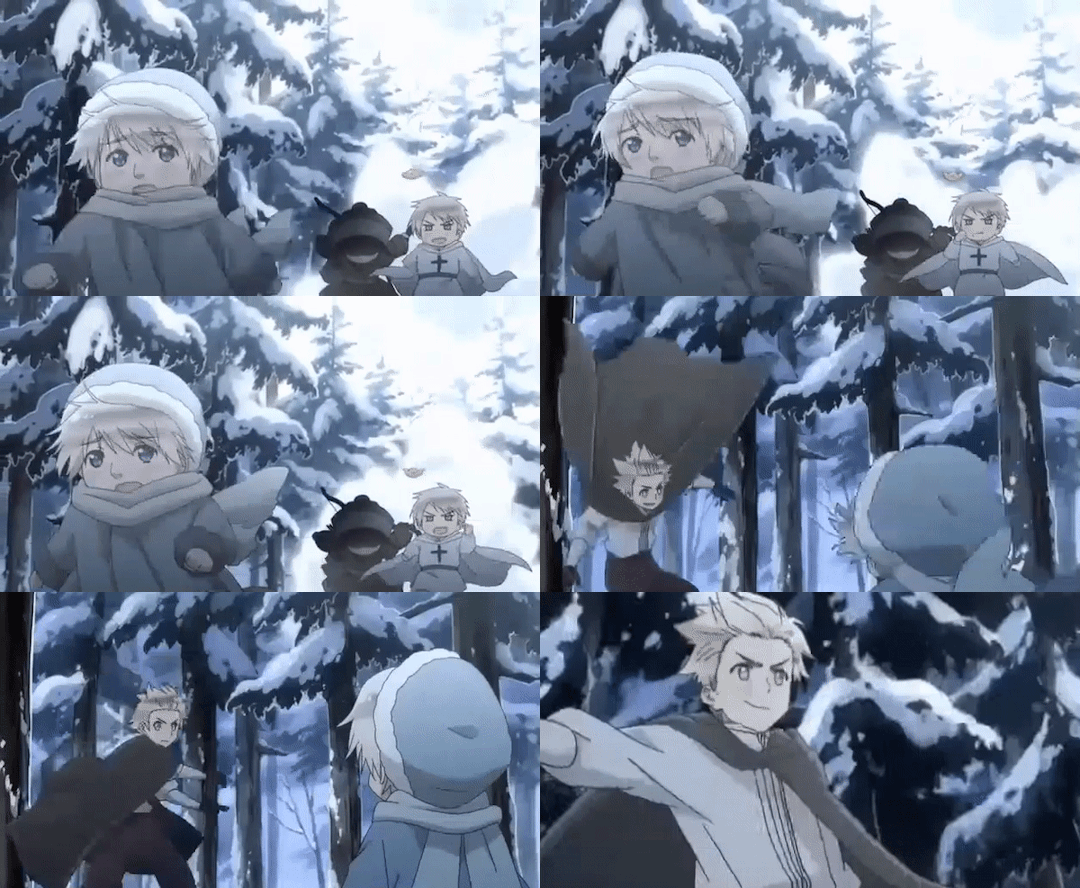
Russia’s organized/
unresolved attachment style, for the most part, stems from his relationship
with General Winter, who acted as his parent figure. The inconsistency of
General Winter’s care for Russia is seen in how he protected Russia from
invaders and yet attacks (abuses) Russia on an annual basis [x].


It’s far
from a healthy relationship. Not to mention that General Winter wasn’t always
able to protect Russia from countries who were accustomed to colder climates,
thus adding to the inconsistency of care that Russia received.


On the other hand, General
Winter wasn’t the only one who altered Russia’s conception of what a normal
human relationship is like. Having been conquered over and over again, in this
case by the Tatars, Russia normalized unequal power in a relationship.
This is why I believe that he
rejected becoming Lithuania’s friend when they first meet as children. They
didn’t have enough “power.” Notice how Russia’s environment has completely
misconstrued how he associates and attaches himself to others. What you’ll see
is that just like General Winter, Russia will repeat this abuse once he assumes
a position of power over others.


Point is, with a character
like Russia, there is no right and wrong. He’s not evil, and he’s not good. He
can’t have morals if he doesn’t realize that what he’s doing is wrong,
especially if it’s all he’s ever learned.
As such, Russia’s
understanding of friendship is warped. He believes that everyone is his friend,
including General Winter, his abuser.

A good example of this would
be when Lithuania points out to Russia that he shouldn’t really consider the
Allies to be his friends, given how they’re all ruled by self-interest. Russia
becomes dejected at this; he truly thought that they were his friends.


We also know that given
Russia’s particularly rough and bloody history, he’s carried a lot of trauma.
Ex: A happy New Year’s for him
was not freezing to death [x].


Ex: He’s had several dramatic
shifts in government [x].


Ex: His bosses have tortured him. In this example, they ask him to stop a tank with his body.


Ex: During the Stalinization
era, he’s tasked with building a canal with no food or adequate clothing while
his boss – presumably Stalin – eats in front of him and wears a parka [x].

As mentioned above, because
Russia was subjected to so much violence, it’s been normalized for him. While
this is obviously wrong, violence is how Russia’s learned to solve his
problems [x].

Although, this isn’t canon,
Russia’s heart falling out – to me – acts as a metaphor for the fact that he’s
never learned what love is, let alone experienced it. Yes, he has his sisters,
but they couldn’t always be around for him.

There are several instances
in the manga where Russia dissociates to cope with a stressful situation.
A common coping mechanism for Russia is to
imagine being in a warm place, a long-time wish of his [x].


He also appears to
disassociate when he’s threatened with punishment if he doesn’t build a steam
engine [x].

In response to Latvia’s
trembling, Russia starts shaking him around and then snaps his neck –
presumably killing Latvia temporarily. Notice how Russia doesn’t even realize
the scope of what he did [x].


While Russia is childish –
and therefore arguably detached from reality – there are moments where his
attachment system gets hyperactivated. His
childhood trauma is kicked into overdrive, and he becomes…terrifying.
Ex: When Lithuania outsources
himself to America after WW1, Russia isn’t exactly keen to see the latter off [x].

Ex: He’s commonly spotted
hugging and squeezing Soviet countries from behind to communicate his
possession over them/ desire to possess them.


Ex: He asks Moldova to call
him older brother [x].

Ex: In the present, Russia
wonders whether the ex-Soviet countries consider him as a friend.

Obviously, given the physical
abuse they were subjected to, they’re not very keen to be close to Russia. At
the same time, they also appear to realize that how Russia experiences his
reality and relationships isn’t normal. Again, he doesn’t realize that what he
did was wrong.
Just to put things into perspective, from a criminal law point
of view, Russia probably wouldn’t be convicted for his abuse, given that he
lacks the mental capacity – mens rea – to fully understand what he did.
In sum, Russia’s not an inherently
evil figure that maliciously inflicts abuse onto others. Instead, he’s a character
who has experienced his fair share of evil, and because it’s all he knows, he
inflicts this same evil on others. Of course, none of this pardons or justifies
his past actions, but hopefully it gives perspective into why he acts the way
that he does.


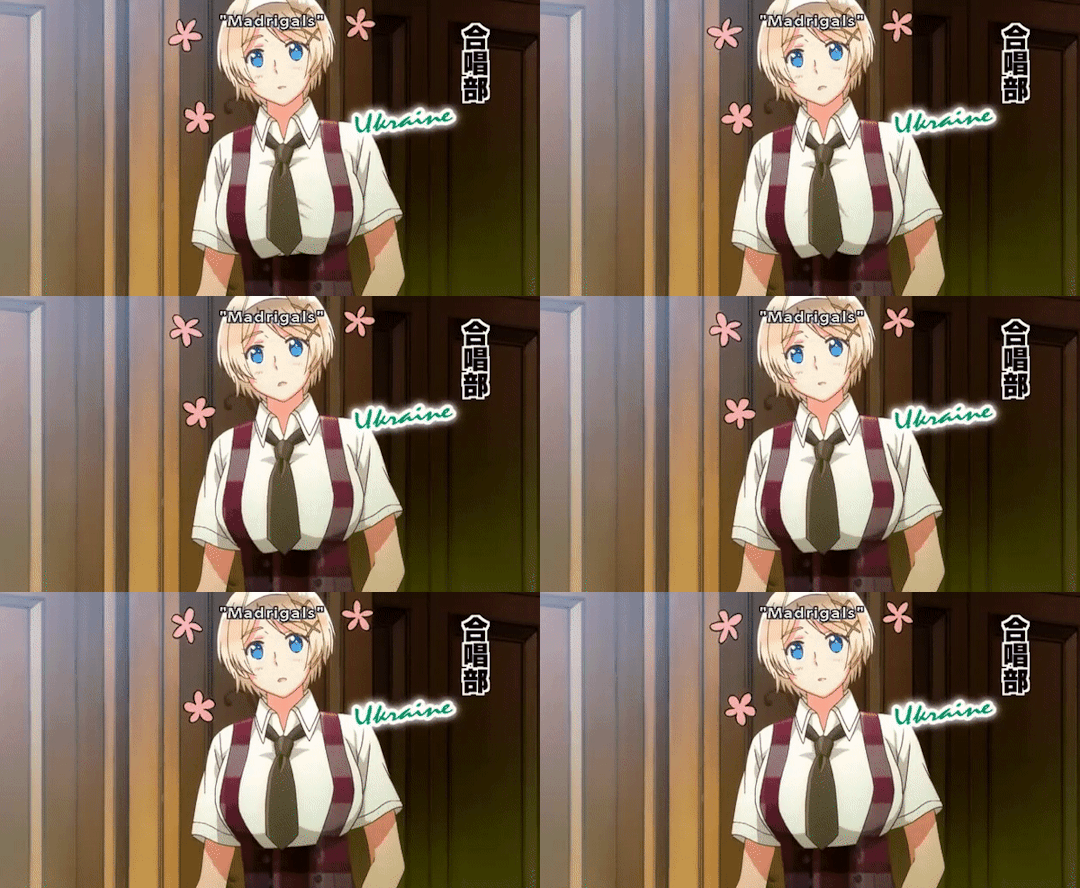
Misconception: She has big breasts because fanservice
Reality: She’s characterized this way since Ukrainian news supposedly
often focuses on breasts.
If anything, Ukraine is insecure about her breasts. It’s to
the point that she’ll wear restrictive clothing that prevents them from moving
too much [x].
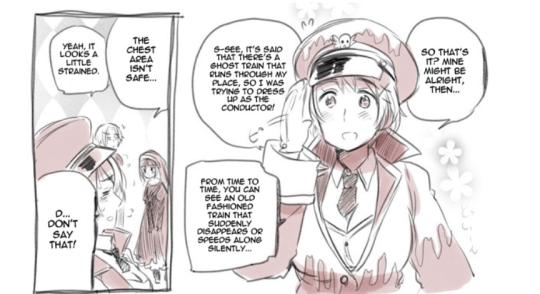
There’s also a strip in volume 2 titled “I hate my big
boobs!”
The ironic comic gag of this is the childhood advice she
gives to Russia. When fighting her enemies, Ukraine speaks to their hearts by
showing them her breasts– I’m dead serious here. [I can’t believe I’m actually writing this…]


She also advises Belgium to show off her breasts
to get noticed [x].

Misconception: Belarus hates her.
Reality: While Belarus would rather be with Russia, there
are moments where their sibling relationship shines.

Ex: They take a cute Christmas photo together. The fan
request is to see a happy Ukraine [x].

Ex: Another fan request wants to see Italy interacting with female nations. When it’s her turn, a weird shadow appears behind Ukraine.
Some have speculated that this is Belarus being protective of Ukraine,
especially because Belarus is included in the panel right above [x].

Misconception: She’s a weak crybaby.
Reality: While she is a crybaby, she’s not weak.
Ex: She cries when she has to leave the Soviet Union,
knowing that it’s the best for them politically, but perhaps not personally as
siblings.

Once again, the differentiation between a nation following
their bosses’ orders against what they want is shown as Ukraine remembers that
her boss forbade her from giving milk to Russia. Although the subject of the order
is trivial, it’s the fact that she’s been ordered to avoid her own brother
altogether that’s important. It takes a lot of resilience for a nation to
juggle personal and political lives.

Ex: She cries when her attempts to establish relations –‘friends’
– in the EU doesn’t work out right away.

Ex: In a Volume 4 character note, she’s described as “Russia’s
fearsome sister who will stand her ground to the last” [x].
Ex: A young Russia perceives Ukraine to be evil-minded when
she gives him his infamous scarf. The reason she does so is not only to keep
Russia warm. She also wants him to thank her by making Kiev successful.

Bonus facts:
She herself is poor as a result of her country’s poor
economic performance.
Ex: She delays paying her oil bill to Russia.

In the World Academy AU, she’s part of the Choral Club along
with the other Baltics.

Her nyo – male version – looks almost exactly like Russia [x].


I couldn’t disagree more.
These are just a few examples. Of course, I’ll
go into them in more detail later.
Magyar raised her just to be like him, which is why she uses
a more male language.

She has a complex over settling down, having previously
represented an equestrian hunting tribe, and has fears about her fighting
skills getting rusty [x]

Despite this, she’s described as “probably the manliest
person in the comic.”


She kicks ass.

Belgium’s ‘plainness’, as in she doesn’t stand out much in
comparison to surrounding countries, is what makes her more complex.
Any insecurity, weakness, or flaw adds depth to a character’s
personality.

As one of the most neurotic and incomprehensible APH character
to unpack, she’s the antithesis of plain.
She breaks Lithuania’s fingers during a date [x]. It lasted three minutes.

Her obsession with Russia became so strong that she forgot
her own language.

This lady packs a strong punch in the world of business and gambling [x].


It was also just recently revealed that she fears losing her
nationhood. Remember that personifications represent their citizens and only exist
because of them.
As such, since most people in Monaco’s country are tourists
(transients) she doesn’t have many citizens to call her own. It’s the tourists
who create the need for her existence.


The threat she faces is that if criminal
activity keeps increasing in her country, tourism rates will decline.

All in all, to say that the female nations are plain is
unwarranted. Even though some of them could definitely use more fleshing out,
they still have distinct personalities, quirks, insecurities, and weaknesses.
I think it’s important to recognize that it’s the quality of
their characters that matters most here; not the quantity of what we see.


To understand Russia’s brutal and violent side, it’s
important to step into his mindset, warped as it is. I go into this in greater
detail in another post [x], but to put it briefly here…
During his childhood, Russia experienced severe repression
and violence. As such, he wrongly learned to equate violence as both a show of
love and a solution to his problems. Not only that, but this violence continued
into his adulthood.

Ex: Russia considers General Winter and anyone he meets to be his friend. The key point to keep in mind here is that while General Winter
protects Russia, he also attacks him every year.


Ex: Russia naïvely refers to the other Allied powers are his
friends. Meanwhile, Lithuania has a more realistic view, stating that nations
operate on principles of self-interest.


Russia becomes saddened after hearing this.

Ex: Russia’s bosses are so notoriously cruel that they
torture him when they’re bored.

They once asked him to stop a tank with his own body.

Again, I’m not justifying any of what I’m about to show. I’m
providing an explanation and in doing so, I’m shedding light on how Russia’s
warped sense of mentality makes him incapable of differentiating between right
and wrong. In other words, he’s not able to possess any morals, despite often
having good intentions.
This amorality and confusion of what true friendship, or
rather, what a healthy relationship with another person entails ,are what caused
nations in the USSR a lot of pain, suffering, and fear.
What I don’t see a lot of people mention is that these nations
are fully aware of the fact that Russia is incapable of making these distinctions.
While they may be scarred and still fearful of Russia in present times, not all
of them hold this against him. There’s meaning and reason behind this abuse,
foul and irrational as the reasoning may seem to a normal person.
That said, let’s tie this back to the strips.
Nations under Russian control became servants to Russia.
They were indoctrinated into saying what Russia wanted to
hear. There was no tolerance for dissent.

Similarly, while Russia represented them at world
conferences, the controlled nations would either stay home or act as servants
during these meetings.

Just like Russia was forced to build a waterway in impoverished
conditions, Latvia was tasked with building an entire railway on his own.


Notice how Russia pushes down on Latvia’s head when he protests to this.

Prussia is noted to have worked unprofitable jobs during his
time spent in the USSR. [x]
Lithuania received many scars on his back. This can be both
as a result of violent historical events marking themselves on his body and
Russia physically causing these marks. It’s left open-ended.

The trauma of Russia’s abuse is enough to have him experience
flashbacks.
Ex: Lithuania recalls declaring independence from the USSR. As
he imagines this, he remembers Russia squeezing his shoulders. Still immersed
in the memory, Lithuania begins squeezing Latvia’s and Estonia’s shoulders
without realizing it. He squeezes hard enough to cause them both pain.


In a volume 2 character note, Lithuania is said to be rehabilitating
from his time spent in the USSR.

I’ve said this before, but Russia pushing down on Latvia’s
head is likely a metaphor for political repression. Latvia’s growth was stunted
in the process.

What is of more relevance here is how ignorant Russia is to
Latvia’s suffering. He doesn’t connect Latvia’s trembling to feelings of fear
[of him].
To get Latvia to stop trembling, Russia’s solution is to
snap Latvia’s neck. You can’t honestly tell me that this is the rationality of
a sane person. This isn’t calculated pain; it’s irrational.

The imposition of Russian culture was so strong that Belarus
once forgot her own language.

The tension and fear are still there, but most of it has to do with the fact that
Russia’s personality is still unstable and unpredictable. He perceived the USSR
as an opportunity to keep and make new friends.
You can imagine how hard Russia took this separation,
childish and unrealistic as his conception of reality is. He was all alone
again.
Latvia is still scared of Russia and is not keen to visit him
on New Years when invited.

Estonia also remains fearful of Russia but is not afraid to
stand up to him if needed.
Ex: Estonia confronts Russia when he believes that the
latter hacked his blog.

Ex: Estonia has no problem hanging up on Russia during the
2010 Christmas event.

Prussia holds a strong resentment toward Russia. The hatred
is so deep that he’ll puke if Russia even so much as lays a finger on him.

With all that in mind, I’d like to end this by pointing out
that while history may have divided the nations [personifications], they don’t only let this effect how they interact
with each other in the present. They may still resent and be fearful of him; however, it doesn’t stop most of them from making peace and acting as if they’re a unit again.
This is seen in the 2011 Halloween event, where most of the
ex-Soviet nations coordinated their costumes together. Perhaps this is one
stride closer to obtaining the true friendship that Russia had originally
sought in them.


Please note that Freud’s concepts are allegorical in nature and are not meant to be taken on a literal level…
Psychoanalyzing the German brothers’ personalities + childhoods
Psychoanalyzing America’s personality + childhood
The effects of being weaned off too early; in other words, gaining independence and autonomy at a young age.
Psychoanalyzing Belarus:
She clearly has a phallic fixation, and at least alludes to Freud’s notion of castration anxiety. The amount of times she talks about ripping off male genitalia/ anything to do with them is the biggest clue of this.
Psychoanalyzing Hungary:
Hungary also has a phallic fixation, except it’s more to do with Freud’s notion of penis envy (again, this is allegorical). The amount of times she talks about having male genitalia during childhood is the most obvious clue of this.

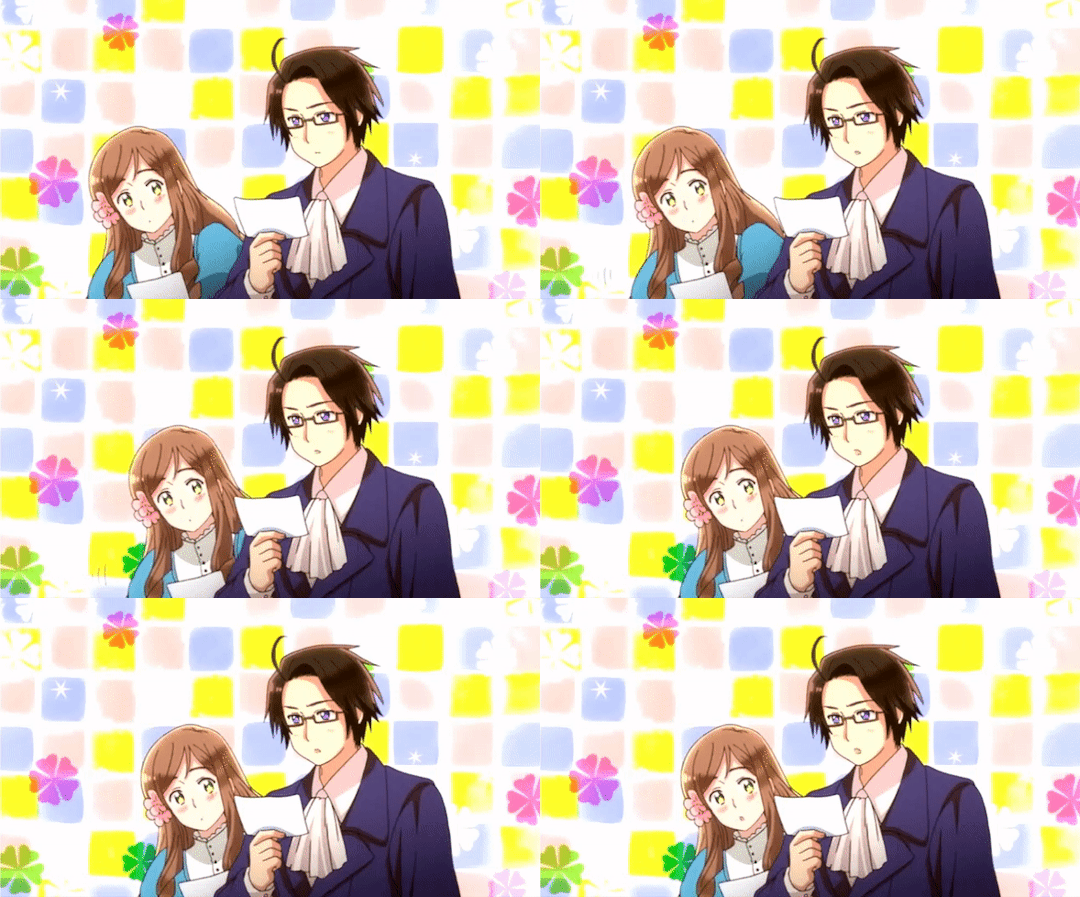
Marriage with the nations is a lot different than
traditional, primarily Western notions of it. It arises more out of a sense of
political duty, an arranged alliance or
partnership, and sometimes it just so happens that a romance forms between
the two countries involved.
Typically, what I’ve seen is that marriage at its core in
the series involves two countries merging together, either into a co-state empire,
a co-state kingdom, or a separate sovereign nation with distinct ethnic groups
and cultures. There aren’t any ceremonies, but rather, it entails a mutual dependence
and relative respect between two political entities.
That said, it’s important to mention that two countries joining
together via annexation does not fit into this marriage equation. There’s a
difference between being conquered and subordinated and forming a mutual
union. On the other hand, that doesn’t go to say that there’s perfect equality or
power balances in marriages between nations; Austria’s control over Hungary is
a perfect example of that.
All right. Let’s go over some examples of marriages, shall
we?
Austria’s character is known for his quirky tendency to
solve his problems through marriage.

First, there was arguably his early ties with Switzerland. I’m
counting this as a marriage mainly because it involves the use of the word
partnership and honeymoon (albeit jokingly).

Notice how as soon as one tries to control the other, the partnership ends. While Switzerland does
reveal some fondness over his early memories spent with Austria, there’s
nothing particularly romantic about it, especially given the fact that they
were young children at the time. Again, marriage for them is essentially the
joining together of nations.
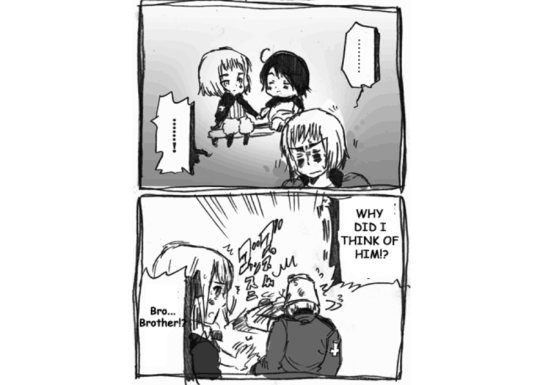
Next, Austria marries Spain via the Hapsburgs Monarchy.
Here, you actually see a hint that Spain harboured romantic feelings for
Austria during the Austrian Wars of Succession. It was a political merger
that likely later involved the development of some intimacy between the two.
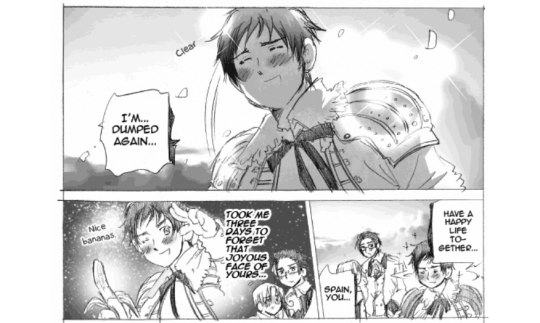
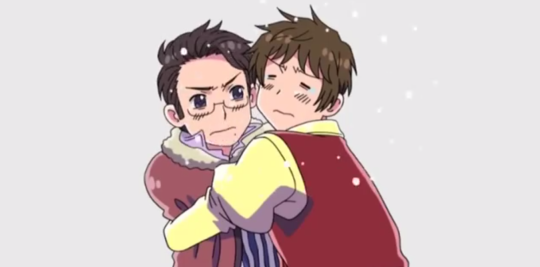
Then, you have Hungary. After the dissolution of the Austro-Hungarian
empire, it’s very heavily hinted that Austria still bears feelings for Hungary.
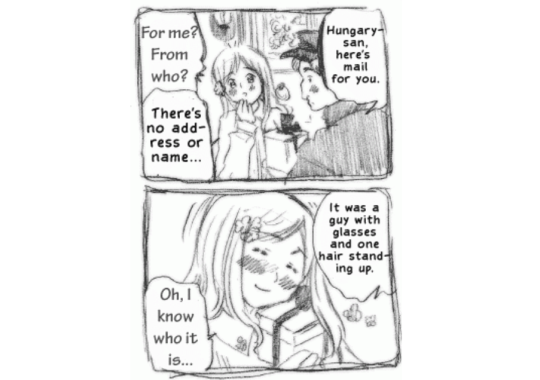
In Buon San Valentino, Hungary receives roses from an anonymous man that’s
conveniently described as having glasses and one hair sticking up.
On the other hand, there are marriages that involve little
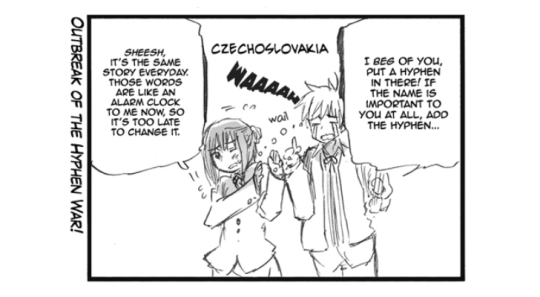
or no romance at all. Take Czechoslovakia for example, two countries united by a
hyphen. Yes, that’s an actual joke in the series.
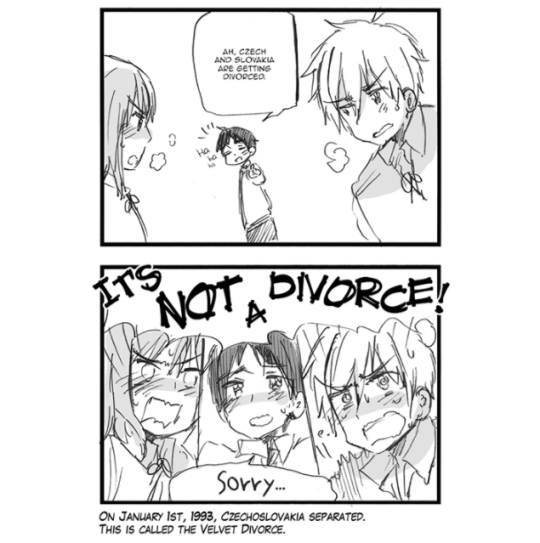
Still, what’s interesting is that when Bulgaria talks about
their separation in terms of a divorce, they’re quick to deny the claim, mainly
because of the romantic connotation marriage carries.
How I interpret this is that the two may have developed
feelings, but never told each other.
Bulgaria bringing up the topic of marriage in a casual political
sense merely may have caused them to get defensive because of these unvoiced feelings.
This isn’t confirmed, so don’t take it at canon value.
I know I’m repeating this, but it’s important that I make
this as clear as possible:
Marriage = a merger between two countries.
I say this because I’m going to apply these rules to Belarus
and Russia. Belarus wants to marry Russia and loves him to the point of obsession.
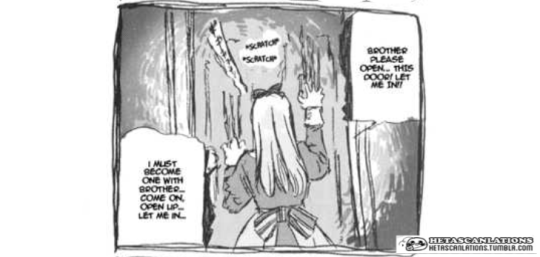
She’s even forgotten her own language at one point in favour of learning Russian.
But, does it ever say that Belarus loves Russia in a
romantic way?
No.
What it does say is that she wants to “become one” with him.
Sounds like a merger if you ask me.
When Belarus says marriage, she wants their countries to
join together. There’s nothing romantic about it, so hopefully this stops
people from misinterpreting their relationship.
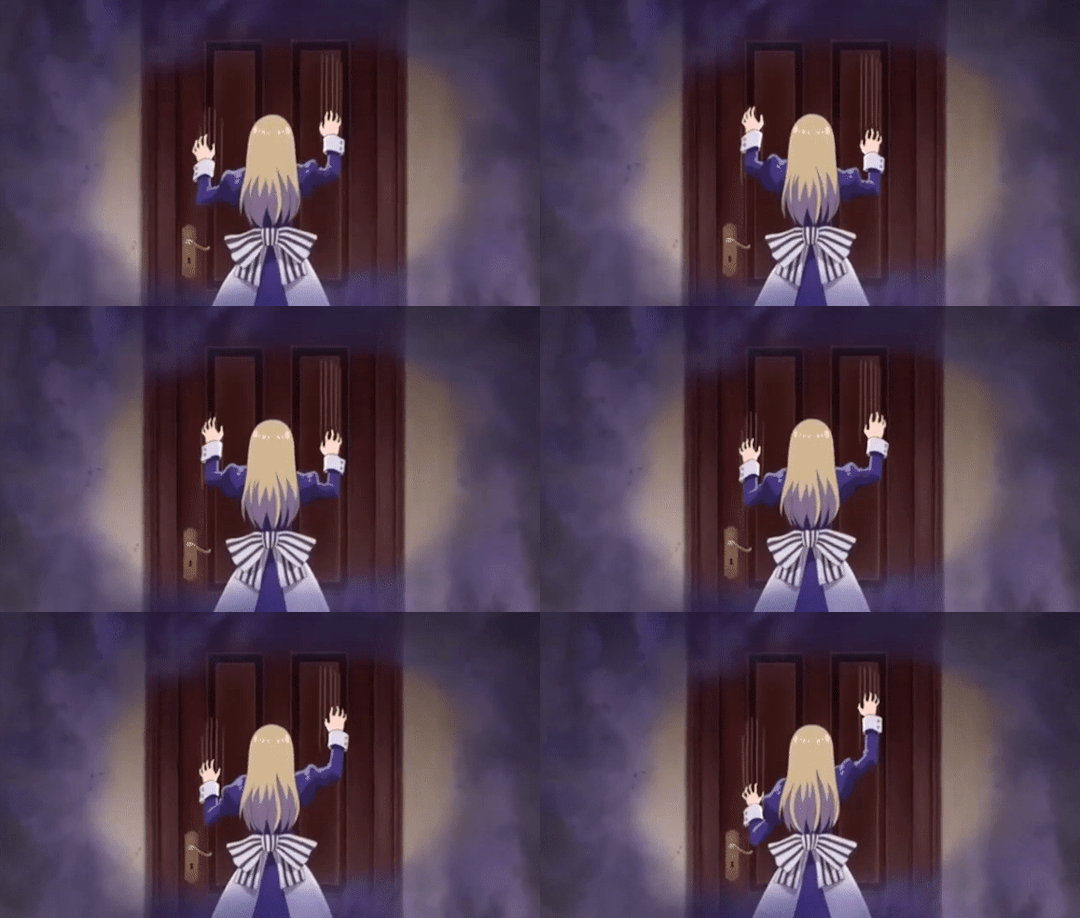
In summary, marriage between the nations seems to involve a political
merger between two countries (partnership, co-ruled kingdom/empire). It can have
a romantic element to it, but this isn’t always the case.

For comedic value, Belarus’s
obsession with her brother is exaggerated. However, what you’ll find in the
series is that history and puns are often molded together. In particular,
Belarus’s name, Natalia/ Natalya, may serve as one of those puns.

History time! Falling back
to the late 17th century, Russian ruler Peter the Great ascended to
power. He was known for, well, being great. A lot of it had to do with reforming
Russia’s culture, as due to previous oppressive Mongol rule, the nation had
missed out on a lot of the cultural and artistic achievements that occurred in
Western Europe during the Renaissance period.

Basically, it was a
modernization project that involved bringing in Western ideas of art, politics,
and science. For example, many Russian aristocrats learned French dress and
spoke the language too.

What also made Peter great
was that he had transformed the Tsardom (the Russian kingdom) into an extremely
successful and powerful imperial empire. A lot of the structures in Russian political
institutions today still echo some of the traditions from these initial
reforms.
Peter arguably represents
the pinnacle of Russian achievement; again, all that is great.
Now, what’s interesting is
that Peter had a very supportive sister named Natalya (Kirillovna Naryshkina).
She and Peter shared a close
relationship, one where it’s reported that she would like anything that her
brother did. Sound familiar?

Side note: I’m aware that Peter
eventually co-ruled with his half brother, Ivan. For the purposes of this post,
it’s not that important. Given that the first part of a Russian name is their Christian
one, many males and females will share the names of Saints. It’s more about the
personalities of the figures who held the names that I’m looking at here.
Belarus, Natalya, is also extremely supportive of
her brother, going so far as to want their countries to unite into one. She
will agree with almost anything Russia says, perceiving him as the greatest
nation out there…
She wants to remain with him
forever.

This obsession with Russia
and its culture has even caused her to forget her own language at one point.

Notice how Belarus’s love
and devotion for Russia echoes the human Natalya’s love and devotion of Peter,
who’s highly regarded as representing the greatness of Russia.
 Ellawritesficssometimes