First, I just want to thank you both for participating. I really
appreciate it 😀
My theory accounts
for this:
1) The nations are
cultural personifications
“Usually, when the culture or the country’s personality dies/ disappears, the country would gradually disappear or entrust him/ herself to the country that takes over him/ her.
There are also cases that him/her is not a country but continues to live leisurely as a representative of a region.”
Source: Hetarchive, It’s a Treasure Box of
Countries.
The nations are cultural personifications. They
exist when people unite under a common cultural identity. As such, this may
account for the reasons why there are separate personifications for Ancient Egypt
and Greece and Ancient Greece and Greece etc. However, I do agree that the
rules of this are arbitrary and inconsistent if you look at nations like China
and Japan, who don’t have ancient counterparts. Which brings me to my next
point:
2) The nations are
described as “strange beings.”
Because of this, not everything that happens can be explained with an ascribed logic. It’s canon for nations to arbitrarily last
for as short as a few days to 1000s of years. Nations can also keep living and
change their titles over time. For example: Hungary was originally born as an equestrian
tribe and Prussia was originally born as a catholic order.
Therefore, it’s not an easy fix because no rules
were broken.
Source: Hetascanlations, World Stars
Chapter 1 + Hetarchive, Notes & Etc + Volume 2 Character profiles.
On the other hand, given that World Stars is
recent, the “easy fix” argument can still be countered. Himaruya’s been hinting
of the Holy Rome = Germany connection since the first original web chapters
(2006).
See: Hetare 4, Pact of Steel + Hetare 5, Lietuvis.
My theory also
accounts for this:
1) France never killed
Holy Rome in the deleted strip.
He only notified Italy that Holy Rome had died.
Source: Hetarchive, Holy
Rome is no more
2) Cultural personifications
x 2
I’m going to sum up my main points, as I’ve already
written and explained this in greater detail:
Basically, because the nations are cultural personifications, the switch
from Germany to Holy Rome didn’t consist of a significant change in culture.
They both represented the German people. Germany represented the consolidated nation
of the previous sovereign states that Holy Rome represented.
Holy Rome didn’t die right away after his dissolution–this ties in
with the fact that as long as the culture exists, the personification won’t die
right away.
Source: Hetarchive, It’s
a treasure box of countries + Hetascanlations, World Stars Chapter 187.
Holy Rome became sick because of fragmentation
and disunity but nonetheless existed because of the culture. This is consistent
with the rule where nations get sick if their economy or political situation
isn’t stable
Source: Hetarchive, In
just two minutes you can grasp the exterior of the European Economy.
This then escalated to him being on his deathbed after dissolution. On
top of the culture still existing, it’s still possible for personifications not
to die even after their culture/ personality (essence) disappears
Source: Hetarchive, It’s a Treasure Box of Countries.
The switch from Germany to Holy Rome is consistent with the rule of
personifications being able to change titles.
The purpose of this post is to delineate the fact that
nations that have cultural influences on each other are not biologically
related. While the influencee may adopt traits from the influencer in some
cases, it doesn’t always constitute a biological relation. What’s even more
confusing is that there are specific adopted traits that the nations use to
mark a biological relation.
I know this sounds obscure, but it’ll make sense when I go
through some examples.
Romania and Bulgaria
vs Romano and Veneziano:
A gag with Romania in the series is that he claims that he’s
a descendant of Rome, and, therefore, an Italy brother.
However, even though Rome did, in fact, instill significant
cultural influence in Romania, Romano is quick to reject this claim. He
identifies the presence of a curl as proof of biological lineage from Rome.
Remember that Rome is said to have had many grandchildren and adopted
grandchildren.
Source: Hetascanlations, World Stars Chapter 163 + Hetarchive (Bamboo Thicket, eng trans., October 30th, 2014).
Later, we see the same rejection occur with Bulgaria, who
has Roman ruins.
Source: Hetarchive (Bamboo Thicket, eng trans., Oct 22nd, 2014).
England, America,
Finland, and France: (+ more)
As I’ve stated before, England and America are not
biologically related. England is stated to be the fourth and youngest sibling
in his family, consisting of Wales, Northern Ireland, and Scotland.
Source: Hetarchive (Bamboo Thicket, eng trans., Aug 4th 2010).
In the Battle for America, it’s explicitly stated that
England becomes America’s brother. We also learn that because America was a
“melting pot” of several cultures at the time, he inherited certain physical
traits from his colonizers.
Source: Hetarchive, The Battle of America.
For example, in the trio’s feud to make America their little
brother, Finland notices that America looks like him.
The distinction between cultural influence and blood
relation is necessary otherwise it would lead to a slippery slope where all
nations are related to each other. So, unless explicitly confirmed by Himaruya,
nations aren’t related to each other regardless of their histories. Arbitrary
as the biological relations may be, you work with what’s given to you.
Lastly, I’ve seen people comment that there’s a confirmed
biological relation between America and Finland. That’s not the case. Finland says that America has some genes from his people. Remember that America emerged as a personification representing several cultures. The genes are the traits, but because America has so many cultural influences, they don’t consider each other to be blood-related.
The fact that America didn’t identify with Finland as a
family member in the first place is telling of this cultural influence, as well
as the fact that Finland offers to become a father figure for America, who in
the context of the strip had been feeling jealous of kids who get presents from their fathers on Christmas.
Source: Hetarchive, Christmas 2010 Event.
France and Canada:
Similar to the situation with England and America, Canada
inherits France’s hair.
Source: Hetascanlations, World Stars Chapter 192.
France, America, Canada, and Seychelles vs England, Hong
Kong, India, Australia, New Zealand, Hutt River, Sealand, and Wy:
We learn that France’s cultural influence is a dominant trait
that prevents America, Canada, and Seychelles from inheriting England’s bushy
brows. Although, interestingly enough, Seychelles had initially been designed
to have one thick eyebrow and one bushy one to represent English and French influence.
Source: Hetarchive, Seychelles profile.
Meanwhile, without French influence, Hong Kong, Australia,
New Zealand, Hutt River, Sealand, & Wy inherited the bushy brows.
Source: Hetarchive (Bamboo Thicket, eng trans.,Nov 12th 2013) + Hetascanlations, World Stars Chapter 269.
Of most importance and what I can’t stress enough is the
example of Hong Kong. It proves, with the most clarity, that cultural influence
does not have a causal relationship with biological relation.
After becoming English territory, Hong Kong’s eyebrows grow
bushy from the resulting English influence on his culture.
Source: Volume 6, A wise man has no specialty.
It’s said that England put a curse on him to have his eyebrows become so thick, but you also have to remember that England’s eyebrows themselves are cursed. The implications would be that his influence caused the curse to pass on.
Source: Volume 5, Special Booklet.
Point is, as far as Himaruya’s concerned with his
characterizations:
France tries—emphasis on tries—to bond with
Germany over fashion [x].
France offers to be there for Germany, only to
bolt when it comes to EU matters with Greece [x].
They console each other like a de facto couple
when England leaves the EU [x].
As most people already know, the nations’ body parts represent
different geographical landmarks/ land within their territory..
What I’ve found particularly interesting about Hetalia is
that it plays around with the idea of Cartesian Dualism, conforming to its
rules at times, while at other times subverting it.
The basic and essential principle is that the mind and the
body are two separate things. Himaruya, on the other hand, blurs those
boundaries.
I’ve broken down representation of this dualism into a model
consisting of three categories.
1)
Physical body part = geographical elements
2)
Geographical element –> personality influence
3)
The sociological collective –> bodily influence
Let’s break down these categories.
Physical body part = geographical elements
Fairly self-explanatory. As mentioned above, geographical
elements of the nation are reflected in the personification’s body.
Source: Comic Diary 2, Hetarchive.
Geographical element –> personality influence
The body in question here is the
body of land as opposed to that of the personification’s.
In these instances, the geography
and/or climate of the country affects the personification’s personality.
Ex: Iceland’s volcanoes and cool
weather are reflected in his canon hot and cold personality. He’s quick to rise
with anger but just as quick to cool off.
Source: World Stars Chapter 114, Hetascanlations.
The sociological collective –> bodily influence
This last category has more to do with the collective unconscious
of the society in question.
Ex: Both Italy brothers’ curls represent the “sexual
something” of Italians and function as an erogenous zone.
Source: Notes and Etc, Hetarchive.
Ex: Austria’s mole is said to have a similar function to the
Italy brothers’ curls.
Source: Hetarchive (Bamboo Thicket, eng trans., June 26, 2008).
My best guess is that this is a reference to Freud, who
believed that humans at their core are primarily sexual and aggressive beings
and that civilization exists only by repressing these urges into the unconscious mind.
Lastly, although it doesn’t exactly fit into this category, Austria’s glasses also represent his “musical something.” It would stand that this is a larger reflection of Austrian culture considering that classical music is something they are known for.
Source: Hetarchive, Notes and Etc.
In sum, while I understand that Himaruya likely didn’t have
an intent of tracing out and implicating Cartesian Dualism into his characterizations,
it still provides us with an interesting lens to analyze his work. It also proves
that a lot more thought and consideration was put into the characters than he’s
given credit for.
This doesn’t include all of them, but Comic Diary 2 is the
strip you’re looking for.
Source: Hetarchive
No worries. I’ve briefly touched on it but not in its
entirety.
I’ve boiled it down to three main categories:
Involuntary circumstances:
This occurs when a nation is conquered and is forced to live
with their conqueror/ annexer.
Ex: Chibitalia
and Austria under the HRE household.
Source:
Hetarchive, Chibitalia (Main storyline.)
Wartime Circumstances
When administrations crumble and there’s no other place to
go…
Ex: England hosts
France during the Vichy Regime.
Source: Volume 5,
Liberté, Égalité, Fraternité and…
Employment
Circumstances
Due to their dire financial circumstances, Lithuania and
Romano move into America’s house and end up working for him.
You could argue that this is in a way, involuntary, but I
would say it’s more along the lines of necessitated.
Source: Hetarchive/ Hetascanlations, World Stars Chapter 58 + Lithuania’s Outsourcing Series
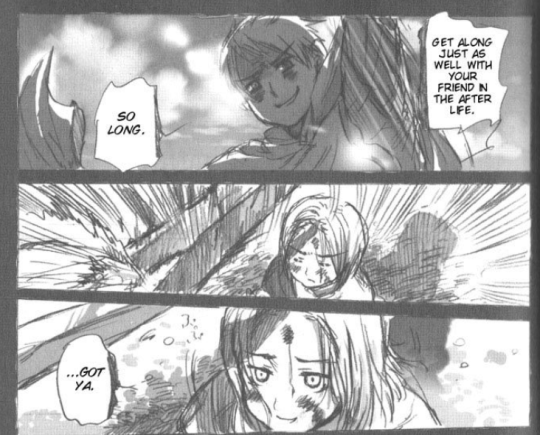
1. You can SO die. #not cool
Millennials, stand aside. We’ve been wanting to die for centuries. Unfortunately, we’re totally immortal.
“I remember death so much it feels more like a memory.” LITERALLY!!!!
Work’s giving you’re a migraine? Try being shot in the head a few times.
2. You’re FOREVER Alone
Forget no-strings attached. No-strings is our way of life.
Not aging makes us virtually undateable to the majority of the population. Nothing says major turn-off like being perpetually baby-faced…hang in there, Latvia!
3. You’re ALWAYS working
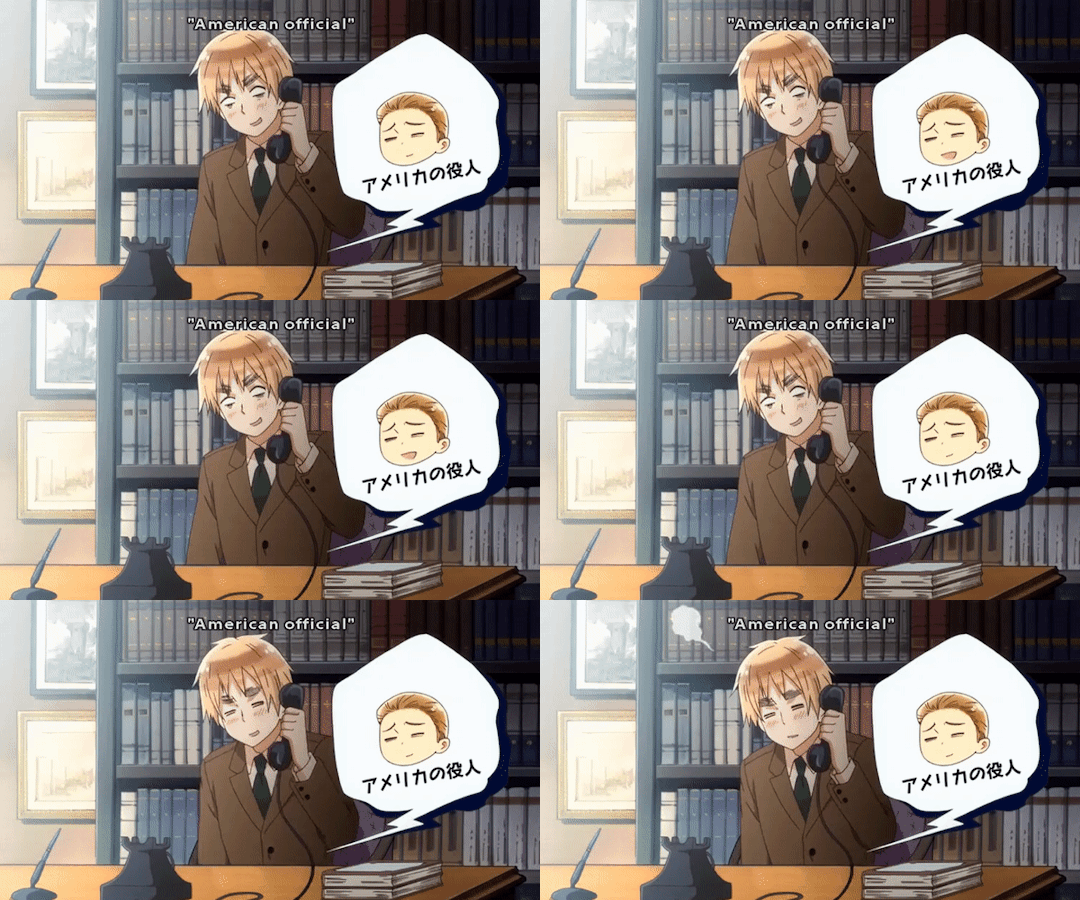
Thanks to our bosses, we have an inhumane amount of paperwork to do every day.
Still waiting for France to unionize us and pull off a strike. Any century now…
4. You can NEVER escape your ex
Unlike humans, breakups can mean a number of things to us.
What’s more AWKWARD than having your ex-colonial overlord as your colleague?









 Ellawritesficssometimes