Q & A

image

Do you have a theory on Germania? It seems weird
that Rome is still his friend in heaven if he did kill him. Also Himaruya wrote
something along the lines “it’s ‘believed’ he killed Rome” so… he
didn’t really kill him?? Also he says they’re friends, but later says they hate
each other, with Persia and Germania being all buddy-buddy taunting Rome. And
why is he Prussia and Germany’s dad when Rome is a grandfather?

–  Yes, it is weird. You are right that the matter
of whether Germania really did deliver a fatal blow to Rome is left open-ended.
It’s neither a yes or a no.

– That’s also true. His character notes do tend to
contradict each other. I covered this more in detail in my characterization
post of Rome, although that was written after you sent in this ask 😊 [x]. 

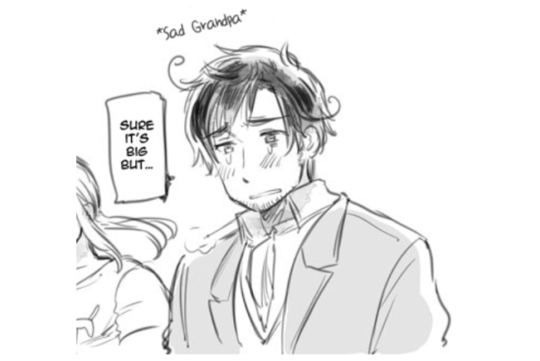
– That last question isn’t necessarily true. The
relations between them is incredibly wonky. Germania’s referred to as both the
father and grandfather of Germany in different pieces of canon material. Search Hetarchive’s profile of Germania. 

Image: Grandpa Rome’s Visit Home, Hetarchive. 

image

I genuinely learn so much more about the manga
after you analyze it and uncover those hidden messages that have been embedded
into Hetalia ❤ Any chance you know a little something about India and/or
Thailand? Thanks anyway!

I’m glad! 

I do know some things and anyone can too if they search the relevant character tags on the English translation
of Bamboo Thicket, provided by Hetarchive! (ah geez, I sound like a
telemarketer…)

Not all information can be found on the blog, though! 

Just for fun, here’s one
fact each. 

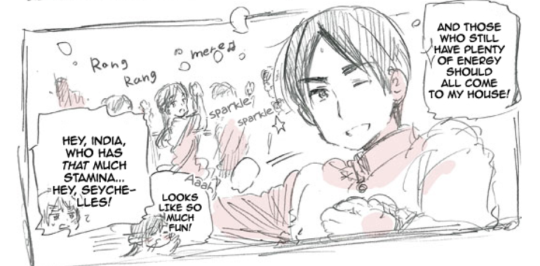
India: He has
considerable stamina.

Source: Halloween 2011 Event, Hetarchive. 
image

Thailand: He’s somewhere around 22
years old according to Himaruya.

Source: Hetarchive (Bamboo Thicket, eng trans., Nov 26th, 2010). 


I got a question about the U.S. states. I
know they are not officially canon, that’s not what I wanted to ask. In the
sketch Hima showed what they’d be like, am I mistaken or did he confirm that
they would not be America’s children but his relatives, like Germany’s states?
And that they were all male (brothers I think the state shown said)? I may be
wrong though, it’s been awhile since I seen it, but my friend got into it with
me over whether it disproved the whole his children thing.

Note: Originally in my
State-talia post, I accidentally cropped and posted an image from the question
below in the same Q & A where Himaruya created a hypothetical dialogue with
the states. Nothing about the information I gave or said was incorrect (again,
total accident and you can verify in the initial reblogs to see that I haven’t
changed what I said), but the image was misleading (it had to do with computer
programs/software being personified). Still not sure how that managed to slip
past me
[x]

Anyways, no. They’re not personified. We got a dialogue of
what it would be like if they existed. There is no confirmation of their
relation. All we know hypothetically is that while some possess “mixed feelings,” they still “love America very much.”

Source: Hetarchive (Bamboo Thicket, eng trans., Jan 10, 2015). 

image

image

Tbh, I don’t even know
where to start with this lol. This blog is pretty much dedicated to proving
that whole assertion, so I would recommend checking out my post directory 🙂


People have yelled at me before for me asking
for them only to give me proof for things, since i dont believe just from
someones word. No one ever wants to give proof and gets angry from me not
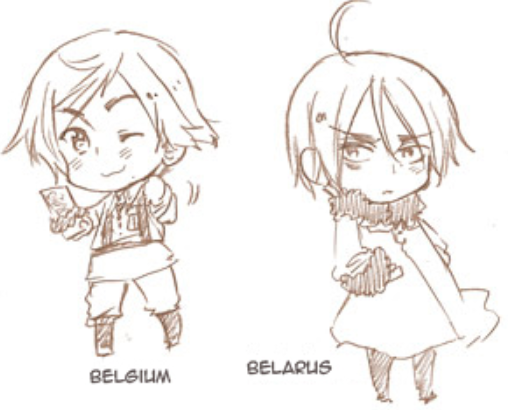
wanting to believe them until I get proof. So I’ll ask you, does Belgium have a
cannon nyo? And does France have a canon mother (Gaul i think it was)?

I’d suggest removing
those people from your life. If they can’t respect you, then they’re not worth
your time.

Belgium has a canon nyo. Just remember that the nyos that have made appearances in the manga don’t exist
in the same world. There is no canon Gaul. While it’s still not canon, Himaruya
has pondered over the idea of the Kingdom of the Franks being a parental figure to
France.

Source: Hetarchive (Bamboo Thicket, eng trans., April 1rst, 2011 + May 6th, 2008). 
image
image
image

Germania:

Most of these can also be applied to other Germanics, but
for the purpose of this post I’ll only be focusing on the similarities between
Germany and Germania.

Emotional stuntedness
+ awkwardness

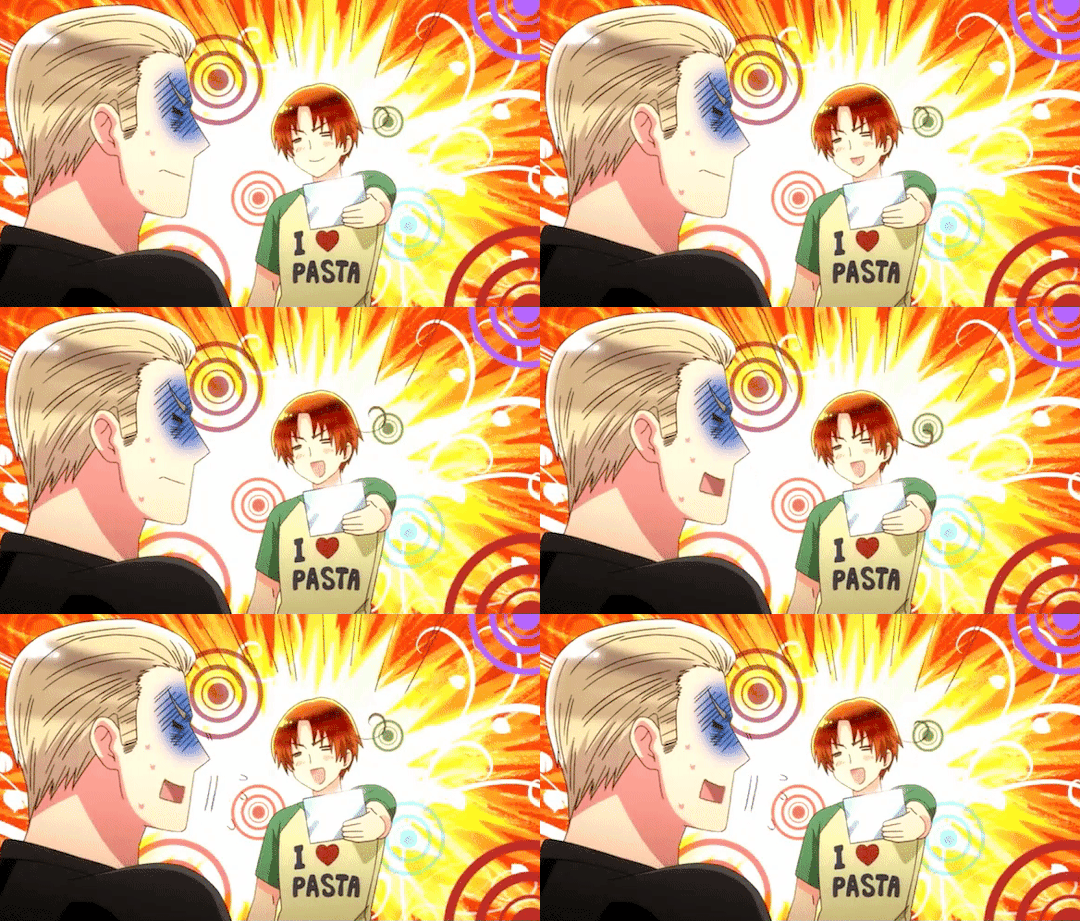
Both Germania and Germany are unable to smile.
Well, at least expressively and regularly.

image
image

Source: Hetarchive, Christmas Event 2010 + World Stars chapter 7. 

image

Source: Hetarchive (Bamboo Thicket, Eng trans., Feb 24th, 2015). 

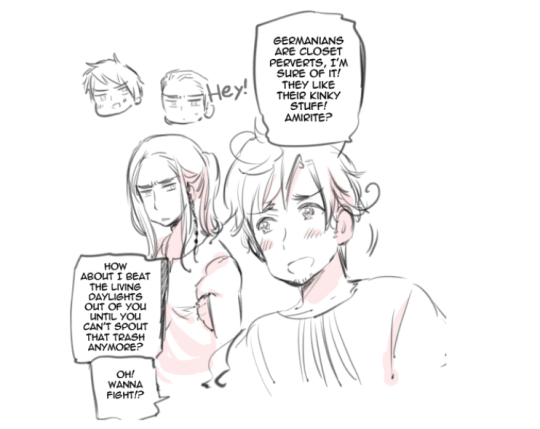
Perverted trope

While I’m not exactly favourable of this, there’s still the
running joke that Germans are closet perverts.

image
image

Source: Volume 1 + Hetarchive (Bamboo Thicket, Eng trans., Feb 6th, 2015). 

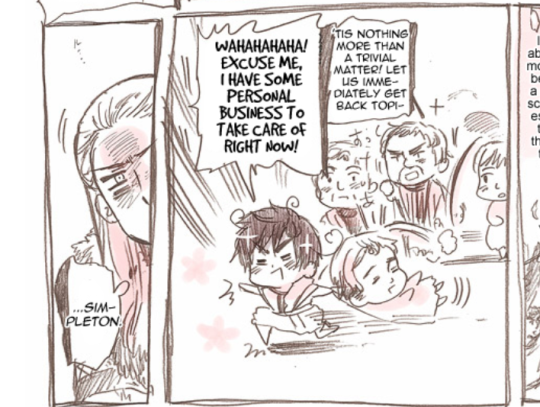
Bridge between
nations: the organizer and ‘Mom of the group.’

Both bridge the gap between chaos and civility. In other
words, they organize those around them and keep them in line.

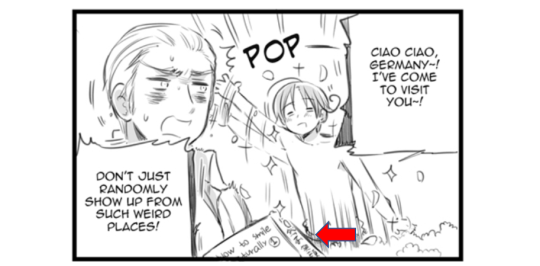
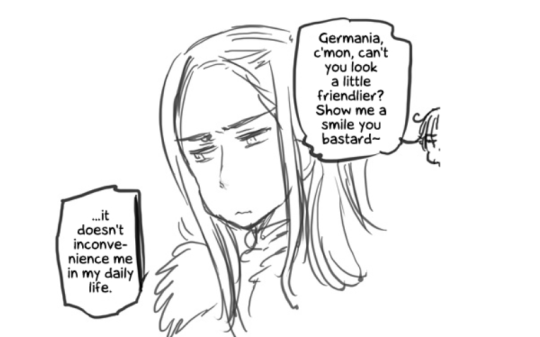
Ex: Germany demanding order at a world meeting vs Germania
making a snide comment when a meeting in Rome goes awry.

Source: Volume 1 + Hetarchive (Bamboo Thicket, Eng trans., May 3rd 2011).

image
image

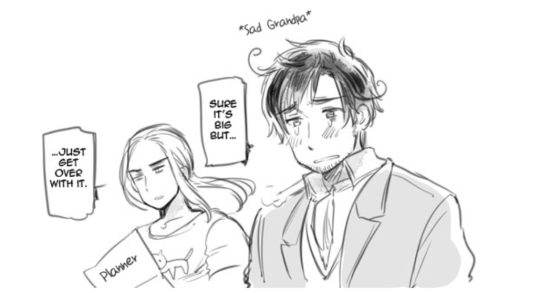
Ex: Both are adept planners.

Source: Hetarchive (Bamboo Thicket, Eng trans., Oct 20th 2013). 

image

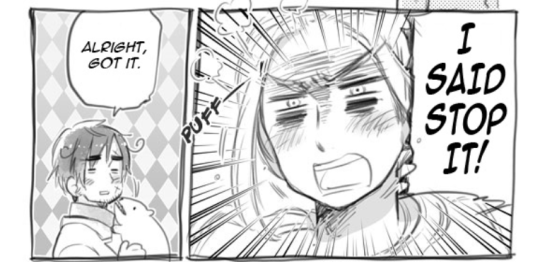
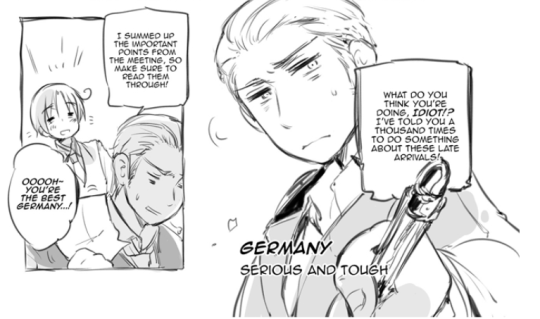
Ex: Both have an Italian to look after. This often includes
calming the latter down after an emotional outburst.

Source: Ibid + World Stars chapter 1

Rome + Germania

image

Italy + Germany

image

There’s also the tendency for the Italian to be late. 

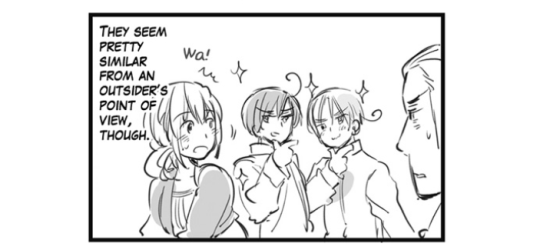
Lastly, it’s obvious that they look pretty much identical
save for hair length.

Ancient Rome and the
Italy Brothers

Both brothers inherited the signature curl and a love for
women. Notice the positions of the curls and then compare them to Rome’s (i.e., one curl for each brother). 

Source: World Stars Chapter 20 + ibid 

image
image

The split between them lies more with the expressions they
make.

Italy is the softer, more relaxed side of Rome, while Romano—while
also considerably vulnerable and soft—bears a more abrasive external shell; that is, when he’s not being a crybaby. 

The best way to go about this is to just show comparisons.
Notice how each Italy brother uniquely adopted specific expressions from Rome
that tailor well to their respective personalities. 

Source: Vol 1 + Vol 2

image

Source: Vol 1

image
image
image

Misconception: He’s
dead and no longer exists.

Reality: He is
dead, but he still exists in heaven.

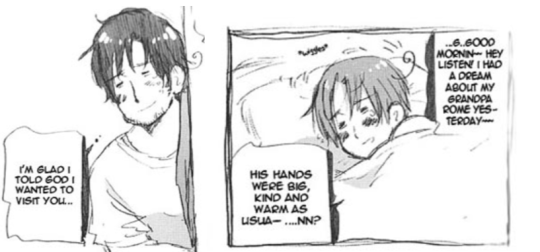
Ex: He once tied
up God so that he was able to visit his grandsons. 

(Source: Together with Grandpa Rome, Hetarchive.)

image

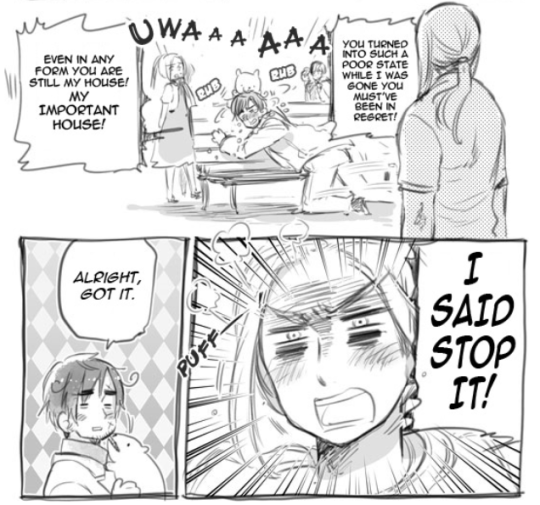
Ex: He visits
Earth with Germania, only to find out that his home has since been replaced by
a bench.

(Source: Grandpa Rome’s visit home, Hetarchive). 

image

Misconception: He
and Germania hate each other and are grave enemies.

Reality: It’s not
so much hatred but rather a strong one-sided dislike on Germania’s part. A lot
of canon information is contradictory, so it’s tricky to piece together.

Ex: A character
note for Germania: “Has a taciturn but rough personality and dislikes Rome
greatly.”

Source: Bamboo Thicket (Eng trans., Hetarchive, May 6th, 2008). 

Ex: Germania is
easily irritated by Rome.

Source: Bamboo Thicket (Eng trans., Hetarchive, Feb 6th, 2015). 

image

A condensed explanation of their relationship would be
childhood rivals who teased each other, a disgruntled Germania becoming Rome’s
bodyguard + occasional teasing, tension, Germania probably—although unconfirmed—giving
the finishing blow that ended Rome’s life on Earth, and reconciliation in
Heaven.

Ex: Childhood
teasing.

Source: Bamboo Thicket (Eng trans., Hetarchive, Feb 24th, 2015). 

image

Ex: Germania
acting as Rome’s bodyguard and making a snide comment about the latter.

Source: Bamboo Thicket (Eng trans., Hetarchive, May 3rd, 2011). 

image

Ex: The
unconfirmed status of whether Germania truly killed Rome is mentioned in this
character note “A brave man who is said to had [sic] defeated Rome, although
the truth is hard to find out.”

Source: Bamboo Thicket (Eng trans., Hetarchive, May 6th 2008). 

Ex: The two visit
Earth together. Germania consoles Rome, who became distraught after learning
that his home no longer exists.

Source: Grandpa Rome’s visit home, Hetarchive. 

image

Misconception: He
doesn’t care about Romano.

Reality: While he
may have devoted more attention to Veneziano, he very deeply cares about Romano
too.

Ex: Sketches indicate that Himaruya may have intended for them to have a more
tangible family dynamic.

Source: Bamboo Thicket (Eng trans., Hetarchive, May 1rst 2011). 

image

Ex: Rome visits
both Italy brothers in their dreams [x]. 

image

Ex: Romano bursts
out into tears of happiness when Rome visits him from heaven. The meetings don’t
occur often because Romano gets embarrassed by his crying.

Source: Bamboo Thicket (Eng trans., Hetarchive, April 5th 2011)

image

Misconception: He’s
not biologically related to the Italy brothers.

Reality: While
the labels attributed are awkward due to the absence of a traditional birth
process, the three of them are, in fact, biologically related.

Ex: Rome is said
to have many grandchildren, both biological and adopted.

Source: Bamboo Thicket (Eng trans., Hetarchive, Oct 30th, 2014). 

Ex: On several
occasions, the Italy brothers are said to have inherited his legacy.

Source: Grandpa Rome’s visit home, Hetarchive). 

image

Ex: The presence
of a curl is later used to distinguish a direct blood relation from Rome [x]. 

image

Bonus facts: 

He was originally conceptualized as a much older man.

Source: Main story line chapter 4, Hetarchive.

image

He also visits Germany quite often to check up on the latter’s
research on him.

Source: Bamboo Thicket (Eng trans., Hetarchive, Oct 20th, 2014). 

image

Himaruya intended to give him a retired playboy vibe.

Source: Bamboo Thicket (Eng trans., Hetarchive, May 6th, 2008). 

image

Are there any parallels between Ancient Rome and germania and Italy and Germany? Are their personalities the same?

I wouldn’t say the same. Veneziano and Romano are like a
split from Rome’s personality. Rome is a conflation of both of them. If you
read the manga, you’ll notice that his expressions are very uncanny to the ones
his grandsons make.

Anyways, there are similar parallels between them that I
think would be worth exploring later.

Ex: This scene replicates Italy and Germany’s typical dynamic:
frantic Italian and no-nonsense German.

Source: Bamboo Thicket (Eng trans., Hetarchive, Oct 20th,
2013).

image
image

What this post aims to
do is examine the ways in which the nations are impacted by the chronicity of
the wars they’ve endured as well as the coping mechanisms that they employ to bear
these hardships. Aside from the predictability of physical pain and illness,
there is a disturbing sense of normalization and domesticity in how the nations
negotiate their lifestyles in war. It’s
maladaptive.

That said, let’s go over
some examples.

Physical Pain and Illness: 

The most obvious impact
of war and political struggles—both
domestic and international—is the physical strain that it puts on a nation’s body.

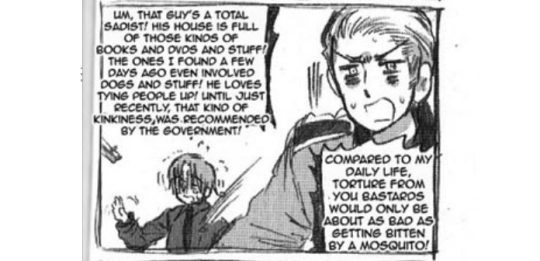
Ex: During the Second World War, Germany and Italy are both taken as
prisoners of war. Germany compares the pain of torture to a mosquito bite, as
his daily life is far more painful.

image

Ex: England falls ill on several occasions following major political conflicts
(e.g., the American Revolution, the Napoleonic Wars, World War II) [x]

image

Ex: China complains of body aches, stemming from political infighting
in his country [x] [x]. 

image
image

Sense of Helplessness:

Of course, smaller
powers are rendered vulnerable and pliable to the discretion of larger powers.

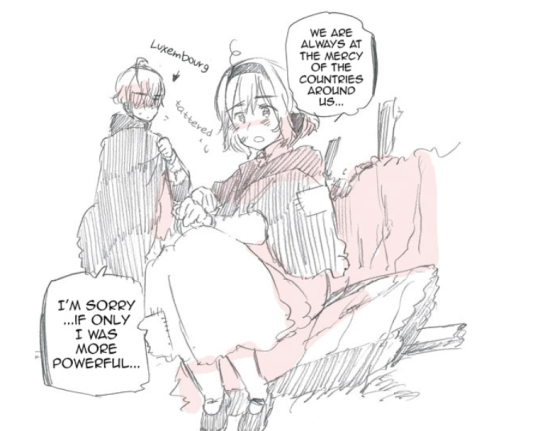
Ex: Belgium and Luxembourg discuss their inability to protect themselves
during both World Wars [x].

image

Ex: The conditions that Russian soldiers experienced were so bad that
Russia becomes ecstatic when Germany takes him as a prisoner of war. He
compares the German POW camps to heaven.

image
image

Ex: England’s normalized being captured by
the Axis and pre-preemptively brought a spare change of clothes [x]. 

image
image

Suspicion and Hostility:  

War is a breeding ground
for distrust and betrayal. As such, the nations must always be ready to fight
for their lives, even in seemingly innocuous circumstances.

Ex: When the two first
meet in World War I, Germany second guesses himself several times on whether
Italy poses a threat to him.

image
image
image

Ex: Russia shares his tea
ration with England. While skeptical at first, England accepts. The sweetness
of the tea initially causes England to conclude that Russia poisoned him. What
matters here is the fact that England rationalized this outcome as a legitimate
possibility…[x].

image
image

Domesticity, Normalization, and Adaptation:

image

As horrible and gruesome
as war may be, there are still moments where the nations are able to enjoy
themselves and share a good laugh. The problem, then, is that having had
experienced countless wars, the nations bring the domestic into the world of
war—i.e., war becomes their home and the private
and public sphere divide becomes muddled.

Ex: England drinks tea in
the middle of the battlefield. Trivial as this may appear, on a latent level,
he’s attempting to include a routine and sense of normalcy in an environment
that is otherwise chaotic and unpredictable.

image

Ex: After infiltrating
America’s war camp, Prussia teases Germany for his impression of an American.

image
image

Ex:Having just occupied
Rome, America asks the terrified Italy Brothers if they could make him
authentic Italian cuisine [x]. 

The casualness in the way
America speaks is disturbing considering that from his perspective, taking over
another country is normal. It’s not
something that should produce fear but rather should be accepted as is. He
doesn’t consider the Italy Brothers to be his personal enemies. The personal is not political in this case.

image

Relief:

The best nations that
illustrate the burdens of war are those who have passed on. Rome and Germania
visit Earth together and upon reflecting on their lives, they reach a similar
conclusion: death gave them a sense of liberation.

They’re no
longer bound by their bosses’ orders and aren’t forced to participate in wars
they have no interest in being involved in [x]

image
image
image
image

It flows
differently for them:   

Of course,
being immortal affects how the nations experience time. They’ve lived for
centuries/ millennia and experience time at a much faster pace. A year, let
alone a decade, for a human is nothing to them.

Ex: Canada once
spent an entire weekend in a trance, staring into Kumajiro’s eyelashes. [x]

image
image

Ex: Because time flows differently for him, by the time America visits his child/ later teen friend Davie again, the latter’s had both children and grandchildren [x].

Interestingly,
the nation’s immortality can also rub off on other beings.

Ex: Pets like
Hanatamago, Pochi, or the Gilbird’s have extended lifespans as a result of
being around their owner nations. Should they separate, they would become
normal pets again. [x]

image

Ex: The
situation with humans is similar, but not quite the same. Unlike pets, humans
have a stronger developmental capacity to perceive time. It’s likely for this
reason that being around a nation for too long would cause them to go mad. The
drastic warping of time would be too much to handle.

image

How the Nations cope with their Immortality:

From what we’ve
seen in the strips, immortality is depicted to be more of a curse than it is a
blessing. There are several instances where nations have expressed regret over
their existence.

Ex: Germania
and Rome, as fallen ex-nations, experience relief over not having to deal with
wars and their leaders.

image
image

Ex: As an
Ancient in his own right, China romanticizes about the past, wishing that the
world was the same as it was 4000 years ago.

image

Ex: Italy
admits that he sometimes gets bored of seeing the same people every day [x]. Also
notice how his boss recognizes that immortality isn’t beneficial in practice,
as Italy’s had to endure countless painful memories and experiences. 

image

Ex: The nations
have gaps in their memories [x]. 

image

While it would
be impossible for them to remember everything, as they’re not perfect immortals
and can get injured and die, the fact that Russia claims that it’s good that
they don’t remember all the bad in their life may allude to an unconscious repression
of memories.

image

Still using
Russia as an example, given how he’s historically been tortured and punished by
his bosses, it’s easy to understand why he wouldn’t want to remember everything.

image
image
image
image