

I think it goes unsaid that how the nations relate to one
another is not only based on their present political relations.
In other words, while they may not be on good terms with
each other, these relations don’t define their relationship in whole. There are
times where nations get along, and there are times where they will fight
frequently and ‘hate’ each other. Point is, the hate doesn’t typically last.
While current relations do cause tensions, their pasts have
the most impact on how they view one another. It would therefore be shallow to
say that if nation A and nation B grew up together, only to go to war centuries
later, that they would unequivocally hate each other and be unable to reconcile.
Relationships don’t work like that, and this is especially the case for
immortals who have lived several lifetimes.
I’ve stressed this in other posts before, but the nations
don’t represent their government. They represent their people – they’re cultural,
not political representations. The irony is that they’re forced to serve their government, which may or may
not represent their peoples’ best interest. [x] [x]
It is for this reason that even in times of war, nations on
opposing sides are shown to be getting along with each other when they’re not
on the battlefield.
Ex: America’s occupation of Rome. He doesn’t treat the Italy
brothers as enemies, but rather friends.


Ex: England, Russia, and Germany share their military
rations with each other.


While humans from other nations may bear present grudges
towards each other, this doesn’t always reflect itself in the personification.
It’s important to remember that they’re people themselves, and have had more experiences
that influence their outlook on life.
That said, what this post will set out to demonstrate is
that nations rumoured to canonically hate each other don’t actually. The hatred
isn’t deep-set or genuine. It’s more like a rivalry between someone who constantly
gets on your nerves…someone who you routinely get into arguments with and can
never see eye-to-eye. On the other hand, old war grudges have been shown to heal with time.
Although, some take far longer than
others.
With all that in mind, let’s go over some of the most common
characters that are mistakenly depicted to be in hate-hate relationships. And
yes, while this is intended to be ship neutral, all of these examples can be
used to counter bashes against your ship.
Russia and America:
While they may have been on thin ice with each other in the Cold
War, their history runs far deeper than that. Unfortunately, we get very
minimal insight into American-Imperial Russia relations. The strips only depict
Russia’s participation in the American Revolution.
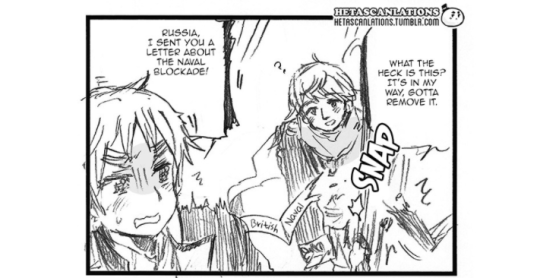

Either way, the two countries don’t hate each other,
regardless of how tense their political relations were and still are. They even
acknowledge this tension as they spend time with each other in the present.
Russia in particular admits to how much America gets on his nerves.


China and Japan:
Japan’s betrayal in WW2 caused China to develop a strong
grudge towards him.

Nonetheless, in recent strips, we do see China attempting to
reconcile with Japan through diplomacy.


Hungary and Romania:
The two are noted to fight like cats and dogs. Each nation
depicts each other in a negative historical light. They may have resented each
other, and still do from time to time. However, it’s not true, long-lasting hatred.

Ex: Hungary’s somewhat smug reaction to Romania and Bulgaria fighting with
each other.
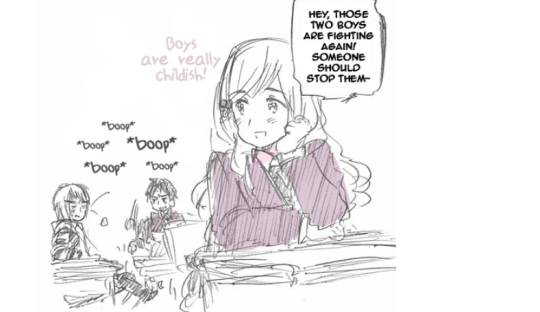
Regardless, they’re still capable of getting along.

Greece and Turkey:
The two bicker every time they see each other.

Comic gags
aside, the two still care for each other and are mentioned to be making some grounds
in their relationship.

Ex: Turkey’s form of bullying Greece is taking him to a
bathhouse and massaging him.

Switzerland and Japan:
Switzerland yells at Japan to be more assertive and voice
his opinion. It has nothing to do with hatred. If anything, it’s an aggressive form of encouragement.


Veneziano and Romano:
Romano suffers from an inferiority complex in comparison to
Veneziano, who received most of their grandfather’s attention. As such, he is
often very hostile to Veneziano, referring to him as “stupid little brother”,
or something similar to that depending on his mood.

However, this is only done to Veneziano’s face. When he’s
not around, Romano’s been shown on several occasions to look out for Veneziano.

America and England:
Short story short, the two have been able to reconcile their
rocky relations in the years following the Revolution. England’s bitter and
scathing nature towards America has softened considerably over the years.
It’s said that England once suffered from one hundred years
of heartbreak, presumably a hint to the American Revolution.[x]
Ex: England still goes to America’s centennial celebrations, despite
how sick it makes him.

He also offers to fix a crack in the first liberty bell he
gave to America, and gives him another one for his bicentennial.

Ex: The two are close enough to make fun of each other’s
politics.

America and Canada:
Canada doesn’t hate America. Instead, he hates America’s
egocentrism and often calls him out for this.

France and England:
While these two are notorious for fighting, having their own
designated preserve to quarrel in…

…they can get along with each other just as well too.
Ex: France used to be England’s cook.

Ex: England proudly calls on France’s cooking skills again
when he opens a butler café.

Ex: A summary of how their relationship’s progressed.

Prussia and Austria:
The two don’t get along with each other.

However, that doesn’t stop them from spending Christmas together as ‘family.’ Prussia, of course, initially [teasingly] refuses to accept Austria and Hungary as guests.

…

Real Hatred – Prussia and Russia:
Albeit the fact that it’s one sided, Prussia’s hatred of
Russia is deep. It’s probably one of the only case examples where it’s not a
matter of two nations simply not getting along.
Ex: Prussia will cough up blood if Russia touches him.
Either that, or he will lose four eyelashes.

With all that in mind, long-lasting hatred between nations
is rare in canon. Similarly, while current political relations may have an
influence on how nations interact with each other, the influence of the past –
on a personal level – is much greater.




 Ellawritesficssometimes