When the assignments pile up on you out of nowhere

Yes, but it’s
just a comic gag.
Some
examples would be Romano’s “Neapolitan Tornado” or Japan’s “The Final Arcanum…Sincere Regret” [whatever that means].
My personal
favourite is France’s “Eiffel Attack.”

I have! I’m guessing this is a blog recommendation, so go and follow them!


England’s character tends to get a lot of criticism, for, well,
how critical he is of America. Don’t get me wrong either. England can be
exceptionally mean. At the same time, however, as I’ve mentioned in previous
posts, he can also be just as sweet, considerate, and thoughtful.
To understand why England tends to take out his frustration onto
America, it’s important to situate this behaviour within the context of the Revolutionary
war, both before and after (duh).
The isolation and constant mocking that came with being the “Black
Sheep of Europe” took a huge hit on England’s self-esteem. Of course, being as
sensitive as he is, he responds with anger and keeps the accompanying feelings
of stress and anxiety to himself.
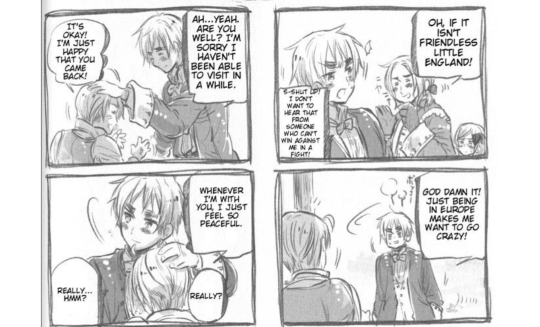
Things were different with America, who functioned as England’s
stress relief. England’s even noted to feel at peace when he’s with America.
This can be attributed to the fact that America’s youth and naivety
led to his unconditional acceptance and love for England. America was the one
person England could feel at home with. While the rest of the world hated
England, America didn’t.
That said, England became dependent on America emotionally. He
didn’t have to worry about being rejected by America…that is until America
began fighting for his independence.
To put it simply, America going against him broke England’s
heart. He felt like he could trust and rely on America to have his back, only to
be betrayed (in his POV) and isolated once more when other European nations sided
against him in America’s favor.
History repeats itself, and England found himself all alone
again.

While subtle, there are significant hints about just how deeply
the Revolution hurt him.
For one thing, it’s said that he’s suffered from 100 years
of heartbreak. Likewise, an even more telling emotional omen of the past is that
in one his character notes, three important pieces of information are given.
1) “His
temper was quite stormy during the decades after America’s independence.”
– Anger is a maladjustive way of
either expressing one’s need for something or acquiring it. In this case, it
could be a reaction to the loneliness he experiences after losing America.
2) “He’s quite bad at expressing
himself. He himself knows that people often misunderstand him, he uses this fact
for self-depreciating jokes.”
– This ties in with how easy it is to see him as an angry
person when he’s actually extremely sensitive.
Taking the latter two bits of information, you can see why Hima then
says this about England:
3) “He could
easily be the most pitiful one in this webcomic.”
In other words, England thinks lowly of himself, cares about
others’ opinions of him, poorly expresses his sadness by acting out in anger,
and yet doesn’t bother to fix these external misconceptions.
Like I said before, America was his best friend, and because
he can’t articulate his feelings well, England went from using America as a stress
ball to a punching bag (this term is used loosely).
For example, England is notorious for being a “scathing”
critic of America’s movies.

Nonetheless, what you’ll also notice is the subtle hints of America knowing that England cares about him.
Here, America –with a noticeably teasing look, as if he understands
more than what he voices– allows England to poke holes in his proposed world
defense plan.
Also pay attention to how England “commends” parts of
America’s plan.


Aside from these faults, the strengths in England’s
character prevail when they’re most needed. Even though any mention of America’s
dependence causes England to get sick, he visits America and celebrates the
occasion with him.
It causes him a lot of pain to do so, but he still commits
to it. Not only that, but he gives America the liberty bell on the 100th
anniversary of his independence, worries over and offers to repair the bell in
1958 despite the offer being turned down by American officials, and gives America
a new one another one hundred years later.

While America is amused by England’s evident embarrassment,
the next panel can easily be interpreted as him crying and laughing from
happiness.
Please note that the anime handles this scene quite differently, as it’s depicted more as in America laughs so hard that he cries.

I think it’s also important to end this by mentioning that
England was also America’s best friend. America is arguably just as lonely as
England.
When he was younger, America was scared to sleep alone. Regardless
if England always fell asleep before he did, America still needed him.
In “We’re Shipwrecked Too”, we get this awkward moment where
both of them consider sleeping closer to each other for warmth, but in the end
choose not to.

The tension here reveals that England isn’t the only one
having trouble working past the difficulties in their relationship.
Nevertheless, we also get moments where America reaches out
to England.
Ex: During a blizzard, he asks England to come and play
video games with him, but is turned down.

As seen in more modern strips, the two of them are slowly working
towards reconciliation and visit each other often. The perfect ideal would be
if they’re able to become best friends
again, not just in their hearts, but openly and expressively without any qualms
of what others might think.
How I imagine America’s cooking show would be like.
I don’t know why they cut this out of Buon San Valentino in
the anime, but I’ve always loved this scene.
Basically, America gets upset that England didn’t give him
any chocolates on Valentine’s Day.

When England finds America to give him some chocolate,
America obliviously tries to play it off, as if the whole matter hadn’t even
happened. The way America excessively stuffs down his chocolate is arguably a childish way of showing England that he’s not needed – [when he
actually is.]
Yeah, not buying it. America’s feelings were definitely hurt
here. Why else would he be “grumbling” about it?

I have some idea that I’m willing to share. It’s quite sad and hopeless, actually.
Post coming up tonight!

Hmmm. Since I both agree
and disagree with this, I’ll play devil’s advocate 😈 😉
The series is based on
stereotypes. Stereotypes are generalizations predicated on the culture and
society in which you grow up. That said, it’s inevitable that stereotypes of
different nationalities are going to vary across the world. They’re also
inherently biased.
As you said, coming from
an Eastern society, this influences how Hima conceptualizes these national
stereotypes. To say that Hima’s stereotypes are inaccurate is a self-defeating
argument. They’re accurate from his point of view, and again, are inherently
biased.
It’s self-defeating in
the sense that anytime you attempt to apply stereotypes, it’ll be based on
where you’re from. With that logic, any stereotype someone comes up with will
always be seen as inaccurate to another person, who holds a different view of
what that stereotype consists of.
That’s where the fandom
comes in. Because stereotypes are so wishy-washy, it’s impossible to
characterize them accurately, not to mention that a stereotype is a generalization;
it’s function isn’t to pay attention to small details. This flexibility of stereotypes allows fans to mould characters to fit their own
understanding of their culture.
In other words, the series
wouldn’t function well if it wasn’t based on stereotypes.
However, regardless of
the presence of stereotypes, this series is a historical comedy. While they may
be a few misunderstandings and limitations of language spanning across diverse audiences,
Hima should still be held to account for the research he incorporates into his
writings.
If you check out his
blog, he does do quite a bit of research and travelling. Obviously, he’s human and
mistakes will happen, but since the series’ initial premise was historical in
nature, he should be aiming to be as accurate as possible.
The series gets a lot of
criticism, understandably, for some of his earlier characterizations of the
characters. In my opinion, I think what happened is that Hima never imagined
that the series would grow so big, and so he just did whatever he wanted with
them. If you notice, later characterizations are more culturally-sensitive, but
these older depictions will still haunt him and be brought up from time-to-time.

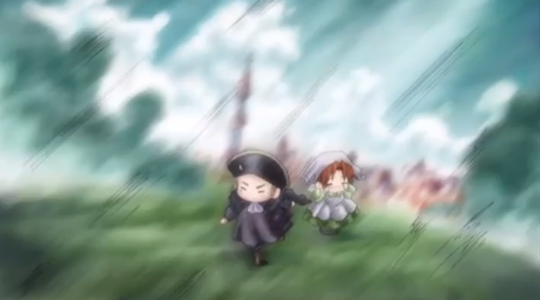
Ever noticed how similar
the Chibitalia and Holy Rome storyline is to Cinderella?
Because I sure have, and
I honestly wouldn’t put this level of trollness past Hima.
When Ancient Rome died,
Chibitalia, as Northern Italy, fell under Austria’s strict rule. There, he was
subjected to rigorous chores and harsh punishments.


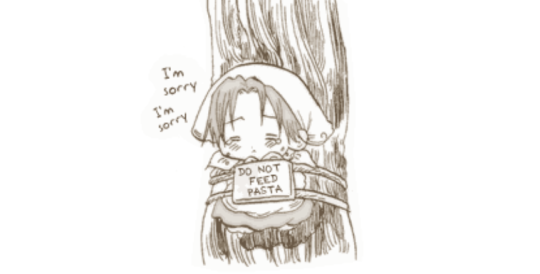
Keep in mind that
Austria’s strictness is exaggerated given how old this strip is. Even so, Chibitalia still shares fond moments with Austria.

“Big Brothers” France and
Spain ruthlessly fight over Romano and Italy as if they were pieces of pie. Again,
their relationship isn’t only tied down to this, I’m just situating this with
regards to the fairytale.


Chibitalia encounters
rats while performing his chores. While they’re not mice specifically, it’s the similar
theme that matters.

Chibitalia is mistaken as a girl by Holy Rome. While Hungary is aware of Italy’s true gender, she
still has him wear fancy and traditional Hungarian dresses.
In other words, Hungary ‘dresses’
Chibitalia up.

There’s no ball here,
nor is there an imminent stroke of midnight in which the plot has its turning
point. Holy Rome would be the fill-in for the prince but the roles reverse
slightly here.
Nonetheless, the scene in which Holy Rome leaves for war is eerily similar to when Cinderella
forgets her glass slipper.
The glass slipper in
this case would either be the push broom (anime) or the underwear (manga) Chibitalia
gives to Holy Rome as a parting gift.

Holy Rome = Germany disbelievers, look away, because you’re
not going to like this…
It pains me to say it, but after hearing all this, how much
do you want to bet that if Germany is ever revealed to be Holy Rome, it’ll have
to do with him still possessing the underwear or push broom?
Just imagine it. Hima could have possibly been trolling and
leading us on for eleven years about an ending so obvious and overstated in popular culture that it’s gone
completely unnoticed.


 Ellawritesficssometimes