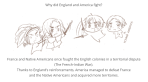
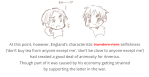
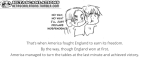
Due to popular request, I’ll be starting to analyze the several instances in the series where it’s alluded that Germany is Holy Rome in some way or another. There’s too many of them to include all in one post, so welcome to yet another new sub-series!  

You’ll notice how subtle these hints are, as well as how uncomfortable they make the nations feel as they recall certain memories. Without further ado, let’s get started.

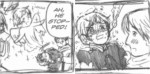
First, there’s England. In the “About why there is Italian architecture in England” strip, France shows surprise at the sight of an Italian-styled house in England and even praises it. England then has a flashback of when Holy Rome gave him this house as a gift, despite it not being suitable for the harsher English climate.

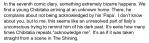
Note the expression on England’s face once the flashback ends. Sure, the reminder of Holy Rome’s legacy must be painful to relive, but why become so nervous and uncomfortable? If he was sad, I could understand, but the former two emotions make me think that something is still unresolved in the present; that is, England is reminded of how HRE is still around today except in the more modern form of Germany.

It almost seems as if the nations are aware of Holy Rome’s reincarnation/rebirth/ revival (whatever you want to call it) but don’t have the courage to tell Germany about his past. It’s not really their place anyway.

Then, you have France. We already know from the Napoleonic Wars, the first world war, as well as the German military occupation of France in WW2, that France has every reason to hate Germany, and is even depicted stating so.

In modern times, he still shows an evident aversion to Germany. Call this a stretch if you want, but I interpret a lot of this aversion more so in terms of guilt. Napoleon’s army ended the Holy Roman empire, after all.

However, it’s also important to note that recently France has slowly been starting to spend more time with Germany and is noted to no longer hate him.

In the “Germany’s playing an impossible game” strip, France is shown to be secretly backing Germany, referring to himself as the latter’s Big Brother. (Yes, I’m aware that France considers himself the Big Brother of the world).

What makes me suspicious is that in a few panels below, Hima mentions how France and Germany’s economic relations in the EU isn’t always agreeable and that they don’t see eye-to-eye in a lot of matters.

Why am I mentioning this? Well, flip back to when Holy Rome and France lived in Rome’s house. They used to refer to each other as brothers then too – they’re not actual brothers, it’s just a form of endearment.

Historically speaking, I can understand France’s grudge towards Germany after the Napoleonic wars. What I’m curious about is that even in modern times, well after WW2, France still appears to be hesitant/ walking on egg-shells around Germany.

That’s why I believe France is not completely open in his support for Germany. Again, I think he still feels guilt for causing the Holy Roman Empire’s demise and doesn’t know how to compensate for this.

Lastly, as I couldn’t possibly leave him out of this, there’s Prussia. Prussia is the one who tells Germany all about his past, being his older brother/ father figure. I say father figure sarcastically, because Prussia is lame enough to be wearing a Dad shirt in the 2011 Christmas event.

Anyways, in that same event, Japan and Italy reminisce about how Prussia, as the Teutonic knights, used to be. Germany expresses his confusion towards these stories by shouting, “What is that brother of mine doing?!”

We then get a brief bit of inner dialogue from Japan, who also seems confused over the fact that Germany believes everything that Prussia tells him about his past. Perhaps Prussia is purposefully fabricating parts of Germany’s birth to spare him from the pain of remembering how he had died before.

More notably, Germany remarks that he’s going to cross-examine Prussia, which may mean that the truth (whatever it is) is going to be revealed to him. Now that’s exciting.

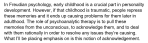
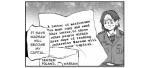
On that note, there’s one last thing I want to talk about. In “The Guns of Italy and Germany”, Germany is completely bewildered by the shoddy guns Italy makes, all for the sake of making them easier to clean. When he asks Prussia if Italy has always been like this, Prussia ominously stares off into the distance and tells him this:

Hmmm. Another potential hint that just like Holy Rome had an ‘appreciation’ for Italy, Germany will eventually develop one too? Questions, questions. So many strips and not nearly enough confirmations…

The answer to the title is no, by the way. To
elaborate on why I believe this is, it’s important to understand that the modern
definition of a nation-state is much different now than what it was centuries
ago. People often organized themselves in terms of city-states, kingdoms,
principalities, or small territories.

That said, during the Renaissance era, Italy
consisted mostly of small city-states. This would explain Italy’s full name,
Italy Veneziano, an obvious reference to the city of Venice. This fragmentation
was due to the larger foreign powers of Austria, Spain, France, and the Holy
Roman Empire coming in and taking land for themselves.

However, as I just said, Italy Veneziano is
repetitively referred to as North Italy, which simply includes Venice. He
doesn’t only represent Venice. I
don’t mean to say that North Italy wasn’t born
to represent Venice, though. That certainly seems to be the case. What I am
saying is that as the concept of a nation changed, so did Italy. He likely absorbed
the entire northern region. I mean, we’ve already seen this multiple times in
the series where nations adopt new lands and titles. Take the Teutonic Knights
and Prussia for example.

Now, this wouldn’t be a theory if I didn’t have any evidence, so here.

Then, at the end of the strip, North Italy mentions
that parts of his house were taken. We already know that a nation’s house, or
rather, an empire to be more applicable to the time period, consisted of other
nations under their rule. However, in Italy’s case, his house consisted of the
many different sovereign city-states of northern Italy.

So no, I wouldn’t worry about Italy Veneziano
disappearing anytime soon just because Venice is likely to sink in the coming
years. He’s got the whole rest of northern Italy to embody.

Further, and as I’ll get into with a much, much larger post, there is no dominant
Italy – between the two Italian brothers, I mean. The south and north are different
enough for them both to personify the land, and Hima makes sure to mention this
countless times.

image

So, about the whole Prussia situation: since nothing is
confirmed in canon, I’m going to keep coming up with possible theories and
explanations. All of which, in my opinion, make some sort of sense. This time,
I’ll be presenting evidence that suggests that Prussia is neither dying, a
nation, nor quite a human.

image

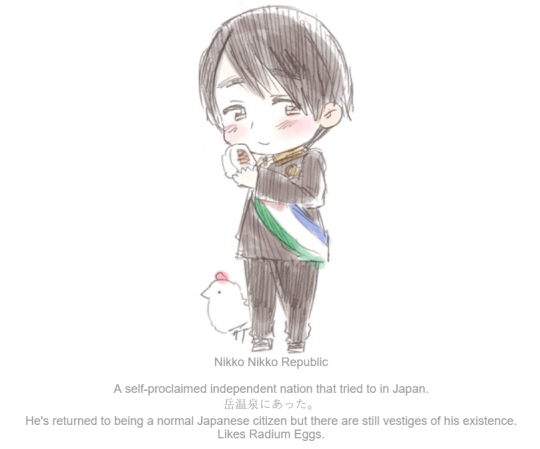
In “It’s a treasure box of countries”, we’re given a
goldmine of information with regards to the rules of nationhood. We learn that NikoNiko,
a human who achieved micro-nation status, went back to being a regular citizen
and human. It’s also stated that it was difficult for NikoNiko to revert back
to being a human, despite resuming normal aging again.

image
image
image

However, the last two bits of information are crucial.
First, we learn that when a nation’s culture or personality dies, said nation
in question will fade; that or the nation entrusts themselves to their
successor. That’s what most people, including myself, have speculated about
Prussia’s fading status as the personification of East Germany.

image

On the other hand, Hima also drops this last little bomb on
us.

image

Yes! It’s possible for the ex-nations to become political
representatives, as opposed to personifications. What’s more, we’ve seen
Prussia attend world meetings with Germany. For example, in the strip titled
“Germany’s Playing an Impossible Game”, Prussia is seen attending an EU
meeting.

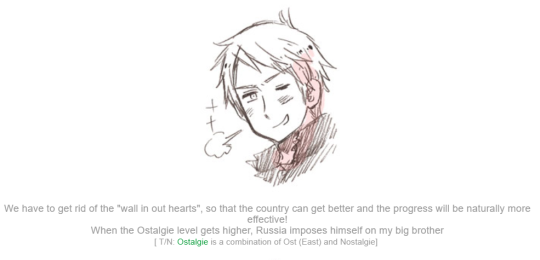
Further, I think this may be a typo on the translator’s
part, but Prussia at the end of the strip states:

image

For the sake of this post, I’ll be making the assumption
that he actually said, “the wall in our hearts.” Why? Because we’ve already
seen with Sealand that the nation’s landmasses are reflected in their physical
bodies. What I mean by this is that because Sealand’s landmass is a minuscule
fort, being a nation would be hard on his heart.

image

Simply put, it would seem the hearts Prussia is referring to
relates back to German Reunification following the fall of the Berlin Wall. Yes,
we get it, it’s very heavily implied that he’s East Germany (especially with that nostalgia pun, geez). Just call him it already, damn it! Enough with these
roundabout East and West nicknames.

Anyways, why do I think Prussia’s a representative then?
Well, aside from the fact that he’s attending world meetings, we’ve seen in the
“Private Concert” strip that he doesn’t heal from his injuries quite as fast as
a regular nation would.

Is he a nation? Probably not.

Is he a human? Not sure.

Is he a representative?

At the very least, he sure seems to be.

ellawritesficssometimes:

image

Note: Flying Mint
Bunny is a dubbed term, as the creature doesn’t have an official name. I’ll be
working from that. Still, I think there’s enough to say even if you omit the
mint part. It’s just for entertainment and speculative purposes.

Flying Mint Bunny, huh? Never thought analyzing magical creatures
would lead me down this dark of a rabbit hole – pun graciously intended – but here
we are.

image

In the series, we know that England’s not very well-liked and is
kind of a loner. He’s certainly not a favourite in Europe, being referred to as
the Black Sheep of the continent. We also see in the Splendid Isolation strips
how much he struggles to make friends with the other nations, with the exception
of Japan.

Given this loneliness and England’s popular ghost culture – which
allows him to see ghosts, fairies, or any other supernatural creatures –  it would seem that he befriends these beings
as a way of compensating for his loneliness.

image

In terms of Flying Mint Bunny’s potential symbolic value, there
are several things to mention. First, it can be a reference to Ancient Chinese
folklore of the Jade or Moon rabbit. Either way, the bunny is symbolic of longevity
as well as fertility. The latter meaning of longevity is what is more
applicable here, as it could be used to represent the nations’ immortality. That
is, as long as England is lonely and needs a friend to speak to, Flying Mint
Bunny will always be there for him, presumably being immortal itself.

So, why make him mint-coloured? Of course,
this is just speculation, but mint itself is symbolic for the protection of
illness. Following this train of logic, perhaps England is using Flying Mint
Bunny, as well as the rest of his magical friends, to help ease his loneliness
and prevent himself from going mad. There’s also the fact that mint is symbolic
of precious moments; England is indeed very fond of these friends of his.

image

Now, as for the true madness aspect, let’s break it down before
tying everything together. The nation’s memories are not limitless, and those old
enough have been shown to forget things. We see this more with Japan, and I’ll
get into this more with another theory, but for this specific post, I’ll be
focusing on ghosts and supernatural beings.

It’s noted that because Japan’s people no longer believe in
ghosts, he is unable to see them. Meanwhile, on a state visit, England is able
to see the tengu, onion-headed youkai spirit, and kappa at Japan’s house. 

image

Later in the strip, England interacts with the kappa and
onion-headed spirit. They tell him that because they’re not acknowledged by Japan’s
people, they’re no longer able to be seen and thus have to move farther up into
the mountains. Before they leave, however, they give England a gift.

image

The Kappa’s Miracle Cure is known for its ability to cure any
illness. Don’t you find it weird how they gave England, an immortal and invincible being
himself, that specific gift of all things? What if England’s illness isn’t
physical, but rather mental? What if he’s lonely and depressed, and these youkai
spirits recognized that and tried to help him? I mean, he literally came to
Japan to establish a friendship/ alliance with him.  

The nations are able to recover from physical
diseases, but it’s the mental scars that never truly leave them. And as much as England may try to forget about how isolated he is
from the other nations (especially from America), the memories are still fresh enough for them to remain.

image

 It’s extremely disturbing if you think about it, because there are
instances in the strips where America thinks England’s crazy. Yes, it’s mostly
because America is unable to see the ghosts/ creatures (he’s too impure,
according to England. Pssst. I’m aware Norway can see FMB too), but the specificity
of the word choice is what makes me wonder if there’s something else to it.

England isn’t schizophrenic, as we know
that it’s actually France who’s the ‘ghost’, appearing frightening because his
beauty sleep was interrupted (don’t ask me how he snuck in). Still, America’s
comment may be referring to something wrong with his head; that is, a mental
illness. Obviously, he’s not crazy, but depression and loneliness is very
much an illness of the brain (i.e head).

image

Then, in “We’re shipwrecked too”, after America goes into the forest
to search for materials, England immediately turns to his magical friends…perhaps for comforting purposes.

image

That said, loneliness and the possible depression it brings is a
serious illness, and it would seem that England may very likely be suffering
from it.

image
image

A long-standing joke in the fandom is that because England’s
food is poor, America inherits said lack of taste from him and can therefore
eat it without a problem. However, evidence from the strips point otherwise. Just
like he chooses to read the atmosphere or purposefully ignore it, it seems that
America also chooses whether or not to give his true opinion on the food he
eats.

For example, in the sixth comic diary, an adult America reminisces
and bashfully admits that England isn’t very good at cooking.

image

He then has a flashback of his childhood, where his younger
self comments and shows disappointment in the fact that England has burnt his
food again. He also remarks that France is a better cook, which demonstrates
his ability to rank food according to taste.

image

What I’ll be arguing is that America doesn’t want to hurt England’s
feelings, and pretends to like his cooking instead. This is clearly seen in the
strip, as young America notices how intently
England watches him as he eats.

In other words, he wants to make England feel better. Quite frankly,
if England was giving me that look, I’d find it hard to tell him the truth too.
England’s reaction after America tells him that he likes the food is too cute
for words – it’s absolutely priceless – and this is likely why America keeps up
this façade.

image
image

Then, in another strip titled “America and England”, it seems
that America has become so used to ignoring the taste of food, that he’s
forgotten what ‘good’ food tastes like. That’s where I believe his ‘alleged’ lack
of taste comes from.

image

Why do I say this? Because there’s also instances where
America becomes aware of how bad the food he’s eating is, and has no problem making
his opinion known about it. It’s also important to mention that when he does
this, it’s usually in retaliation to England’s insults.

In other words, the moment England is rude to him, America is
no longer worried about trying to avoid hurting his former guardian’s feelings
and gives his honest opinion on the food. Here are just a few more examples:

After being called a collection of hicks by England, America
opens up about how awful the former’s scones are.

image

America is also known for hating the taste of marmite.

image

So, there you have it. It appears that America’s lack of
taste is more of an aversion to hurting England’s feelings. He may not openly
show it, but America truly does care about England; it’s the small hidden
details that you especially have to look out for with them since they’re both so stubborn.

Well, you guys asked for it!

Just some quick corrections before I post a theory on this tonight, though. Latvia is 4′7, which is just under 140 cm. The reason he gives for being so short is that Russia keeps pushing down on his head every day (I’ll argue that it’s more than just Russia). He actually says that he would be 10 cm taller.

Anyways, contrary to what other people have said before me, I do believe that there is a reason why Latvia is so short. There’s enough reasoning that falls directly in line with how Hima conceptualizes nationhood as well as their maturation process. I don’t think it’s fair to say that there’s no reason for this, as we’ve already seen how much thought Hima puts into his work, regardless of how weird it may get sometimes.

There’s significant evidence in the strips and character profiles. I’ll leave this one here, as it’s going to act as the backbone for my argument:

image