image
image

What this post will set out to do is prove that while
Belarus may have neurotic tendencies, she does not have APD. I should also
mention that I don’t mean to conflate the labels of psychopath and sociopath. What
matters is that both are listed under APD. I’ve noticed in the fandom that
Belarus is often labelled as either or without having an actual idea of what
the diagnosing criteria is for the personality disorder.

Similarly, while I don’t go into it much here, it should be
noted that a good chunk of canon information about her comes from the untranslated
video game, Desktop Buddies (2008). The most neurotic piece of
trivia we are given there is that Belarus wore Russia’s underwear on her head, has looked at suggestive photos of him, and has fantasized about them having sex…

Source: Hetarchive, Belarus’ profile.

I attribute this
mostly to the hyperbolic shock sexual—unequivocally inappropriate—humour that Himaruya previously employed to evoke reactions
from the audience. Such humour is no longer employed, but the trope of Belarus’s
obsession and love for Russia has still remained. Overall, it was a crude way of
portraying Belarus’ tight historical ties with Russia.

That said, one by one, I’ll be going through the criteria of
APD to prove that while Belarus may have neurotic tendencies, she does NOT have
APD. Even though she fulfills some of the criteria, she doesn’t get a passing
grade for the true diagnosis.

Disclaimer: I’m very critical of the DSM because of the
vagueness of its criteria and its history of overdiagnosing and
overmedicalizing biological and mental conditions/ making up conditions that aren’t even remotely pathological. This doesn’t mean that it’s not a useful tool either; I just
carry a degree of skepticism when using it because of its overuse, as well as
the fact that it once listed homosexuality as a disorder.

A) Significant Impairments in
personality functioning manifest by

1. Impairments in self-functioning (a or b):

a) Identity: Ego-centrism; self-esteem
derived from personal gain, power, or pleasure.

Criteria: Unfulfilled (X).

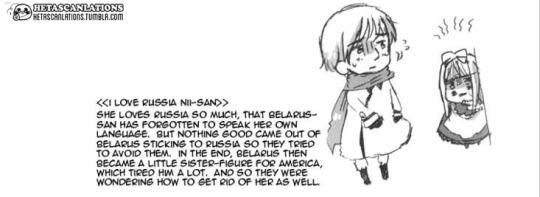
Belarus is the exact opposite of ego-centrism. Her whole
life revolves around her devotion for Russia, not herself. For example, she
once forgot her own language and only spoke Russian.

Source: Volume 2. 
image

b.Self-direction: Goal-setting based on personal gratification;
absence of prosocial internal standards associated with failure to conform to
lawful or culturally normative ethical behavior.

Criteria: Fulfilled (✓).

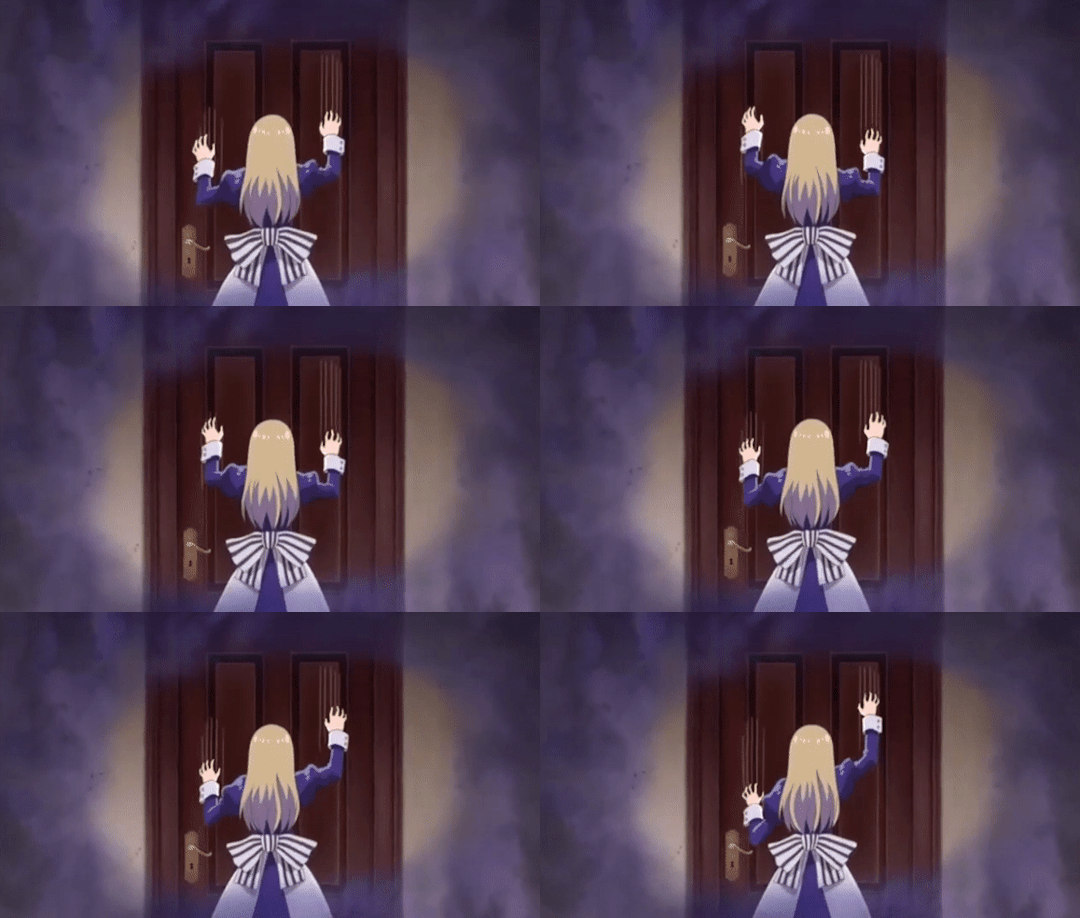
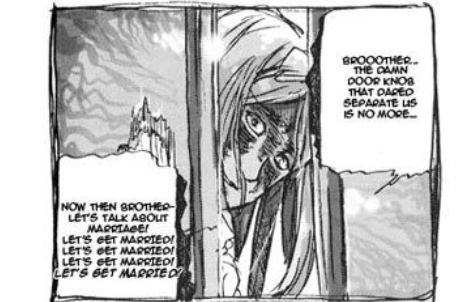
Belarus’s personal gratification is achieved when she’s with
her brother, meaning that she’ll do anything to be with him.

Ex: She’s broken through doors to get to him.

Source: Volume 2.
image

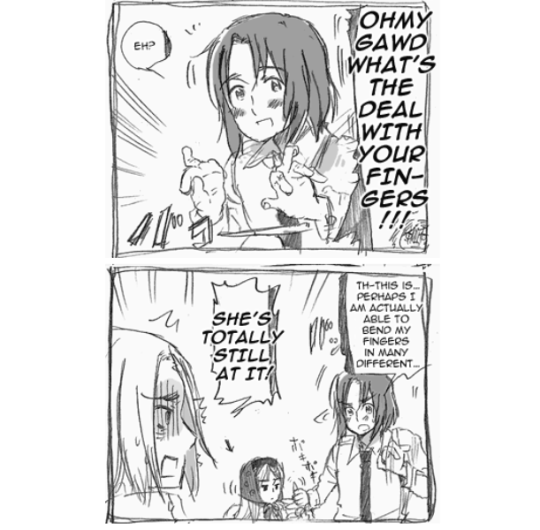
Examples of where she hasn’t conformed to normal ethical
behaviour would include holding other nations at knifepoint and breaking
Lithuania’s fingers when they went on a date.

Source: Hetarchive, Comic Diary 11.
image

2. Impairments in interpersonal functioning (a or b):

a. Empathy: Lack of concern for feelings, needs, or suffering of others;
lack of remorse after hurting or mistreating another.

Criteria: Unfulfilled (X).

Belarus is always putting Russia above herself and making
sure that his needs are met. She does have empathy, even though it’s only
directed at her brother.

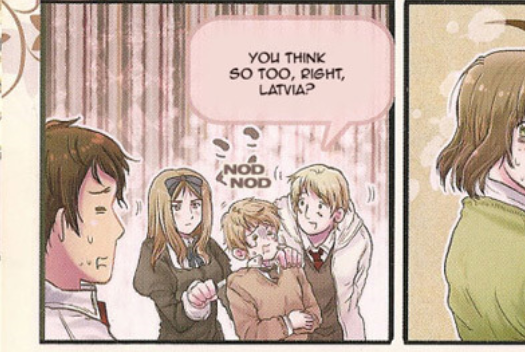
On the other hand, she doesn’t experience remorse when
she hurts other nations in order to meet Russia’s needs.

Ex: She holds Latvia at knifepoint to pressure him into
complying with Russia.

Source: Volume 1.
image

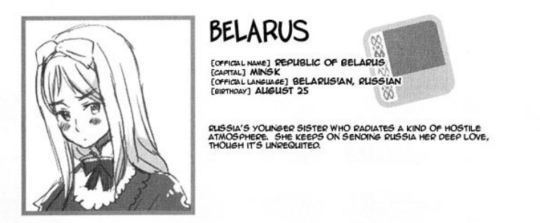
b. Intimacy: Incapacity for mutually intimate relationships, as
exploitation is a primary means of relating to others, including by deceit and
coercion; use of dominance or intimidation to control others.

Criteria: Unfulfilled (X).

As seen with the Lithuania
example, Belarus is unable to form mutually intimate relationships. This
applies to Russia as well, who for obvious reasons, does not reciprocate her
love.

Source: Volume 2. 
image
image

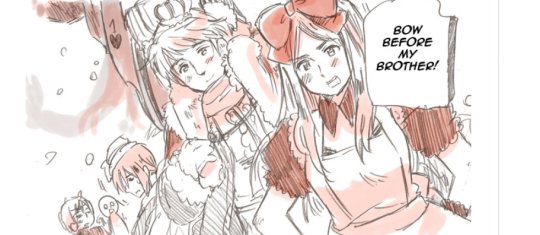
However, Belarus is not
exploitive. She’ll use force to control others but not for her own personal gain. In her world, she lives to serve her
brother. A person with APD is both egocentric and is unable to relate to
others; what excludes Belarus is that while incapable of doing this with other
nations, she’s able to do so with Russia.

Source: Hetarchive, Halloween 2011 Event + Christmas 2010 Event.
image
image

B) Pathological
personality traits in the following domains:

1.
Antagonism
, characterized by:

a. Manipulativeness: Frequent use of subterfuge to influence or
control others; use of seduction, charm, glibness, or ingratiation to achieve
one’s ends.

Criteria: Unfulfilled (X).

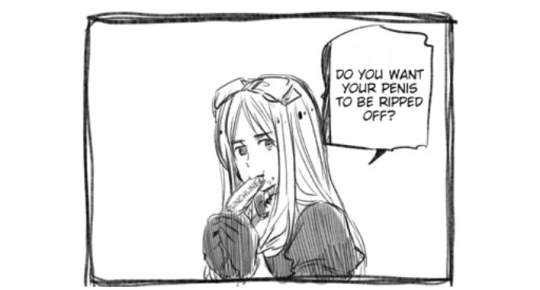
As mentioned above, Belarus doesn’t
manipulate other nations to get what she wants. I say manipulation in the sense
that people with APD are skilled at reading others and pull a lot of strings behind
the scenes to get those close to them to do what they want. They do this
through charm and a grandiose presentation of self. Meanwhile, Belarus will
merely use brute force.

Source: Hetarchive (Bamboo Thicket, eng trans., March 31rst, 2010). 
image

b. Deceitfulness: Dishonesty
and fraudulence; misrepresentation of self; embellishment or fabrication when
relating events.

Criteria: Unfulfilled (X).

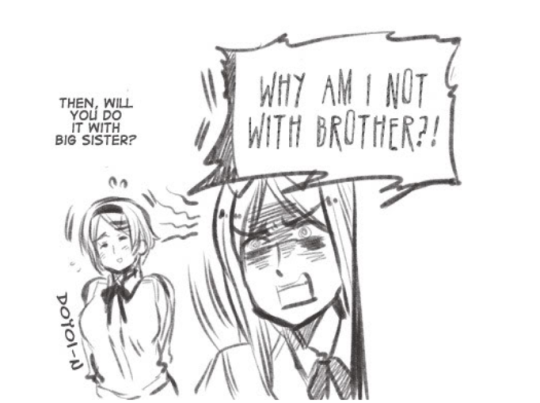
Belarus is painfully honest about
her intentions. She straight up tells Russia of her desire to marry him. She
also divulges that she doesn’t want to be with anyone else but Russia. In other
words, Belarus doesn’t curate or put up a false presentation of herself. She
wants to be with Russia and everyone knows it.

Source: Hetarchive (Bamboo Thicket, eng trans., Nov 11th, 2010). 
image

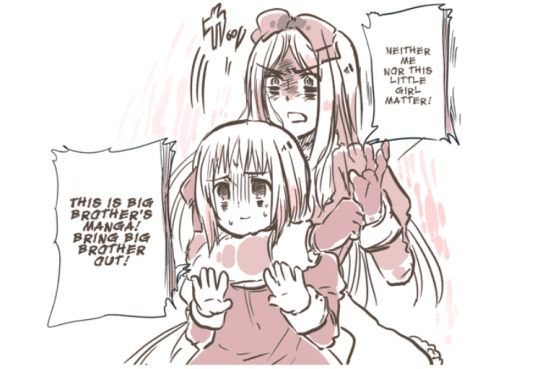
c. Callousness: Lack of concern for feelings or problems of others;
lack of guilt or remorse about the negative or harmful effects of one’s actions
on others; aggression; sadism.

Criteria: Partially fulfilled,
but not really.

Examples cited: Breaking
Lithuania’s fingers, holding Lichtenstein and Latvia at knifepoint.

Source: Hetarchive (Bamboo Thicket, eng trans., Jan 8th, 2010). 
image

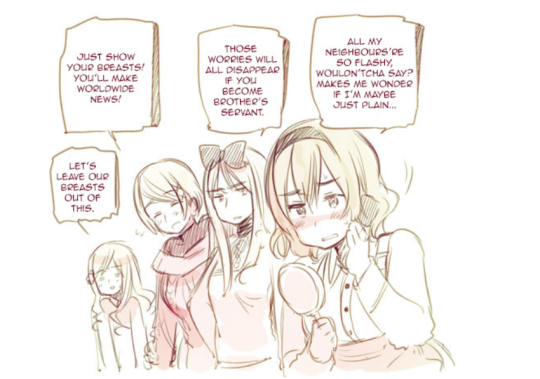
Another example would be when she
told Belgium, who was feeling self-conscious about her ‘plain’ appearance to
become Russia’s servant. This demonstrates a complete lack of concern for
Belgium.

Source: Hetarchive (Bamboo Thicket, eng trans., Nov 25th, 2013). 
image

Again, people with APD wouldn’t
be as devoted or as concerned for another person as Belarus is for Russia. Belarus’
ego is very much invested in Russia. She’s not the pinnacle of her existence–Russia is.

d. Hostility: Persistent or frequent angry feelings; anger or
irritability in response to minor slights and insults; mean, nasty, or vengeful
behavior.

Criteria: Fulfilled (✓).

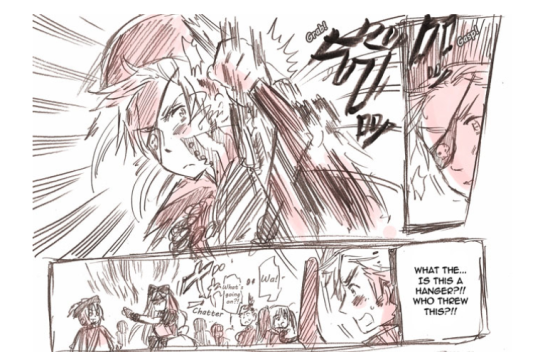
Belarus is notorious for being
hostile. This is especially the case in circumstances where Russia is either challenged
or insulted.

Ex: She throws a hanger at
Denmark simply because he was Russia’s rival in a costume contest.

Source: Hetarchive, Halloween 2011 Event.
image

2. Disinhibition, characterized by:

a. Irresponsibility:
Disregard for – and failure to honor – financial and other obligations or
commitments; lack of respect for – and lack of follow through on – agreements
and promises.

Criteria: Unfulfilled (X).

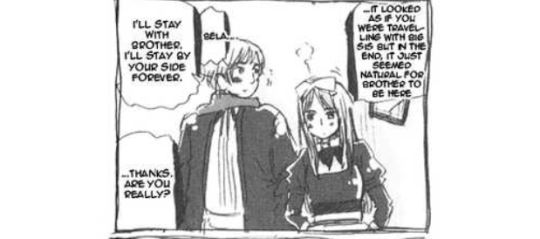
Belarus doesn’t form many obligations,
but when she does, she commits wholeheartedly. Big surprise, she promises to
stay by Russia’s side. Although, she does leave him briefly to live with
America after the USSR disbanded.

Source: Volume 2.
image

b. Impulsivity: Acting on the spur of the moment in response to
immediate stimuli; acting on a momentary basis without a plan or consideration
of outcomes; difficulty establishing and following plans.

Criteria: Fulfilled (X).

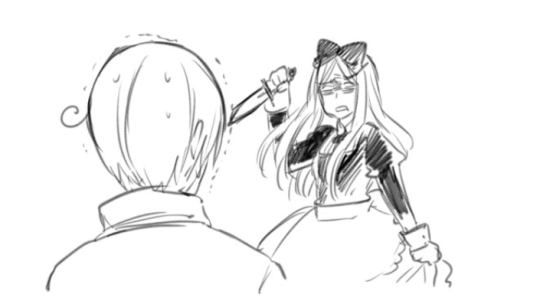
There’s no doubt that Belarus is
impulsive. The hanger example and the fact that she pulls a knife on Italy just
for approaching her speaks to this.

Source: Hetarchive (Bamboo Thicket, eng trans., Nov 8th, 2013).
image

c. Risk taking: Engagement in dangerous, risky, and potentially
self-damaging activities, unnecessarily and without regard for consequences;
boredom proneness and thoughtless initiation of activities to counter boredom;
lack of concern for one’s limitations and denial of the reality of personal
danger.

Criteria: Unfulfilled (X).

Belarus’ stalking of Russia doesn’t
come at the cost of harming herself.
image

C) The impairments in personality functioning
and the individual’s personality trait expression are relatively stable across
time and consistent across situations.

Criteria: Unfulfilled (X).

While the traits that do satisfy the
personality impairment criteria are consistent, there aren’t enough of them to
warrant a diagnosis.

D) The
impairments in personality functioning and the individual’s personality trait
expression are not better understood as normative for the individual’s
developmental stage or sociocultural environment.

 Criteria: Fulfilled (✓).

 I think we can all agree that Belarus’s
behaviour is not normal for any stage of development.

 E) The
impairments in personality functioning and the individual’s personality trait
expression are not solely due to the direct physiological effects of a
substance (e.g., a drug of abuse, medication) or a general medical condition
(e.g., severe head trauma).

Criteria: Not enough information is known –> Unfulfilled
(X).

F) The individual is at least age 18 years.

Criteria: Artificial and of no intrinsic value but fulfilled (✓). 

All in all, while Belarus does fulfill some of the vague
criteria outlined in the DSM for APD, it’s not enough to stipulate a diagnosis.
Without a doubt, Belarus has several neurotic tendencies. Regardless, unlike
someone with APD, Belarus isn’t egocentric or unempathetic. What it all boils
down to is that her undivided devotion to Russia is the largest disqualifier
for the personality disorder.

image
image
image

Note: This post
will use Adler’s theory of Birth Order.

Birth Order
Psychology…what is it?

In analyzing how children’s personalities develop, Adler was
the first to point out the impact of birth order. Essentially, he contended
that regardless of genetics and the environment children are reared in, the
order in which siblings are born have a unique impact on their personalities.

In fact, the birth order itself was considered to be a
different environment in itself. For example, an only child would have grown up
in a much different environment than a first-born with one younger sibling or a
youngest child with five elder siblings.

While only for fun, I’m going to analyze the personalities
of different siblings in the series. Their personalities don’t correspond with their respective birth order; however, a lot
of their personalities fit very well in Adler’s personality model.

Let’s go through them.

First-born Child:

First-born children tend to adopt the role of the teacher,
the tutor, the leader, and the disciplinarian. They are intellectually mature
and have a deep interest in maintaining order and authority. As such, they’re
good organizers, are very detail-oriented, and hold authoritarian/ conservative
attitudes.

Sound familiar? It should, because this describes both
German brothers: Germany and Prussia.

Both are very disciplined and ordered.

Ex: Prussia
mentored America and gave him vast military knowledge.

Source: Hetarchive, Christmas 2011

image

Ex: Germany
trains his allies, Japan and Italy, in a hierarchical manner during WW2.

Source: Hetarchive, Diary Sketches Summary.

image

Both are very organized and devote a great attention to
detail.

Ex: Germany is
known for his neurotic attention to detail, such as keeping his kitchen clean,
meticulously organizing his day with agendas, and following manuals to the
letter.

Source: Volume 1.

image

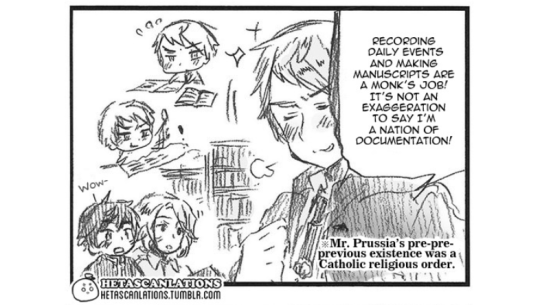
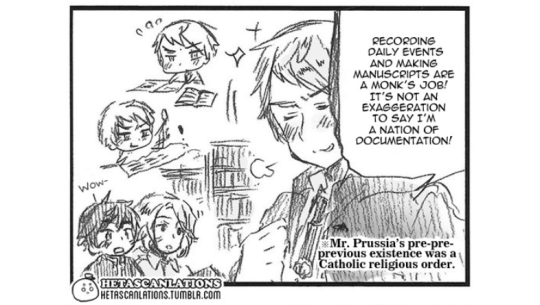
Ex: Prussia has
documented several centuries worth of diary entries and has an entire library
to shelf them.

Source: Hetascanlations, World Stars Chapter 339.

image

Second-born:

Second born children often have a pacesetter set in the
older sibling or vice-versa. A lot of times, this involves becoming locked in a
competition with the other sibling where they may strive to surpass them.

This is especially relevant to Canada and Romano.

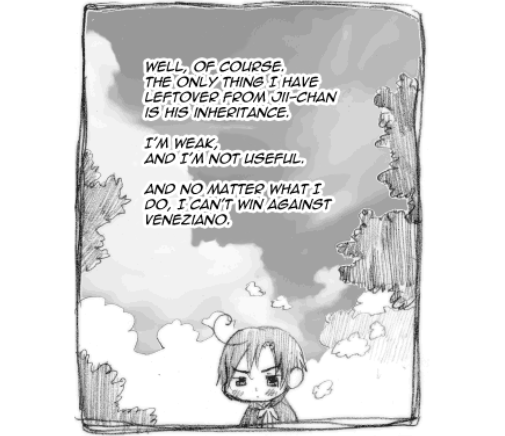
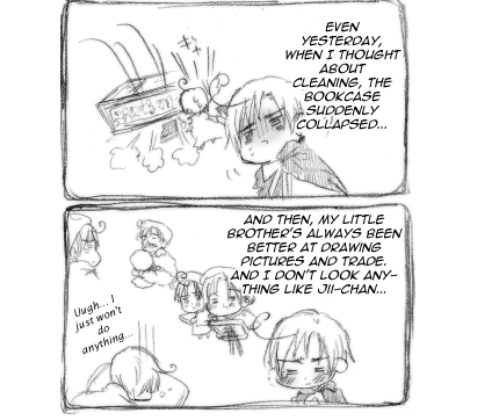
Romano has felt inferior to Veneziano ever since he was a
young child.

image
image

Source: Hetarchive, Boss Spain’s Control of Southern Italy pt. 2

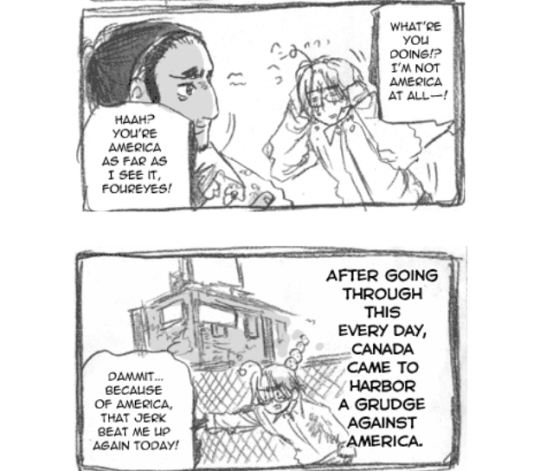
Canada’s characterization often revolves around his struggle
to overcome his invisibility, step out from America’s shadow, and develop a
unique and memorable identity for himself. His greatest irritation is being
mistaken for America.

Source: Hetarchive, Fly Canada-San, Fly!

image
image

Last-born:

Like second-borns, last borns are also driven by the need to
surpass their older siblings and often develop at a remarkably fast rate. They are
high achievers in whatever they decide to undertake. On the other hand, if they
fulfill the role of the “baby” of the family and are coddled too much, they can
also become dependent and helpless in adulthood.

This personality is most relevant to America, who both
developed (aged) at a remarkably fast rate but also rose to surpass England as
a world power to be reckoned with during the second Industrial Revolution.

Source: Volume 3, England Dreaming of Long Days Passed + Hetascanlations, World Stars Chapter 71.

image
image

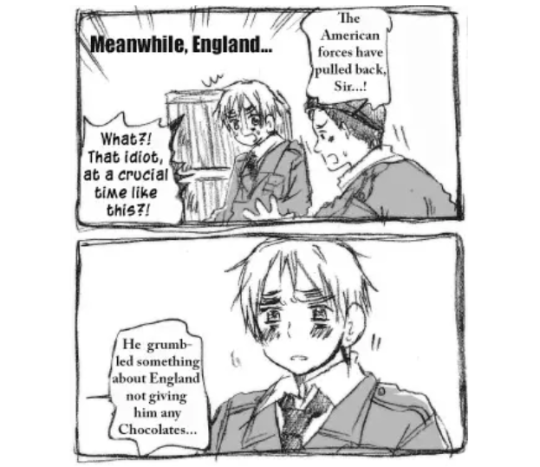
A good example of the baby-like aspect of his personality is
that America is notorious for pouting when he doesn’t get something he wants.

Ex: He pouts and sulks when England doesn’t give him
chocolate on Valentine’s Day.

Source: Hetarchive, Buon San Valentino pt. 2.

image

Only-child:

Only childs are far more mature than their peers due to being reared in an environment with adults. They are likely to
experience difficulties in situations outside the home where they are not the
center of attention.

Italy fits this personality-type best.

Italy grew up in prosperity and accumulated aptitudes in
several things, such as trade and commerce and art.

Ex: Both he and Romano had a talent for business at a young
age.

Source: Hetarchive, Christmas 2011 Event.

image

It’s not so much that Italy wants to be the center of
attention, but abandonment issues that he suffered from after Rome and Holy
Rome died definitely plays a part in how initially clingy he was towards
Germany.

Source: Hetarchive, Main Storyline Chapter 4.

image
image
image
image

As fans have pointed out in the past, many of the nations in
the series are not psychologically healthy. However, if I’m to use R.D. Laing’s
criteria of what differentiates a psychologically healthy person from someone
who’s not, three nations in particular stand out: America, England, and
Germany.

Psychological
Embodiment vs Disembodiment:

An embodied person is psychologically healthy. The person
experiences the world as if they’re “biologically alive” and develop a “sense
of being” in which they are acutely aware of their flesh, blood, and bones–
their body. Likewise, they understand themselves to be both a subject and an
object. In other words, their self and their body are one as they engage with the
outside world.

In a healthy
individual: (self/body) ↔ other

image

On the other end of the spectrum are those who are
consciously unembodied. These people experience a disconnect and divorce
themselves from their body. The body is felt like an object rather than part of
themselves and does not constitute the core of their being. This leads to
ontological insecurity. Essentially, they suffer from a weak, fragmented, and
unconsolidated sense of self.

The unembodied state:
Self ↔ (body-other)

image

There are three modes of ontological insecurity that an
unembodied person may experience but for the purposes of this post, I only need
to talk about one.

Implosion occurs when an unembodied person feels like a vacuum
and possesses an empty, unfulfilled sense of self. The external world is
overwhelming and crushes this empty identity. The individual then compensates
by attempting to fill this emptiness, albeit fearing what they could possibly be
filled with.

Some common examples of this would include the stress of
university. Unembodied individuals experience erasure under the pressure to
conform to uniform codes (standardized testing) and feel unimportant and insignificant
when they underperform. To deal with this stress, they turn to things like
fanfiction or Netflix to help fill the void of their disappointment and unmet
expectations.

That said, let’s tie this back to the strips.

America:

America’s fragmented sense of self lies in his inaccurate and
dichotomized perception of the world: everyone is either a hero or a bad guy,
and there are no grey areas in between [x] [x].

image
image

Ex: He tends to
include these clichés in the movies he makes [x]. 

image

While I may be reading into this too much, it’s still
interesting to look at it from the perspective that this is a coping mechanism
of his. America took on a lot of responsibility post–WW2 and became a
superpower. To deal with the stress, he adopted a hero persona to help him
forget about any misgivings or failures that would compromise this reputation.

I say this because even though America claims to be a hero, it’s
more of a persona than it is his true sense of self. I say this because America’s
actually quite the fraidy cat [x]. 

image
image

The hero persona helped fill in the gaps of any
grey areas that may have called the legitimacy of his actions into question. It
would have also consoled him in the times where he felt fear during war but
didn’t want to express it.

Overeating is also widely known as a stress-reduction
technique, something that America is notorious for [x]. 

image

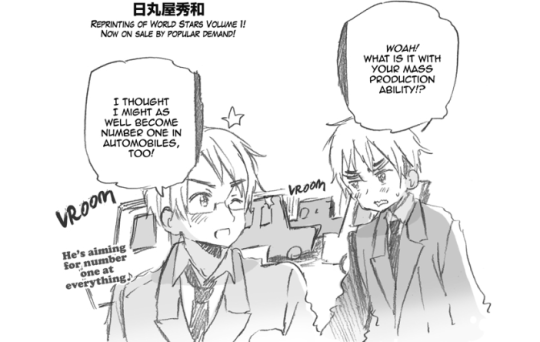
Another instance of implosion would include America’s
tendency to overproduce. I’ve speculated before that this could be a result of
not only the poverty he experienced when he was younger but also as an attempt
to reduce any feelings of loneliness [x]. Longer post on that here [x]

image
image

England:

England’s experience of implosion falls with him turning to
the supernatural to avoid feeling lonely. He’s experienced chronic loneliness over
the course of the series. Some more notable mentions would include the American
Revolution and the Splendid Isolation strips [x].

After the Revolution, his relationship with America suffered
tremendously. Despite offering to become his friend in one strip [x], it took them
a while before they reconciled their differences. Although, it’s important to note that America secretly considered
England to be his friend, as mentioned in a Volume 2 character note.

Ex: During WW2, England’s still spotted talking to his fairy
friends, much to America’s confusion.

image

In modern times, we still see England favouring fantasy and
the supernatural over the real world [x]

image

Germany:

Germany experiences two forms of detachment.

The first one has to do with how he experiences himself as a
nation. As a “strange being” [x] that it is supernatural and not tangibly
explicable himself, I find it odd that he’s so transfixed on empiricism and
scientific data and is quick to dismiss anything to do with the supernatural [x]. 

image
image

The second form has more to do with how he experiences
emotions and establishes relationships with others. More detailed post here
[x].

The basic gist is that Germany treats his interactions with
others objectively [x], following manuals and guides instead of personally
[subjectively] forming emotional connections. He contrives his body as a
machine that can routinely follow social codes and, therefore, hinders his
experience in forming a connection with another person..

image
image
image
image

What this post intends to do is use Horney’s theory of
personality to analyze why Germany’s strive for perfection and productivity
comes at the cost of compromising his true self and confidence.

Tyranny of the Shoulds: 

The tyranny of the shoulds is a term that Horney coined to
explain the occurrence in which someone’s idealized self-image replaces their genuine
self-confidence. What the person strives to be and appears to others acts as
their confidence, whereas they don’t feel confident in who they truly are,
ultimately forcing them to continually put up the former front of
superficiality. An extreme form of this would be the person developing feelings
of shame and disgrace toward their real self.

Put another way, the real self (who you are) is replaced by
how one should be. For example:

“One should always be productive.”

“One should always be punctual.”

“One should never give up.”

“One should be in control of one’s feelings.”

“One should schedule one’s day to maximize utmost
efficiency.”

Sound familiar? It should, because these are the shoulds
Germany is ruled by.

This neurotic compulsion to strive to be someone you’re not
eventually leads to the person internalizing this ideal, albeit unrealistic,
sense of self. The consequence of surrendering your real self compromises the
person’s chances of achieving personal growth and happiness. They’re never
happy with themselves and only focus
on how they present themselves to others.

image

How does this relate to Germany? 

In Germany’s case, he puts up a front of competence, order,
and productivity. He shoulders a lot of pressure to hold up the EU and has
internalized this responsibility to look after other member-states [x]. 

image
image
image
image

His work self has become his primary identity…his master
status.

Of course, this doesn’t mean that he’s incapable of unwinding. He’s very favourable of vacations [x]. 

image

Nonetheless, there’s no doubt that he’s a workaholic [x]. 

image

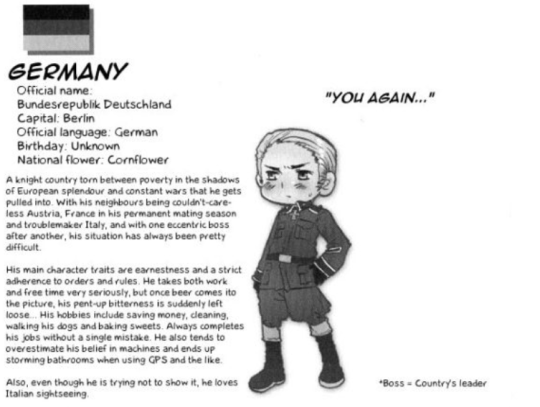
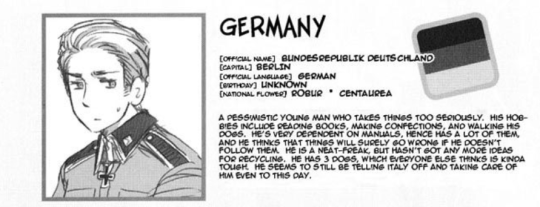
Ex: Several character notes identity him as bearing an
overly serious and compulsive personality type. 

image
image
image
image

Ex: He has a whole character song dedicated to schedules, punctuality,
and routine. Public appearances are an indication of self-worth to him [x] [x]

image

Consequences:

Because Germany identifies with his work self, he’s
internalized repressing his emotions to the point that when he does experience
them (e.g., embarrassment, happiness), he becomes incompetent and lacks
confidence in himself.

Ex: He’s not used to being praised for his abilities outside
of work life. In this case, he doesn’t know how to react when Italy commends
him for his drawing skills [x]

image

Ex: He’s well-known for his inability to smile [x]. 

image
image

Ex: When it comes to interpersonal life, Germany is clueless
and has to rely on manuals (e.g., dating advice, teaching him how to smile). He
doesn’t need manuals for matters like business or economics due to familiarity
and experience, but when it comes to socializing he sheds this cloak of
competence and becomes dysfunctional without them [x]. 

image

There are also instances where Germany’s work self overrides
others’ impression of him, even when he attempts to be personal and social.

Ex: His first character note in World Stars [x]. 

image

Ex: Italy mistakes him as being angry [x]. 

image
image

In sum, I’d like to end this with a passage from his
character song “Einsamkeit” that best exemplifies how his work self has
compromised who he truly is. He’s essentially alienated himself despite frequently being surrounded by other nations for his work [x]. 

image

The side of him that likes romance novels, dogs, and confectionary is completely overlooked. 

I’m always said to be scowling,
But my smiling face hasn’t been erased
You may think I’m frightening,
But it’s only because I’m straining to laugh

Strong Eisamkeit (Loneliness)

image
image
image

Note: This post will
use Swiss psychologist Kubler-Ross’s model of grief to analyze how Prussia has
come to terms with his death/ potential [future unconfirmed] death.

Kübler-Ross’ Model:  

Having worked with terminally-ill patients, Kübler-Ross

recognized universal themes in which people passed on. There were certain
phases that her patients experienced before dying. While the model isn’t
successive in that patients don’t have to experience one phase in order to
experience the next and that some patients don’t necessarily experience all
stages, these themes were a common phenomenon that she observed. It’s not
measurable and empirically supported, but it does provide a good description of
the phenomenon.

The stages, which can be experienced several times
throughout the dying process are: Denial
and isolation, anger, bargaining, depression, and acceptance.

image

Denial is pretty
self-explanatory. The person refuses to accept the reality that they’re dying
and will usually avoid talking about it all together. Mostly, there is a
partial acceptance of their death (e.g., recognizing their fatal diagnosed
illness). It’s very rare where the person will maintain a consistent denial
until death. This stage is ultimately characterized by numbness and stoicism.
What’s isolating is that the person refuses to accept any other reality but
the one they’ve constructed.

Anger is also
fairly explanatory.  Once the denial
can’t be maintained and upon recognizing their lack of control over the
situation, the person gets angry and resentful. This entails displacing their
anger and projecting it onto everything around them, including their family
members.

Bargaining is a sort of middle ground. If they’ve
consistently denied their death and are still angry at everyone and everything,
including God, they will attempt to bargain with their fate. The lack of
control renders them childlike in that they’ll wish for a postponement of their
death with the implicit promise that they won’t ask for anything else.

Ex: “Just let me
live past one last Christmas. That’s all I ask.”

Depression is seen as a necessary phase if the person is to
die peacefully and with a state of acceptance. Rather than trying to cheer the
person up, Kubler-Ross recommends encouraging the person to accept their
sorrow.

Acceptance includes neither an angry or depressed state.
Nonetheless, it shouldn’t be mistaken for happiness. They may not even feel
anything. This final stage typically involves the person withdrawing into themselves.
They don’t want too many visitors and are more contingent on their family
members presence as their support rather than verbal communication.

image

That said, the best example where I 100% believe Himaruya
has used this model is with Prussia. Regardless of what he personifies/
personified, it can’t be denied that Prussia has become weaker and may or may
not fade away.

In my interpretation, his character song, Mein Gott!, is an exemplification of
Prussia’s unwilling confrontation with the possibility of his death. He goes
through all stages with the exception of anger. Just like the model, Prussia
flips through the stages in a non-linear manner and experiences them several
times throughout the song [x].

Denial: 

“Someone is calling,
I’m being called
Alright, leave it to me; let’s go
More! More!

To the east and to the west
I’ll keep running”

He hears the call of death but
runs away from it.

“The awesome me’s the most supreme! The
strongest!

The one who gets the last laugh, yeah!
Is the awesome me, of course!


Danke! 
The best! The most fearsome!
You guys can praise me
I’ll show you my massive dream
A succession of victories for sure!

All of the maps will someday be in these hands…
I’ll laugh as I run through

That’s right, it’s not because I’m weak
It’s because I’m too strong”

He hasn’t come to terms with
the fact that he’s not the political superpower he used to be. Instead, he
deflects by boasting about his strength in a hypermasculine way.

Ex: Prussia flat-out lies to Germany when the latter
recognizes that his bite wound has taken an abnormal amount of time to heal…for
a nation, that is.

image
image

The isolation pertains more to how Prussia himself feels alone.

Ex: When asked why Prussia is so alone, Himaruya answers
that it’s because of the “pitiful state of an enclave he’s in,” [x].

Enclave has two distinct meanings. In this case, I interpret
it as Prussia feeling different and excluded from other nations whose
immortality still remains.

Definition: ENCLAVE, a place
or group that is different in character from those surrounding it.

“Danke!
Everyone! Come here!
Let’s exchange email addresses?
Being alone is too much fun
Everything will be in these hands! Just you
wait!”

Bargaining:

“Mein Gott! 


In a pinch! Punch!
Sometimes even a warrior starts shaking
(…I’ll leave things at this point)
A reverse in the situation, I’m going to be
hasty!”

(Beobachten Sie es bitte,
Fritz Vater) x 3

(Watch over me please, Father
Fritz)”

Here, it’s evident that Prussia desires to reverse
his weakened state. He bargains with fate by asking Fritz, his father figure,
to watch over him.

Ex: Prussia has a picture of Fritz on
his night table. It gives him a sense of security, insulating him from his fear
of dying.

image

Depression:

“Hey
little bird chirp for my sake
It will heal me; niyo niyo!”

Prussia actively recognizes
that he’s been weakened. His sorrow is displaced to his bird, whom he hopes
will cheer him up.

“This is bad, a panda that
will bring happiness
I won’t be fooled.”

In the 2009 April Fools’
Event, China gives Prussia a panda with the promise that it’ll bring him
happiness.

image

Acceptance:

“Alone in my room
I’ll write it today too
A memorial of the awesome me
More! More!”

image

We all know that Prussia’s
been writing diaries since he was little. It’s the mention of a memorial that
signifies his acceptance of death.

image
image

There’s also the recognition
that Germany is his successor.

Ex: When asked if Prussia will
disappear, Himaruya doesn’t rule out the possibility [x].

image

That said, it still amazes me
how people still conceive Hetalia as thoughtless, random, and simple. With the
large volumes of intertexts and historical and theoretical references woven
into the series, it’s anything but.

image
image
image

What this post will explore is the impact of England’s
parenting style on Canada. There is no good and bad here. All I aim to do is
give reason and meaning to the problematic behaviour and relationships that are
depicted in the series. The characterization is done for a specific purpose. What
I seek to do is bring several parallels to light to prove this.

image

 Horney’s Theory of
Parenting and Its Relation to Hetalia: 

One of psychologist Karen Horney’s theories explored how
problematic parent-child relationships often result in the child developing
neuroses (mental health complications), such as anxiety or depression.

image

However, rather than assert all the blame on the parent, she
went on to explain how parents who have been reared in an environment void of
love, care, and affection are incapable of raising their kids in any other
manner.

Put another way, parents pass on their neuroses to their
children. You can’t expect someone to provide the care, warmth, and love that
they’ve never experienced and learned themselves. On the other end of the
spectrum, these problematic parent-child-relationships and parenting techniques
are learned and repeated through generation-to-generation. It’s a cyclical process,
that, unless consciously recognized, results in all sorts of emotional trauma.

image

What Horney believed to be the Basic Evil of these problematic parenting styles is Parental Indifference, which can also
include a hostile or rejecting attitude of the parents toward the child. This
parental indifference can cause the child to develop feelings of Basic Anxiety or Basic Hostility – both of which, if not attended to, can lead to
mental health issues.

For the purposes of this post, I only need to focus on Basic
Anxiety. Basic Anxiety occurs when the child develops feelings of loneliness
and helplessness in a world that they perceive to be hostile and dangerous.

That said, what I’ll now analyze is how England’s own
upbringing and resulting mental health issues were passed down to
Canada.

Let’s tie this back to the strips.

Exclusion + Black Sheep Syndrome: Parental Indifference 

England’s isolated upbringing as the Black Sheep of Europe
leads him to unconsciously replicate this isolation in how he raises Canada.
Since he grew up alone, he doesn’t see a problem in leaving Canada for long
periods of time.

image

He even admits to America that this is what he had to go
through as a child. 

image

Thing is, while this is normal for England, it’s obviously
an abnormal parenting practice. The point to stress here is that England is
repeating the problematic parenting styles of his older brothers, who played no
part in raising him. They would send him hexes or drive him away with
arrows if he got too close for their liking [x].

image

The parallels of loneliness and helplessness are quite
clear.

Ex: England feels
isolated in Europe, often a result of his hostile attitude toward other
nations.

image

Ex: He feels
helpless when he realizes that everyone has turned against him during the
American Revolution [x].

image
image

What hurts Canada is that when England does visit, most of
his attention is devoted to America.

In another post [x], I’ve explored how Kumajiro acts as a mouthpiece
for Canada; he voices the feelings that Canada doesn’t dare to say out loud.

Ex: Kumajiro
tells Canada to stand up for himself. At the time, he wanted to ask England to
have lunch with him.

image

Ex: Kumajiro uses
stuffed animals to draw an analogy concerning how excluded Canada feels.
England neglects Canada in favor of America. Nonetheless, England still cares about Canada [x].

image
image
image

Canada experiences his exclusion in that he’s not memorable
to other nations and is often forgotten and rendered invisible.

Ex: The remaining
G8 members don’t recall him during a meeting [x].

image

Ex: He’s often
mistaken as America, especially by Cuba.

image

Self-Deprecation and Poor Self-Esteem: Basic Anxiety

Constantly being ostracized and insulted by other nations
has had a devastating impact on how England views himself. Those who are hurt, hurt others [x] [x].

image
image

Canada too suffers from self-esteem issues.

Ex: He doesn’t believe that he’s handsome [x].

image

Ex: He believes that America is disinterested in him [x].

image

This escalates in Canada being too shy to speak to America
directly. He uses England as a mouthpiece instead. All of this is reflective of
his low sense of self-worth [x].

image

Sensitivity: Basic Anxiety

While this side of England isn’t revealed often, he’s an
incredibly sensitive person.

Ex: Visiting America – a child that loved him
unconditionally – helped England cope with his anxiety over being excluded from
European circles.

image

Ex: He tears up when Canada comes to his aid during the
American Revolution [x].

image

Ex: He drunkenly sobs in front of America, revealing how he
wishes that their relationship had turned out better [x].

image

Ex: He tears up after watching a fantasy movie, lamenting
over how harsh reality is in comparison [x].

image

Canada’s sensitivity relates more to his fragile sense of
self and identity.

Ex: He cries when Seychelles remembers that he’s part of the
G8 [x].

image

Ex: He cries when England falls ill after the American
Revolution and worries about whether he’ll be able to successfully nurse the
latter back to health [x].

image

Bonus: Hot tempers

We all know how hot-headed and temperamental England
can be. There is no question about that. It’s what he’s most known for [unfortunately].

On the other hand, what most don’t recognize about Canada is
that he also has quite the temper.

The only difference is that Canada has much more patience
than England. It takes a lot to make him angry. Regardless, Canada will still
stand up for himself if his buttons are pushed too far.

Ex: Canada once spent three hours pointing out America’s
faults, causing the latter to cry [x].

image
image

Throughout his and America’s independence arcs, Canada on
several occasions calls out America for his self-righteousness and hypocrisy [x] [x]

image
image

In sum, I highly recommend looking into the similarities
between England and Canada’s sense of self. While their personalities may be
different, they uncannily suffer from the same mental health issues.

image
image
image

This post will use attachment
theory to analyze Russia’s attachment style – how he forms relationships with
others – in adulthood. Unlike the case of Romano’s characterization [x], where
you can argue that attachment theory is actually used, this post applies
attachment theory to Russia for the sake of amusement. Although, things
strangely make a lot more sense when you look at him from this
perspective.

What is attachment theory?: 

image

Attachment theory focuses
on the relationship between a child and their caregiver. Central to the theory
is the concept of needs. A child relies on their caregiver to protect them,
provide for them, and care for them. If all these needs are consistently met,
the child develops a healthy attachment to their parents. This healthy attachment style positively
affects both the child’s personality and their capability to establish and
maintain healthy relationships as they grow older.

However, if needs are not met at all, or are sometimes met and
at other times are not, this inconsistency causes the child to develop unhealthy attachment styles. As
such, they develop unhealthy personalities and form unhealthy relationships
with others.

The Ainsworth experiment was where this theory
originated. To test the attachment styles between toddlers and their
caregivers, they would put them in a room together at first. After a while, the
parent would leave and the child would be left on their own. Then, a stranger
would be introduced to the room and leave after the toddler had a chance to react.
The last part of the experiment analyzed the toddler’s reaction once they were
reunited with their parents again.

Being in a “strange situation” – a foreign room, absence of a
parent, and meeting a stranger [danger] 
– created a lot of
stress in the child. Since children seek protection from their caregivers, this
stress and fear would typically cause the child to become upset and seek
reassurance from their caregiver. It’s a survival instinct that innately kicks
in.

Those with a secure [healthy] attachment style would
cry or be upset for a bit but would be easily calmed once their caregiver
soothed them. The healthiness of this attachment style means that the child
knows that the parent is there for them – they can be relied on to satisfy
their needs.

image

While there are several
different unhealthy attachment styles, only one is important for this
post. An organized/ unresolved categorization is where Russia fits best. A
child with this attachment type functions better when their parent isn’t
around.

This is typically seen in
children who are abused and view their parent (s) as a source of fear. The
parent’s care is inconsistent in that they provide for the child and the child
attaches themself to them out of an instinct to survive; however, the abuse also
makes the parent the enemy. In the strange situation experiment, these children
would often approach their parent with hesitation or be paralyzed with
fear.

As adults, their attachment
system is subtle and needs to be activated. If they’ve had past traumas, such
as abuse, then they become disorganized. This often involves dissociation and
slipping in and out of consciousness. So long as they have trauma(s), they’ll
be disorganized. Sometimes, they’ll act in ways that are completely dependent
on others (activation), and at other times, they’ll be completely detached – perhaps from
reality.

image
image

What’s Russia’s attachment style?: 

Russia’s organized/
unresolved attachment style, for the most part, stems from his relationship
with General Winter, who acted as his parent figure. The inconsistency of
General Winter’s care for Russia is seen in how he protected Russia from
invaders and yet attacks (abuses) Russia on an annual basis [x]. 

image
image

It’s far
from a healthy relationship. Not to mention that General Winter wasn’t always
able to protect Russia from countries who were accustomed to colder climates,
thus adding to the inconsistency of care that Russia received.

image
image

On the other hand, General
Winter wasn’t the only one who altered Russia’s conception of what a normal
human relationship is like. Having been conquered over and over again, in this
case by the Tatars, Russia normalized unequal power in a relationship.

This is why I believe that he
rejected becoming Lithuania’s friend when they first meet as children. They
didn’t have enough “power.” Notice how Russia’s environment has completely
misconstrued how he associates and attaches himself to others. What you’ll see
is that just like General Winter, Russia will repeat this abuse once he assumes
a position of power over others.

image
image

Point is, with a character
like Russia, there is no right and wrong. He’s not evil, and he’s not good. He
can’t have morals if he doesn’t realize that what he’s doing is wrong,
especially if it’s all he’s ever learned.

As such, Russia’s
understanding of friendship is warped. He believes that everyone is his friend,
including General Winter, his abuser.

image

A good example of this would
be when Lithuania points out to Russia that he shouldn’t really consider the
Allies to be his friends, given how they’re all ruled by self-interest. Russia
becomes dejected at this; he truly thought that they were his friends.

image
image
image

Russia’s Trauma:

We also know that given
Russia’s particularly rough and bloody history, he’s carried a lot of trauma.

Ex: A happy New Year’s for him
was not freezing to death [x].

image
image

Ex: He’s had several dramatic
shifts in government [x].

image
image

Ex: His bosses have tortured him. In this example, they ask him to stop a tank with his body.

image
image

Ex: During the Stalinization
era, he’s tasked with building a canal with no food or adequate clothing while
his boss – presumably Stalin – eats in front of him and wears a parka [x].

image

As mentioned above, because
Russia was subjected to so much violence, it’s been normalized for him. While
this is obviously wrong, violence is how Russia’s learned to solve his
problems [x].

image

Although, this isn’t canon,
Russia’s heart falling out – to me – acts as a metaphor for the fact that he’s
never learned what love is, let alone experienced it. Yes, he has his sisters,
but they couldn’t always be around for him.

image

Russia’s Dissociation:

There are several instances
in the manga where Russia dissociates to cope with a stressful situation.

 A common coping mechanism for Russia is to
imagine being in a warm place, a long-time wish of his [x].

image
image

He also appears to
disassociate when he’s threatened with punishment if he doesn’t build a steam
engine [x]. 

image

In response to Latvia’s
trembling, Russia starts shaking him around and then snaps his neck –
presumably killing Latvia temporarily. Notice how Russia doesn’t even realize
the scope of what he did [x].

image
image

Activation:

While Russia is childish –
and therefore arguably detached from reality – there are moments where his
attachment system gets hyperactivated. His
childhood trauma is kicked into overdrive, and he becomes…terrifying.

Ex: When Lithuania outsources
himself to America after WW1, Russia isn’t exactly keen to see the latter off [x]. 

image

Ex: He’s commonly spotted
hugging and squeezing Soviet countries from behind to communicate his
possession over them/ desire to possess them.

image
image

Ex: He asks Moldova to call
him older brother [x].

image

Ex: In the present, Russia
wonders whether the ex-Soviet countries consider him as a friend.

image

Obviously, given the physical
abuse they were subjected to, they’re not very keen to be close to Russia. At
the same time, they also appear to realize that how Russia experiences his
reality and relationships isn’t normal. Again, he doesn’t realize that what he
did was wrong.

Just to put things into perspective, from a criminal law point
of view, Russia probably wouldn’t be convicted for his abuse, given that he
lacks the mental capacity – mens rea – to fully understand what he did.

In sum, Russia’s not an inherently
evil figure that maliciously inflicts abuse onto others. Instead, he’s a character
who has experienced his fair share of evil, and because it’s all he knows, he
inflicts this same evil on others. Of course, none of this pardons or justifies
his past actions, but hopefully it gives perspective into why he acts the way
that he does.

image
image
image

Note: This theory will make use of Freudian theory. While I
recognize that Freud’s ideas do not bear much contemporary relevance, that
shouldn’t take away from the fact that many of his concepts (e.g., erogenous
zones, childhood memory repression, catharsis) are nonetheless employed by Himaruya
in the series. The purpose of this post is to give some insight into the
psychologies of the characters.

Ever wonder why Italy
acts so childish sometimes? From a perspective of psychoanalytic theory, this
would be seen as a re-enactment of the insecurity and fear of abandonment that
Italy’s held since his childhood.

image
image

What is Regression?: 

Regression occurs when a
person experiences stress and reverts back to an earlier stage of development
where life was easier. A lot of these childish behaviours have to do with
insecurity and the seeking out of comfort.

For example, if social
situations stress you out and you have a tendency to cling to a friend or
spouse, this behaviour is comparable to a child that clings to their parent for
protection. Another common example would be grown adults sucking their thumbs
when they’re stressed. An even milder version would be biting your nails.
Babies teeth and suck as a form of tension reduction; it soothes them, just
like an adult biting their nails or sucking on their thumb would.

We know that Italy’s
childhood was far from healthy. He went from the security, comfort, and
undivided care of Rome to being routinely conquered, subjected to countless
wars, and being forced to live in a strange and foreign environment – Holy Rome’s
household [x].

image
image
image
image

This abandonment, insecurity, and
fear of being left behind is still alive and well in Italy’s adulthood. What
you’ll see is that just like a child who seeks comfort in the ‘big’ and ‘strong’
authority figure that is their parent, Italy unconsciously sees Germany as a
replacement for Rome.

That said, let’s tie
this back to the strips.

Italy’s Adulthood:

When Italy and Germany
first meet in WW1 as enemies, Italy pleads for Germany not to open the tomato
crate that he’s hiding in. He comes up with the childish ruse that he’s the
spirit of the tomato box. While this could just be used for comic effect, I
still think it’s interesting to consider.

image

This example, on the other
hand, makes a lot more sense to me if I analyze it from a Freudian perspective.
Remember when Germany takes Italy as a prisoner of war and we get that bizarre
scene where Germany lets Italy escape, only for Italy to come waltzing right back
into his imprisonment?

image

Of course, the reason
that Italy does this is that he doesn’t want to go back to war and fight. On
top of that, what Germany’s providing for Italy here is a sense of comfort and
security – just like a parent would. That’s why Italy wasn’t so keen to leave.

image
image

We also get this scene. Italy has a nightmare where he’s left behind by Germany and Japan.
What prompted this was Russia’s alliance with Germany. His greatest insecurity
is that he’s useless and doesn’t bring any value to his allies [x].

image
image

He fears being alone.

The parallels between
these next two scenes are uncanny.

After waking up from his
nightmare, Italy runs all the way to Germany’s house in the middle of the
night. While he may not realize it, Italy’s seeking comfort and reassurance.

image

Now, compare this to the
scene with Chibitalia. Upon being frightened by thunder, he hops into bed with
Holy Rome [x].

Side note: Holy Rome and
Germany literally have the same emotional and verbal responses, just saying.

image

Point is, Italy’s fear
of being alone was developed early in his childhood and it’s continued into his
adulthood.

In sum, Italy’s childish
behaviour doesn’t appear to be simply for the fact that he was originally
intended to be a derpy character by Himaruya. A lot of Italy’s clinginess stems
from childhood fears of abandonment and the subsequent insecurity of being left
to fend for himself in a world that has consistently proven to be hostile,
brutal, and unfair.

image
image
image

This post will use attachment theory to analyze Romano’s
attachment style – how he forms relationships with others – in adulthood. The
previous post to this analyzed how Romano’s unhealthy and insecure attachment style was
developed as a result of his childhood [x].

Previously in
Psych-talia…

What is Attachment Theory?

Attachment
theory
 focuses on the relationship between a child and their caregiver.
Central to the theory is the concept of needs. A child relies on their
caregiver to protect them, provide for them, and care for them. If all these
needs are consistently met, the child develops a healthy attachment to their
parents. This healthy attachment style positively
affects both the child’s personality and their capability to establish and maintain
healthy relationships as they grow older.

However, if needs are not met at all,
or are sometimes met and at other times are not, this inconsistency causes the
child to develop unhealthy attachment styles. As such, they
develop unhealthy personalities and form unhealthy relationships with others.

The Ainsworth
experiment
 was where this theory originated. To test the attachment styles
between toddlers and their caregivers, they would put them in a room together
at first. After a while, the parent would leave and the child would be left on
their own. Then, a stranger would be introduced to the room and leave after the
toddler had a chance to react. The last part of the experiment analyzed the
toddler’s reaction once they were reunited with their parents again.

Being in a “strange
situation
” – a foreign room, absence of a parent,
and meeting a stranger [danger] 
– created a lot of stress in the
child. Since children seek protection from their caregivers, this stress and
fear would typically cause the child to become upset and seek reassurance from
their caregiver. It’s a survival instinct that innately kicks in.

Those with a secure
[healthy] attachment style
 would cry or be upset for a bit but would be
easily calmed once their caregiver soothed them. The healthiness of this
attachment style means that the child knows that the parent is there for them –
they can be relied on to satisfy their needs.

While there are several different
unhealthy attachment styles, only one is important for this post. An insecure
ambivalent/ preoccupied attachment style
 is seen where the caregiver
returns but is unable to sooth the child. The child often responds with anger, and sometimes they can even become aggressive.

The unhealthiness of this attachment style means that the parent
inconsistently meets the needs of the child. In other words, their care for the
child is inconsistent. They’re either overbearing when they meet the child’s
needs, or they’re completely unavailable and don’t meet them.  

This inconsistency causes a sense of hostility and distrust to develop
in the child. They don’t want to rely on their parent, but know that they have
to if they want to survive… a love-hate relationship if you will. The anger and
aggression are symptoms of this contradiction. Anger is also a way that the
child learns to communicate their needs to their parents.

Let’s tie this back to the strips.

What’s Romano’s attachment style?

What you’ll see with Romano is that he has an ambivalent/
preoccupied attachment style stemming from two parental relationships. His
needs were not consistently met since Ancient Rome spent most of
his time rearing Veneziano. The unavailability of care.

image

Then, Romano falls under Spain’s rule, someone
who goes out of his way to care and provide for Romano. The overbearingness of care.

image

 A full
analysis of Romano’s attachment style in childhood can be found in the first
part of this series.

Romano’s Attachment Style in Adulthood:

While
attachment styles are developed in childhood, they often follow a person throughout
their whole life. It affects how they form relationships with other people, how
they maintain them, as well as, you guessed it, how secure they feel in romantic
relationships. Given that Romano hasn’t been depicted to be in a romantic
relationship, this analysis can only cover platonic or familial relationships.

Adults
with ambivalent/ preoccupied attachment styles are hot-tempered, angry often,
constantly complain, and get pissed off easily. In relationships, they embody an
“I love you, I hate you” pattern of communication. In other words, they have
jealousy issues and will say one thing but mean another. Another example of
this would be person A being reliant and dependent on their partner, person B, and
yet claim that they don’t need person B.

image

Romano
and Spain share a very complicated relationship, given that Spain evolved from
a parent/ older brother figure to a confidant and close friend of Romano’s.

The
love-hate relationship is made clear in one character note that claims that
Romano doesn’t see Spain as a friend or an enemy and that their relationship is
in a grey area.

image

Other
interactions in canon completely contradict this.

For
example, when Romano moves to America for work during the Second Industrial
Revolution, it’s stated that he’s closer with Spain than he is with his own
brother, Veneziano [x]

image

It’s
for this reason that the first person Romano calls when he’s in this new,
scary, and unfamiliar environment is Spain.

image
image

Spain
is happy to give Romano advice and acts as his biggest supporter.

image
image

Notice
how frustrated Romano gets at certain points in the conversation. The running
gag between the two of them is that there are times where they completely
understand each other and times where they don’t at all. In this case, Spain’s
easily distracted mind irritates Romano.

image
image

Point
is, Romano is dependent on Spain despite constantly cussing at the latter and
insulting him. Remember, anger is a communication of needs for these people.
Here, Romano has trouble getting through to Spain, who is available to
talk seriously for some parts of the conversation, only to get completely
side-tracked and be emotionally-unavailable for the majority of the phone call.

Romano
is also dependent on Spain in terms of comfort.

Ex:
This occurs when the price of pasta sky-rocketed.

image

One
last example of this love-hate relationship with Spain would be when Spain
experiences an economic recession and almost dies from it [x]. Pay attention to how
Romano shows his love and care for Spain through actions, yet repeatedly verbally
berates Spain as he saves him. 

image
image

Romano even had to square off against the Mafia, whom he’s normally terrified of and is coerced into doing favors for.

image
image

Love- Hate Relationship + Jealousy – Veneziano

Ever
since Unification, the two haven’t seemed to get along. 

image
image

Romano still resents
that Veneziano was given the special treatment by their grandfather and feels
inferior. Longer post on that here [x].

Ex:
Romano insults Veneziano’s innovations during the Second Industrial Revolution.
This appears to stem from jealousy given that Romano compliments this very same
innovation when Veneziano can’t hear him [x].

image
image
image

Later,
he moves to America just so he won’t have to rely on Veneziano.

image
image

He’s
jealous of Veneziano in that he’s often referred to as “Italy’s older brother.”
He resents and perceives this as him not standing out on his own.

Ex:
When he doesn’t get a part in a movie, he states that people only care about
his “stupid younger brother.”

image
image

Ex:
He doesn’t react well when Prussia refers to him as Italy’s older brother.

image

Ex:
One character note states that Romano detests Veneziano “a bit. [x].

image

Ex:
Veneziano once said that Romano is nice to him every eight years [x].

image

The
dependency of this love-hate relationship is clear as Romano relies on
Veneziano’s economy in the present, but will still bicker with him and refuse
to cooperate [x].

image
image

Romano
also complains that Veneziano doesn’t give him a chance to work – although this
is valid considering that Veneziano has a habit of taking over most of Romano’s
workload.

image

When
Veneziano gets Germany to help clean Romano’s messy room, Romano has one of two
reactions. Of particular importance is the mixed signals and contradictions in
how Romano communicates with others, a characteristic that ambivalent/
preoccupied people all share.

1)  Excessively insulting both Veneziano and Germany, telling Germany to go
home.

2)  Shock and surprise when Germany actually offers to go home – Romano wanted Germany to clean his room but was too prideful/stubborn to say this out loud.

image
image

Lastly,
the love and care of their relationship is mostly behind the scenes for Romano.
He secretly looks out for Veneziano.

Ex:
Romano scrutinizes Germany during WW2 and doesn’t like his influence on
Veneziano.

image

In
sum, if you look at Romano’s anger from an attachment theory perspective, it’s
not all malicious. A lot of it originates from jealous and hostile feelings
that he’s kept contained since his childhood. Romano’s capable of love and compassion
– he just has a terrible way of verbally expressing it.

image
image
image

Note: This
theory will make use of Freudian theory. While I recognize that Freud’s ideas
do not bear much contemporary relevance, that shouldn’t take away from the fact
that many of his concepts (e.g., erogenous zones, childhood memory repression,
catharsis) are nonetheless employed by Hima in the series. The purpose of this
post is to give some insight into the psychologies of the characters.

Terminology I’ll go over: Psychosexual stages,
causality, regression, fixation.

Yes, that’s right. Freud’s ideas are very much prevalent in the
series. A big area of his work was analyzing the impact of childhood on
personality development. Freud believed in causality, meaning that who you are as
an adult can be directly traced back to your childhood.

image

How you’re parented and
brought up is the most crucial factor. I don’t need to go into this in too much
detail, but basically, we go through five stages of development titled: Oral,
anal, phallic, latency, and genital.

For this specific post, we
only need to focus on the early stages of development, which focus on sensual
(sensory) pleasure and stimulation, often for the purposes of soothing and
experiencing relief.

Each stage has corresponding needs. If these needs are not met (under-gratification) or
if they are too easily met (over-gratification), then the person develops a
fixation.

fixation essentially means that the person is
stuck at that level of development, which causes them to develop a problematic
and unhealthy personality type.

However, it’s only when that individual is met with
confrontation or a stressful situation that they regress back
to the stage in which they developed this fixation. The stress causes them to
revert back to the age where their needs weren’t met, and as such, they engage
in childish behaviours.

For example, if you get into an argument with someone and they
start behaving selfishly, like a toddler, then you have every right to poke fun
at them for having Daddy or Mommy issues. Or, there are those who bite their
nails and pick at their lips, something akin to the soothing acquired from
sucking one’s thumb as a child.

Where Germany fits into this: 

image

Germany is an explicit example of someone who’s fixated at the anal
stage, right down to an exact tee. It’s uncanny.

Anal Fixation:

Yes, laugh all you want.

Anyways, the anal stage focuses on potty training. This is a
crucial event in a child’s life and how their parents receive their successes or
accidents, in this framework, has a huge impact on the child’s personality in
adulthood.

If the child is met with encouragement and praise when they succeed
and patience when they have an accident, then they develop a healthy
personality type.

On the other hand, if the child is met with irritation,
ridicule, or shame–

 Ex: “You’re a big boy/ girl now! Everyone else your age already
knows how to use the toilet! Why can’t you?!”

– from the parent when they make an accident, hostility is
formed. This hostility then results in the child developing an unhealthy
personality type.

The toddler’s hostility in reciprocation to their parent’s
hostility can either manifest in them refusing to go potty (holding it in), or
going whenever they please.

In this case, the hostility, shame, and ridicule, that Germany experienced in
his childhood didn’t come from his brother, Prussia, but rather, other nations
whom he was immediately thrown into war against right from birth. Put another
way, Germany grew up in an unhealthy environment where ridicule and hostility
was the norm.

image
image
image
image
image

Germany has all the qualities of an anal-retentive personality type. These people are described as:

 “Stingy perfectionists
who may experience problems with constipation and are obstinate, neat, and
orderly.”

People with this personality-type also tend to withhold their
emotions – they’re regressing back to the stage in which they held their fecal
matter in. Remember much of Freud’s theories are symbolic and allegorical.

That said, let’s go over these qualities.

 As mentioned, Germany has trouble expressing his emotions.

 Ex: He has trouble smiling and can’t smile the same way Italy
can.

image
image

 Ex: He comes off as angry to others.

image
image

 Ex: In Buon San Valentino, a pan-in on Germany’s head reveals
that he experiences emotions like shame, happiness, and heartbeat for the first
time.

image
image

Germany’s a neurotically neat and orderly person. Everything
about him is structured and regimented.

image

 Ex: He folds his clothes a particular way.

image

 Ex: He has a love for manuals, guides, agendas. 

image
image

 Ex: He’s timely and punctual.

image

 Ex: He allots exact minutes for nations to give speeches at
world meetings.

image

He’s a perfectionist.

Ex: He watches Italy intently as the latter cooks, cleaning up
after every spill or splatter.

image

Ex: He has trouble accepting praise and will often find faults
in what he does.

image
image

 He’s incredibly stubborn.

 Ex: He’ll follow GPS directions, no matter where they lead him.

image
image

Ex: He reports to the police after Italy has his car and phone
stolen from him. Italy knows that his police are useless, which is likely why
he didn’t report the missing property himself. Meanwhile, Germany reports this
anyway.

image

In sum, from a Freudian standpoint, Germany’s emotional withdrawnness
stems in large from the hostile environment that he grew up in; he learned to view others with distrust and closed himself off. Not only that,
but much of his stubbornness and need for organization arises from the desire
to find order from what was previously chaos. It takes a resilient mindset to do that. 

image